
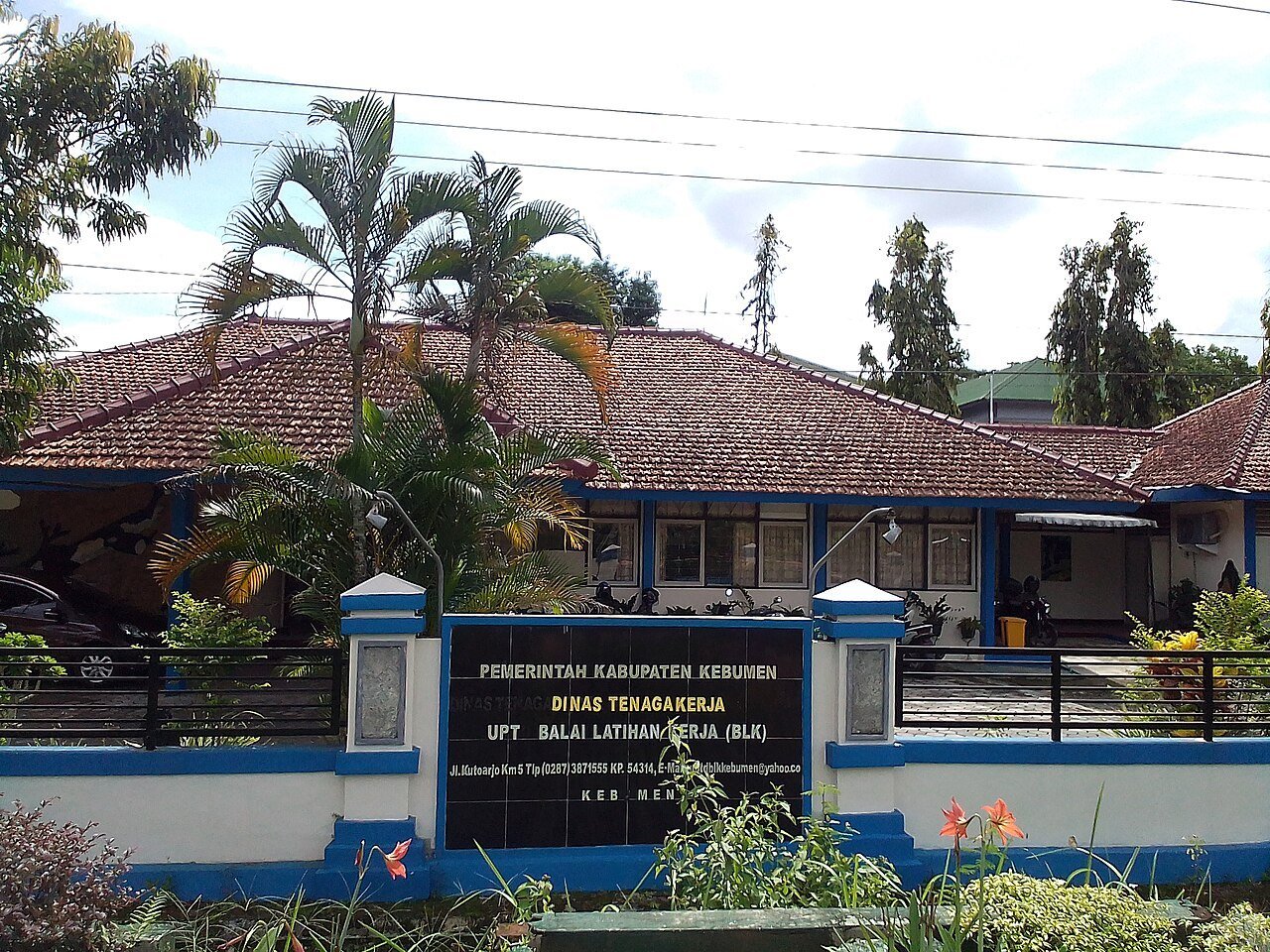
At a hearing with Commission IX of the House of Representatives on 4 February 2025, Indonesia's Minister of Manpower said that the initial efficiency calculation for his ministry came to 57 percent. The Ministry of Manpower (Kemnaker) was allocated Rp4.80 trillion for 2025, leaving about Rp2 trillion. The cut is part of a Rp256.1 trillion reduction in spending across ministries and agencies (Nugraheny, 2025a).
Training felt the effect at once. The ministry's Directorate General of Vocational Training and Productivity announced that competency-based training at all providers was postponed, citing Presidential Instruction No. 1 of 2025 on spending efficiency in the 2025 state and regional budgets. On 12 February 2025 the Deputy Minister of Manpower invited businesses to share the cost of running job training (Nugraheny, 2025b). For employers, this means more of the training load, occupational health and safety (OHS) training included, now rests on their own budgets. Which method gives the best result per rupiah?
Comparison Criteria
We compare four approaches against three criteria: knowledge gain, change in behaviour and in accident outcomes, and cost structure. The main evidence comes from two meta-analyses of OHS training, a Cochrane review of e-learning and an Indonesian systematic review of virtual reality.
The meta-analysis by Burke et al. (2006), covering 95 quasi-experimental studies with 20,991 participants, grouped methods into three levels: least engaging (lectures, pamphlets, videos), moderately engaging (programmed instruction, feedback interventions) and most engaging (behavioural modelling, hands-on training). As methods became more engaging, workers gained more knowledge and accidents, illnesses and injuries fell further. All methods still produced meaningful improvements in behavioural performance (Burke et al., 2006).
Four Approaches
- Classroom lectures. Low cost per head and easy to schedule. A meta-analysis of 28 studies from 2007 to 2014 found that classroom training, the most used and most studied method, was not significant for knowledge outcomes and showed decreasing efficacy for attitudes, behaviour and health (Ricci et al., 2016).
- E-learning. The fixed cost lies in producing the material, after which extra learners are cheap. A Cochrane review of 16 randomised trials with 5,679 licensed health professionals found that e-learning may make little or no difference to knowledge compared with traditional learning, on low-certainty evidence, and that its effect on skills is uncertain (Vaona et al., 2018).
- Hands-on practice and behavioural modelling. The highest cost per head, since it needs instructors, equipment and small groups. This is the group that showed the largest knowledge gains and accident reductions in Burke et al. (2006).
- Digital simulation and virtual reality. A large upfront investment that can be reused many times. A systematic review of 16 articles from 2017 to 2023 concluded that virtual reality can create realistic learning environments for high-risk sectors and has a positive effect on OHS awareness (Pribadi et al., 2023).
Strengths and Weaknesses
When budgets are tight, the temptation is to pick the lowest cost per head, which usually means mass lectures or non-interactive online classes. The evidence points to a more nuanced answer. E-learning appears roughly equivalent to traditional learning for knowledge, so using it to replace lectures is reasonable. Yet lectures are the weakest method in the meta-analyses, so swapping a lecture for an online video saves money without adding quality. What cannot be replaced is hands-on practice, behavioural modelling and dialogue, because that is where the largest accident reductions were found.
In our view, the best choice under budget pressure is a division of labour. Basic knowledge content moves online, while expensive face-to-face time is spent entirely on practice, feedback and discussion of real cases from the workplace. Digital simulation is worth considering for tasks that are dangerous or costly to rehearse for real, such as energy isolation or process emergencies.
The evidence has limits. Most studies in Burke et al. (2006) come from outside Indonesia, the Cochrane review studied health professionals rather than industrial workers, and the virtual reality review covers a small number of articles. Training that leads to certification or a licence still follows the rules of its provider and of the competent authority, so the choices above matter most for internal, refresher and task-specific training.
Practical Steps
- Map which OHS training is mandatory, which is risk-based and which is merely routine, and put the budget first into high-risk work.
- Move knowledge content into short online modules with quizzes.
- Use face-to-face sessions for hands-on practice, simulation and behavioural modelling in small groups.
- Measure results on site, such as behavioural observations and inspection findings, not only test scores.
Nusa Safety can help companies redesign training programmes so that a limited budget still hits the mark, through Custom Training Module Development, scenario-based practice with Digital Safety Simulators, and preparedness exercises through Emergency Preparedness and Drills. Nusa Safety issues only internal training certificates, is not a PJK3, and runs certified programmes together with licensed partners. To discuss a specific need, please contact the Nusa Safety team.
This article is general information and is not legal or professional advice for any specific case.
References
- Burke, M. J., Sarpy, S. A., Smith-Crowe, K., Chan-Serafin, S., Salvador, R. O., & Islam, G. (2006). Relative effectiveness of worker safety and health training methods. American Journal of Public Health, 96(2), 315-324. https://doi.org/10.2105/AJPH.2004.059840
- Nugraheny, D. E. (2025a, February 4). Dipangkas 57 persen, anggaran Kemenaker tinggal Rp 2 triliun [Cut by 57 percent, the Ministry of Manpower budget falls to Rp2 trillion]. Kompas.com. https://money.kompas.com/read/2025/02/04/180456926/dipangkas-57-persen-anggaran-kemenaker-tinggal-rp-2-triliun
- Nugraheny, D. E. (2025b, February 12). Ada efisiensi anggaran, Wamenaker ajak pengusaha sharing cost pelatihan kerja [Amid budget efficiency, deputy minister invites employers to share job training costs]. Kompas.com. https://money.kompas.com/read/2025/02/12/181300726/ada-efisiensi-anggaran-wamenaker-ajak-pengusaha-sharing-cost-pelatihan-kerja
- Pribadi, A. P., Jaladara, V., Silalahi, C. D. A. B., & Rahman, Y. M. R. (2023). Application of digital simulation for training purposes through virtual reality in the workplace. The Indonesian Journal of Occupational Safety and Health, 12(3), 457-464. https://doi.org/10.20473/ijosh.v12i3.2023.457-464
- Ricci, F., Chiesi, A., Bisio, C., Panari, C., & Pelosi, A. (2016). Effectiveness of occupational health and safety training: A systematic review with meta-analysis. Journal of Workplace Learning, 28(6), 355-377. https://doi.org/10.1108/JWL-11-2015-0087
- Vaona, A., Banzi, R., Kwag, K. H., Rigon, G., Cereda, D., Pecoraro, V., Tramacere, I., & Moja, L. (2018). E-learning for health professionals. Cochrane Database of Systematic Reviews, 2018(1), CD011736. https://doi.org/10.1002/14651858.CD011736.pub2

