
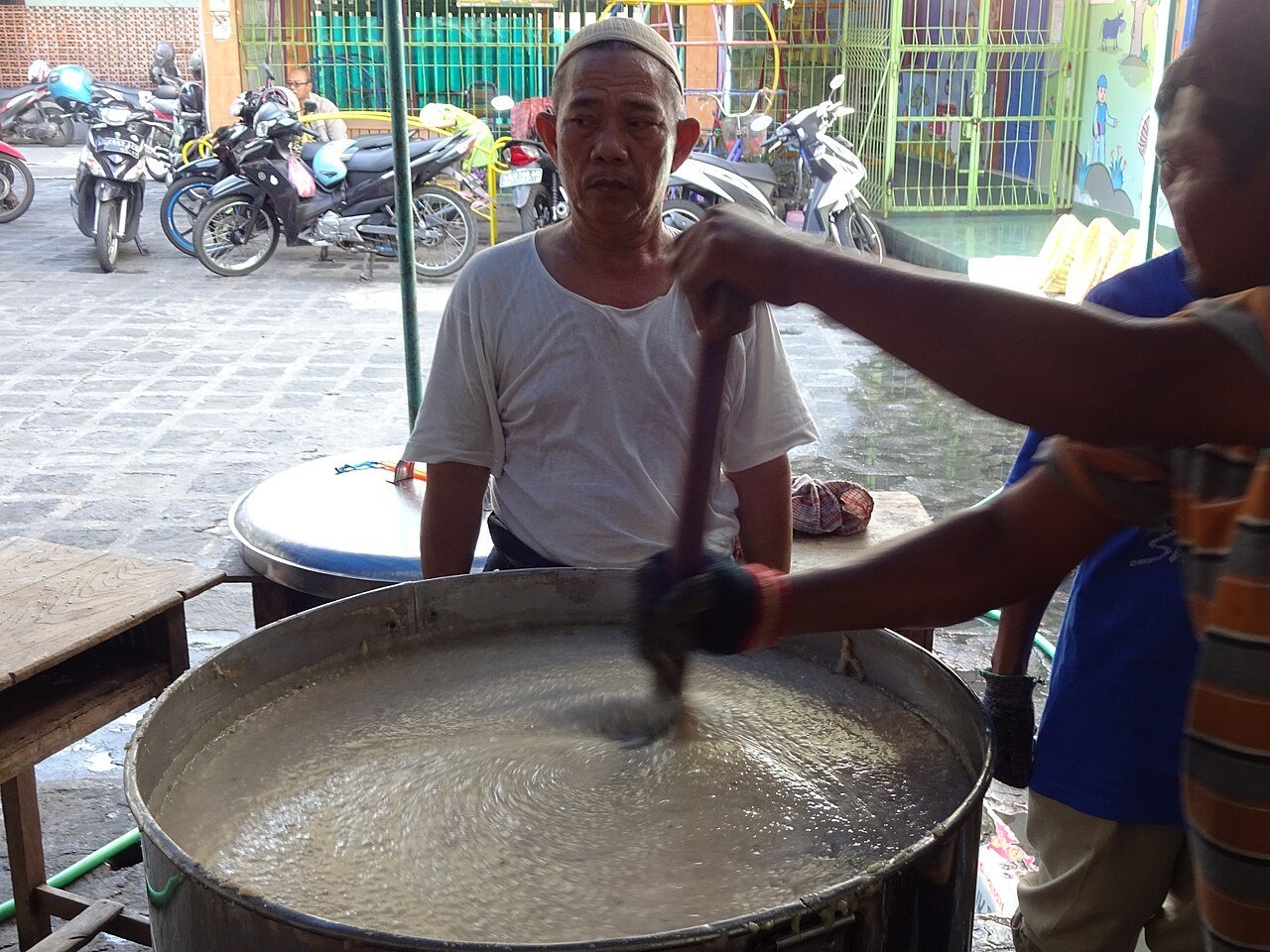
Indonesia's Free Nutritious Meals programme (Makan Bergizi Gratis, MBG) officially began on 6 January 2025. On the first day, 190 nutrition service units (SPPG), the programme's kitchens, were operating in 26 provinces. Each is led by a head appointed by the National Nutrition Agency (BGN), supported by a nutritionist and an accountant (Kamil, 2025).
Ten days later, 40 pupils at a primary school in Sukoharjo Regency had nausea, vomiting and dizziness after eating a programme meal. They were treated at the local health centre without hospital referral. According to the health centre, the kitchen operator acknowledged that the chicken served had been undercooked, and staff withdrew the remaining 2,400 portions of chicken and replaced them with eggs (Ulya, 2025). As of early February 2025 we have not found an official investigation report on the event, so this article does not speculate about its cause. Instead, we set out the method the food industry uses to control such hazards, Hazard Analysis and Critical Control Point (HACCP), with a focus on time and temperature in high-volume kitchens.
Why Time and Temperature
A systematic review of 1,176 food poisoning outbreaks in Indonesia between 2000 and 2015 found that schools were the setting for 13.7 percent of outbreaks and catering food the source of 18.9 percent of cases. Pathogenic bacteria were the most frequent agent (74.9 percent), and the leading contributing factors were inadequate cooking and storage at an inappropriate temperature (Arisanti et al., 2018).
The Codex Alimentarius general principles of food hygiene describe inadequate time and temperature control, for example during cooking, cooling, processing and storage, as among the most common failures of operational control. Such failures allow microorganisms that cause foodborne illness to survive or grow (Food and Agriculture Organization of the United Nations & World Health Organization [FAO & WHO], 2023).
Seven HACCP Principles
HACCP rests on seven principles: conduct a hazard analysis and identify control measures, determine the critical control points (CCPs), establish validated critical limits, monitor control of the CCPs, set corrective actions for deviations, validate the plan and verify that the system works, and keep documentation and records (FAO & WHO, 2023).
Critical limits must be measurable or observable. For heat treatment they usually cover two parameters at once, time and temperature. Codex allows critical limits to be drawn from the literature, regulations, guidance from competent authorities or third-party studies, provided they are validated, and asks that temperature monitoring devices be checked for accuracy and calibrated at regular intervals (FAO & WHO, 2023).
Steps in the Kitchen
For a kitchen cooking thousands of portions, implementation can start with these steps.
- Draw a flow diagram from receiving, storage and preparation through cooking, portioning, packing and transport to the moment the food is eaten, then check it against the actual kitchen.
- Analyse the hazards at each step. For animal-protein dishes, biological hazards during cooking and waiting usually stand out.
- Treat cooking and the waiting time before consumption as CCPs where no later step can remove the hazard.
- Take critical limits for core temperature and holding time from validated guidance or literature, not from a cook's habit.
- Monitor every batch with a calibrated probe thermometer, recording core temperature, the time cooking ended, the time the batch left and the time it was served.
- Set firm corrective actions, namely recook, hold or withdraw portions, and name who has the authority to decide.
- Verify regularly by reviewing records, observing practice and calibrating instruments.
This worked example uses invented numbers. A kitchen cooks a dish in four batches that finish at 04.30, 05.10, 05.50 and 06.30, and all portions are eaten at 09.30. The first batch waits 5 hours and the last batch 3 hours, so the batch that finishes first carries the longest waiting time. With time records like these, the kitchen can check whether every batch stays within the limit it has set, and shift the cooking schedule or add hot-holding capacity where it does not.
Where the Method Stops
The label of technical error explains little. In HACCP logic, human error at a critical control point is anticipated from the start, so the more useful question is why monitoring did not catch the problem before the food was handed out. Withdrawing 2,400 portions shows that a corrective action existed, but it came after some portions had already been eaten. In our view, this is why checks at portioning and before dispatch matter as much as checks at the stove.
HACCP does not stand alone either. Codex places it on top of good hygiene practices such as clean premises, safe water and personal hygiene of food handlers (FAO & WHO, 2023). Training food handlers helps, but supervision is still needed. A meta-analysis of 31 studies found a large training effect on knowledge (1.24), smaller effects on attitude (0.28) and practice (0.65), and a lower effect for directly observed practice (0.45) than for self-reported practice (0.80) (Insfran-Rivarola et al., 2020).
On governance, the head of the National Agency of Drug and Food Control (BPOM) said on 18 January 2025 that the agency's involvement in the programme did not yet have a formal legal basis and that a memorandum of understanding with BGN was being prepared (Wiryono, 2025). Until external oversight is established, monitoring discipline inside each kitchen is the main line of defence. Evidence on the programme's kitchens remains very limited after only a month, and the example above is an illustration, not a measurement.
Nusa Safety can help catering kitchens, SPPG operators and food businesses turn HACCP principles into work procedures that can be checked, through Technical Guidelines and SOP Development, prepare food handler training built around kitchen practice through Custom Training Module Development, and assess management system gaps through ISO Gap Assessment. Nusa Safety issues only internal training certificates and is not a certification body. To discuss a specific kitchen, please contact the Nusa Safety team.
This article is general information and is not legal or professional advice for any specific case.
References
- Arisanti, R. R., Indriani, C., & Wilopo, S. A. (2018). Kontribusi agen dan faktor penyebab kejadian luar biasa keracunan pangan di Indonesia: Kajian sistematis [Contribution of agents and factors causing foodborne outbreaks in Indonesia: A systematic review]. Berita Kedokteran Masyarakat, 34(3), 99-106. https://doi.org/10.22146/bkm.33852
- Food and Agriculture Organization of the United Nations & World Health Organization. (2023). General principles of food hygiene (Codex Alimentarius Code of Practice No. CXC 1-1969). FAO and WHO. https://doi.org/10.4060/cc6125en
- Insfran-Rivarola, A., Tlapa, D., Limon-Romero, J., Baez-Lopez, Y., Miranda-Ackerman, M., Arredondo-Soto, K., & Ontiveros, S. (2020). A systematic review and meta-analysis of the effects of food safety and hygiene training on food handlers. Foods, 9(9), 1169. https://doi.org/10.3390/foods9091169
- Kamil, I. (2025, January 6). Hari ini, program makan bergizi gratis resmi dimulai di 26 provinsi [Free nutritious meals programme officially starts today in 26 provinces]. Kompas.com. https://nasional.kompas.com/read/2025/01/06/07340531/hari-ini-program-makan-bergizi-gratis-resmi-dimulai-di-26-provinsi
- Ulya, F. N. (2025, January 17). Kepala BGN sebut kasus 40 siswa keracunan menu makan bergizi gratis karena human error [National Nutrition Agency head attributes poisoning of 40 pupils to human error]. Kompas.com. https://nasional.kompas.com/read/2025/01/17/20170681/kepala-bgn-sebut-kasus-40-siswa-keracunan-menu-makan-bergizi-gratis-karena
- Wiryono, S. (2025, January 18). Diminta terlibat program MBG imbas keracunan siswa, BPOM: Belum ada landasan hukum formal [Asked to join the free meals programme after pupils fell ill, BPOM says there is no formal legal basis yet]. Kompas.com. https://nasional.kompas.com/read/2025/01/18/19225121/diminta-terlibat-program-mbg-imbas-keracunan-siswa-bpom-belum-ada-landasan

