
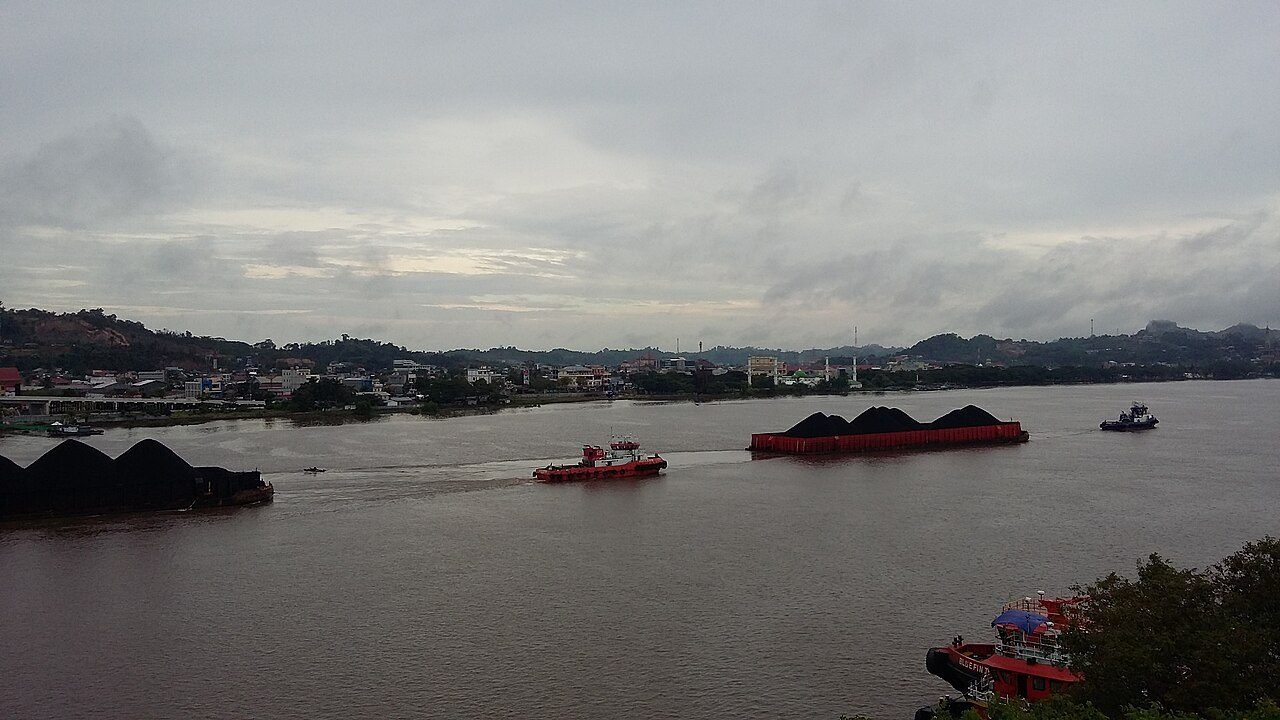
On the afternoon of Wednesday 11 October 2023, an explosion and fire broke out at a nickel smelter in Sangasanga, Kutai Kartanegara, East Kalimantan. A company representative quoted by the media said the fire occurred while the plant was still in its trial run of machinery and equipment. It began in the coal powder preparation area beside the main plant and spread to the floors below and above. A worker tried to put out the fire by prodding it with an iron bar, after which an explosion struck him and a colleague. One worker died and the other was injured, and the police were still investigating the cause of the explosion (Warsudi, 2023).
No official investigation report was available when this article was written, so we do not speculate on the cause. What we can discuss is a question that applies to every facility that grinds, dries or conveys pulverised coal: which hazard analysis method is best at capturing combustible dust risk?
Dust as Process Hazard
A study by the United States Chemical Safety and Hazard Investigation Board identified 281 combustible dust fires and explosions between 1980 and 2005, which killed 119 workers and injured 718. The study drew attention to secondary explosions, in which an initial blast lifts dust that has settled on floors, beams and other surfaces and ignites a larger explosion (U.S. Chemical Safety and Hazard Investigation Board [CSB], 2006). A review of more than 2,000 dust explosion accidents worldwide between 1785 and 2012 also mapped the dust types, ignition sources, high-risk industries and critical equipment most often involved (Yuan et al., 2015).
Dust explosions are usually explained with the explosion pentagon: a combustible dust as fuel, oxygen, an ignition source, dispersion of the dust into a cloud, and confinement (Center for Chemical Process Safety [CCPS], 2017). NFPA 652 requires owners of facilities that handle combustible particulate solids to carry out a dust hazard analysis (DHA), and states that the absence of previous incidents is not a basis for skipping it (National Fire Protection Association [NFPA], 2019).
Four Approaches
We compare four approaches against four criteria: coverage of every process and building space, use of dust property data, resource demand, and fit for the commissioning stage.
- Inspection checklists. Quick, cheap and good for daily housekeeping checks, but they only capture hazards already on the list.
- HAZOP. It works through deviations in process parameters with guidewords such as more flow, high temperature or low pressure. It is strong for fluid systems, including the carrier air in a mill, but in our assessment the standard guidewords rarely prompt discussion of dust that escapes equipment and settles in the building, even though those deposits fuel secondary explosions (CSB, 2006).
- DHA under NFPA 652. A systematic review that identifies and evaluates potential fire, flash fire and explosion hazards from combustible particulate solids in each process and building compartment, together with existing safeguards and recommendations (NFPA, 2019). CCPS has published detailed guidance on carrying one out (CCPS, 2017).
- Studies based on dust testing. Parameters such as the deflagration index (Kst), maximum explosion pressure and minimum ignition energy are used to design explosion venting, isolation and suppression (CCPS, 2017). The results are the most precise, but they need a laboratory and time.
Strengths and Weaknesses
We consider DHA the right foundation because its coverage was designed for dust, including dust outside equipment that a HAZOP tends not to reach. HAZOP remains a useful complement for coal grinding and drying systems, where temperature and airflow govern safety. A checklist cannot replace either, but it becomes the daily control once the DHA has set limits for dust accumulation. Dust testing is needed when the DHA recommends engineered safeguards that must be sized.
Commissioning raises the need for systematic analysis. New equipment runs under shifting conditions, some workers are still learning the system, and emergency procedures have not yet been tested. For a fire in a coal powder preparation area, the lines of inquiry usually examined include heat sources in grinding and drying equipment, dust deposits around equipment, and whether early firefighting actions lifted dust into the air and so completed the dispersion element of the explosion pentagon (CCPS, 2017). These are hypotheses for investigators to test, not findings about the Kutai Kartanegara event. The evidence also has limits: the CSB data and much of the material reviewed by Yuan et al. (2015) come from the United States and China, and we have not found national dust explosion statistics for Indonesia.
Practical Steps
- Carry out a DHA for every process and space handling pulverised coal before commissioning, or immediately if commissioning is already under way, since NFPA 652 does not accept an incident-free history as a reason to wait (NFPA, 2019).
- Supplement the DHA with a HAZOP of mills and dryers, and test dust samples when the recommendations call for venting, isolation or suppression (CCPS, 2017).
- Set limits for dust accumulation and cleaning methods that do not raise dust clouds, then monitor them with a daily checklist (CSB, 2006).
- Cover how to fight dust fires in the DHA and in emergency response training, including actions to avoid because they can disperse dust into the air.
How Nusa Safety Helps
The Nusa Safety team can facilitate early hazard identification through HAZID and Hazard Studies, process deviation studies through HAZOP and LOPA Studies, and a full review of process safety arrangements through the Process Safety Management Review. Fire protection and emergency readiness in dusty areas can be assessed through a FESA. Statutory inspection, testing and certification remain the work of the authorities or licensed PJK3 bodies.
This article is general information and not legal or professional advice for any specific case.
References
- Center for Chemical Process Safety. (2017). Guidelines for combustible dust hazard analysis. Wiley-AIChE. https://www.wiley.com/en-us/Guidelines+for+Combustible+Dust+Hazard+Analysis-p-9781119010166
- National Fire Protection Association. (2019). NFPA 652: Standard on the fundamentals of combustible dust (2019 ed.). NFPA. https://www.nfpa.org/codes-and-standards/nfpa-652-standard-development/652
- U.S. Chemical Safety and Hazard Investigation Board. (2006). Investigation report: Combustible dust hazard study (Report No. 2006-H-1). https://www.csb.gov/combustible-dust-hazard-investigation/
- Warsudi, A. (2023, October 12). Pekerja asal China tewas akibat ledakan dan kebakaran di pabrik smelter nikel PT KFI [Chinese worker killed in explosion and fire at a nickel smelter]. iNews.id. https://www.inews.id/regional/kaltim/pekerja-asal-china-tewas-akibat-ledakan-dan-kebakaran-di-pabrik-smelter-nikel-pt-kfi
- Yuan, Z., Khakzad, N., Khan, F., & Amyotte, P. (2015). Dust explosions: A threat to the process industries. Process Safety and Environmental Protection, 98, 57-71. https://doi.org/10.1016/j.psep.2015.06.008

