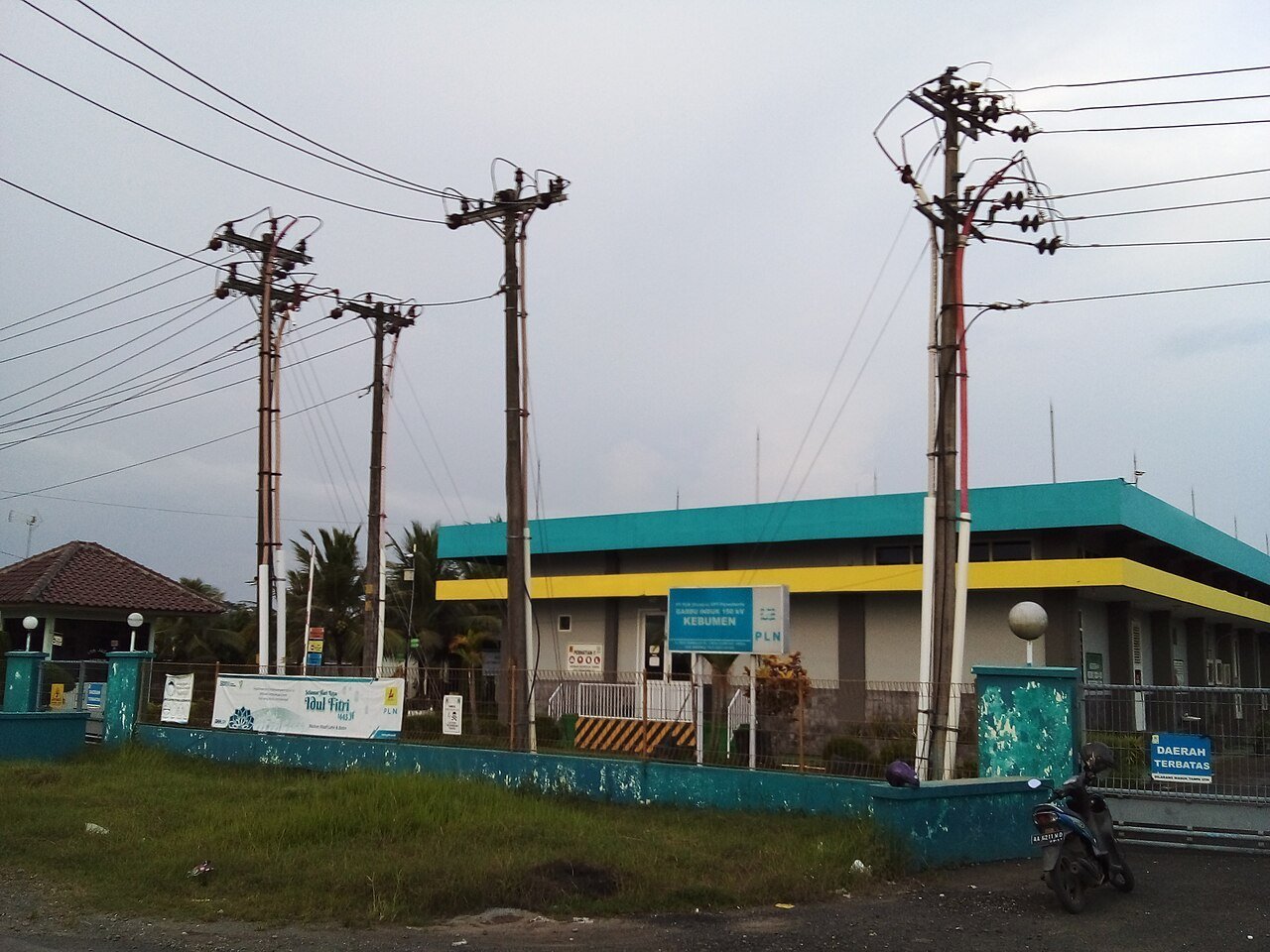
On Friday 21 March 2025, Heathrow Airport in London closed for the whole day after a large fire broke out at an electrical substation in Hayes, west London, that supplied the airport. The same fire left more than 16,300 homes without power and led to about 150 people being evacuated from the surrounding area. London Fire Brigade sent ten fire engines and around 70 firefighters, and the cause of the fire was still under investigation (Patnistik, 2025).
At the time of writing we have not found an official report on the cause, so we do not link the event to any particular type of failure. What it does offer is a reminder that a single substation or transformer can be the one point that stops an entire operation. Many factories and buildings in Indonesia run their own distribution transformers, and one way to monitor the health of an oil-filled transformer is dissolved gas analysis (DGA). This article explains the concept, the steps, a worked example and the limits of the method.
The Basic Idea
The insulating oil and paper inside a transformer break down gradually when exposed to excess heat or electrical discharge. The breakdown products are gases that dissolve in the oil. An oil sample is analysed in a laboratory, usually by gas chromatography, to measure each gas, and online monitors fitted directly to the transformer are also available (Bakar et al., 2014).
Each type of fault produces a typical gas pattern. Hydrogen dominates in partial discharge, methane and ethane in low-temperature overheating, ethylene in high-temperature overheating, and acetylene in arcing or high-energy discharge. Carbon monoxide and carbon dioxide indicate that the paper insulation is also degrading (Duval, 2002). IEC 60599 gives guidance on interpreting these gas levels for mineral oil-filled equipment, including power and distribution transformers (International Electrotechnical Commission [IEC], 2022).
Applying the Method
- Take the oil sample with containers and handling that stop gas escaping or air getting in, because a contaminated sample gives misleading results (Bakar et al., 2014).
- Have the key gases measured by a competent laboratory, and record the transformer's load and temperature at the time of sampling.
- Compare with previous results. The rate at which gases increase is often more meaningful than a single value (IEC, 2022).
- Interpret the pattern with more than one method, for example the key gas method, ratio methods and the Duval triangle (Bakar et al., 2014).
- Decide what to do next, such as sampling again sooner, adding other tests, or scheduling an internal inspection. IEC 60599 stresses that interpretation is guidance only and that action still requires engineering judgement (IEC, 2022).
A Worked Example
The figures below are invented for illustration. Suppose the laboratory reports 60 ppm methane, 120 ppm ethylene and 2 ppm acetylene, a total of 182 ppm for the three gases. The Duval triangle uses their relative percentages: 33 percent methane, 66 percent ethylene and 1.1 percent acetylene. A point with ethylene above 50 percent and acetylene below 15 percent falls in zone T3, a thermal fault above 700 °C (Duval, 2002).
This reading does not show which part of the transformer is hot. In a real case the next step would be to look at the trend, the connections and the load conditions, and then decide whether the transformer needs further inspection.
Limits of the Method
DGA indicates the type of fault, not its location. Different interpretation methods can also give different diagnoses for the same sample, and some samples fall outside every category (Bakar et al., 2014). The method does not replace electrical protection, fire protection or routine inspection of the installation.
What It Means
In our view the value of DGA lies in time. Many transformer faults develop slowly, and periodic monitoring creates a chance to act before a small fault becomes major damage. We also see that at many workplaces the transformer is treated as an asset of the utility or a contractor, so its oil sampling history is never collected. Yet Minister of Manpower Regulation No. 12 of 2015 on electrical occupational safety and health in the workplace requires employers or managers to apply electrical OHS, including maintenance and the inspection and testing of installations (Kementerian Ketenagakerjaan [Kemnaker], 2015). DGA can be one piece of evidence for that maintenance.
The limits of this article should be stated. The worked example is invented, and we do not discuss gas limits for each type of transformer, because, as IEC 60599 indicates, appropriate values depend on the age, design and history of the equipment.
Practical Steps
- List every oil-filled transformer on site, including those run by contractors, with their age and repair history.
- Schedule periodic DGA and keep the results in a single trend record.
- Decide who interprets the results and who has the authority to take a transformer out of service.
- Link DGA results to the emergency response plan and business continuity plan, especially where one transformer feeds a critical process.
Nusa Safety Support
Nusa Safety can help review the condition of an installation, including transformer maintenance records, through its Electrical System Assessment. Electrical safety training and coordination of statutory equipment inspection are delivered with licensed PJK3 partners. Nusa Safety issues internal training certificates only and is not a PJK3.
This article is general information and not legal or professional advice for any specific case.
References
- Bakar, N., Abu-Siada, A., & Islam, S. (2014). A review of dissolved gas analysis measurement and interpretation techniques. IEEE Electrical Insulation Magazine, 30(3), 39-49. https://doi.org/10.1109/MEI.2014.6804740
- Duval, M. (2002). A review of faults detectable by gas-in-oil analysis in transformers. IEEE Electrical Insulation Magazine, 18(3), 8-17. https://doi.org/10.1109/MEI.2002.1014963
- International Electrotechnical Commission. (2022). Mineral oil-filled electrical equipment in service - Guidance on the interpretation of dissolved and free gases analysis (IEC 60599:2022). https://webstore.iec.ch/en/publication/66491
- Kementerian Ketenagakerjaan Republik Indonesia. (2015). Peraturan Menteri Ketenagakerjaan Nomor 12 Tahun 2015 tentang Keselamatan dan Kesehatan Kerja Listrik di Tempat Kerja [Minister of Manpower Regulation No. 12 of 2015 on electrical occupational safety and health in the workplace]. https://jdih.kemnaker.go.id/peraturan/detail/610/peraturan-menteri-nomor-12-tahun-2015
- Patnistik, E. (2025, March 21). Bandara Heathrow di London ditutup sehari akibat pemadaman listrik [London's Heathrow Airport closed for a day due to a power outage]. Kompas.com. https://www.kompas.com/global/read/2025/03/21/123814470/bandara-heathrow-di-london-ditutup-sehari-akibat-pemadaman-listrik