
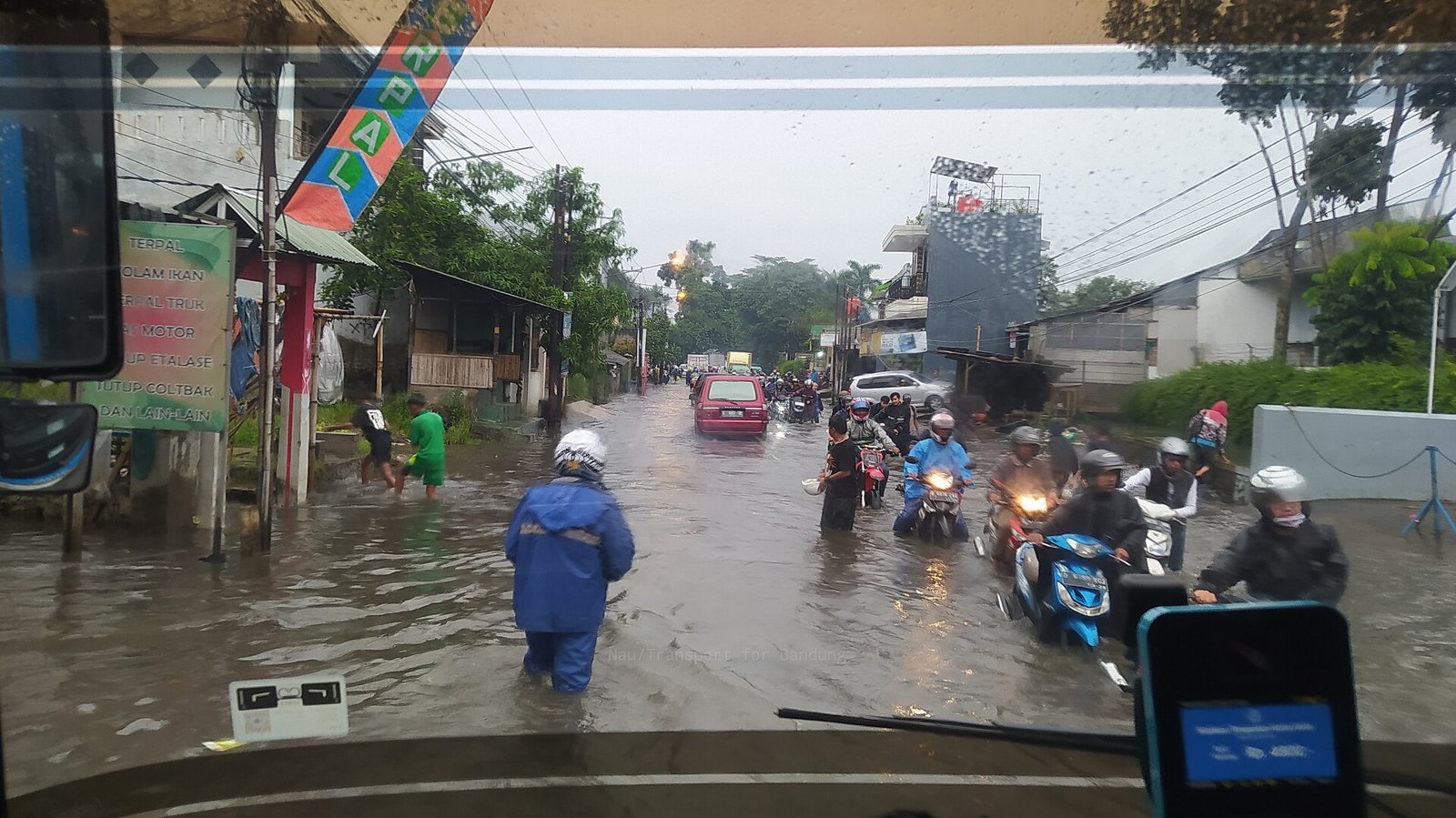
At a press conference on 19 September 2024, the head of Indonesia's Meteorology, Climatology and Geophysics Agency (BMKG) said that most of the country would enter the rainy season in October and November 2024, earlier than the long-term average. The peak was forecast for November and December 2024 in 303 seasonal zones, or 43.35 percent of the total, covering Sumatra, the south coast of Java and Kalimantan, while another 250 zones would peak in January and February 2025 (Mufarida, 2024).
For workplaces, the rainy season brings back the risk of standing water and floods. Attention usually goes to evacuation and to moving stock out of harm's way. One hazard tends to surface only after the water recedes: electrical installations that were submerged and are then switched back on. This literature review asks two questions. How serious is the electrical hazard during and after a flood, and what needs to be confirmed before an installation is energised again? We read research on flood fatalities, guidance from an association of electrical equipment manufacturers and Indonesia's electrical safety regulation.
What Is Known
A study of 13 flood disasters in Europe and the United States recorded 247 deaths. About two thirds were drownings, which leaves a third caused by something else (Jonkman & Kelman, 2005). An analysis of 70 deaths from Hurricane Harvey in 2017 found that 81 percent of victims drowned and 19 percent died from indirect causes. Electrocution and lack of access to medical treatment each accounted for four deaths. The authors stress that rescue, clean-up and recovery carry their own risks, including electrocution and carbon monoxide poisoning (Jonkman et al., 2018).
On the equipment side, guidance from the National Electrical Manufacturers Association [NEMA] states that electrical equipment exposed to water can be extremely hazardous if it is re-energised without a proper evaluation. Floodwater is often contaminated with chemicals, sewage, oil and debris that degrade insulation, and seawater leaves a corrosive, conductive residue. The guidance sorts equipment into two groups. Moulded-case circuit breakers, low-voltage fuses, switches, dry-type transformers and ground-fault and arc-fault circuit interrupters must be replaced. Panelboards and switchboards may be reconditioned after consulting the manufacturer. Evaluation is done by qualified personnel using visual inspection, operational tests and performance tests such as insulation resistance measurement and infrared thermography (NEMA, 2019).
Where Findings Diverge
Fatality data and technical guidance seem to send different messages. In the death counts, electrocution is a small fraction compared with drowning, while the manufacturers treat submerged equipment as a serious hazard that calls for replacing many components. We read this as a difference in coverage rather than a contradiction. The Harvey data cover only victims recovered in the first two weeks, and the authors themselves recommend recording longer-term impacts and standardising data collection (Jonkman et al., 2018). Injuries when installations are re-energised, which can happen weeks later and often at workplaces, are unlikely to be captured in data of that kind.
Both fatality studies also come from Europe and the United States, where installation standards, settlement patterns and recording systems differ from Indonesia's. Their figures cannot simply be transferred to local conditions.
The Local Evidence Gap
In our search we did not find national data that separate electrical injuries and deaths during and after floods at Indonesian workplaces. Without that evidence, the decision to restore power at many sites rests on judgement, such as waiting until a panel looks dry.
The regulation does offer a footing. Minister of Manpower Regulation No. 12 of 2015 on Electrical Occupational Safety and Health in the Workplace requires employers or managers to implement electrical safety (Article 2). Its scope covers planning, installation, use, modification and maintenance, as well as inspection and testing, for installations above 50 volts AC or 120 volts DC (Article 4). These activities must follow standards, including SNI and international standards (Article 5), be carried out by an electrical safety expert (Ahli K3 Listrik) employed by the company or by a licensed safety service company (PJK3) (Article 6(3)), and include inspection and testing at each stage (Article 9(3)) (Kementerian Ketenagakerjaan [Kemnaker], 2015). In our reading, restoring a flooded installation counts as maintenance or modification, which makes inspection and testing before energising part of that obligation rather than an option.
Before Switching On
- Before the rainfall peaks, map switchboards, motors and equipment that sit below past flood levels and consider moving them higher.
- Prepare an energy isolation procedure that names the upstream isolation points, who is authorised to operate them and how to do so without standing in water.
- When water rises, cut the supply from a safe point. During clean-up, treat every conductor as live until proven otherwise.
- Once the water has gone, do not restore power just because a panel looks dry. Have competent personnel carry out visual inspection and insulation resistance testing, and replace the components that manufacturer guidance says must be replaced (NEMA, 2019).
- Record test results, replaced components and the approval to energise as part of maintenance records and the emergency response plan.
How Nusa Safety Helps
Nusa Safety helps companies map how exposed their installations are to flooding through its Electrical System Assessment, and to build flood emergency procedures that are tested through emergency preparedness training and drills. For personnel competence, electrical safety training is available; certified courses are run with licensed PJK3 partners, and Nusa Safety itself issues only internal training certificates.
This article is general information and is not legal or professional advice for any specific case.
References
- Jonkman, S. N., Godfroy, M., Sebastian, A., & Kolen, B. (2018). Brief communication: Loss of life due to Hurricane Harvey. Natural Hazards and Earth System Sciences, 18(4), 1073-1078. https://doi.org/10.5194/nhess-18-1073-2018
- Jonkman, S. N., & Kelman, I. (2005). An analysis of the causes and circumstances of flood disaster deaths. Disasters, 29(1), 75-97. https://doi.org/10.1111/j.0361-3666.2005.00275.x
- Kementerian Ketenagakerjaan Republik Indonesia. (2015). Peraturan Menteri Ketenagakerjaan Nomor 12 Tahun 2015 tentang Keselamatan dan Kesehatan Kerja Listrik di Tempat Kerja [Minister of Manpower Regulation No. 12 of 2015 on Electrical Occupational Safety and Health in the Workplace]. https://jdih.kemnaker.go.id/peraturan/detail/610/peraturan-menteri-nomor-12-tahun-2015
- Mufarida, B. (2024, September 20). BMKG proyeksi puncak musim hujan mulai November 2024, waspada banjir dan tanah longsor [BMKG projects the rainy season peak from November 2024, beware of floods and landslides]. IDX Channel. https://www.idxchannel.com/news/bmkg-proyeksi-puncak-musim-hujan-mulai-november-2024-waspada-banjir-dan-tanah-longsor
- National Electrical Manufacturers Association. (2019). Evaluating water-damaged electrical equipment (NEMA GD 1-2019). https://www.nema.org/Standards/view/Evaluating-Water-Damaged-Electrical-Equipment

