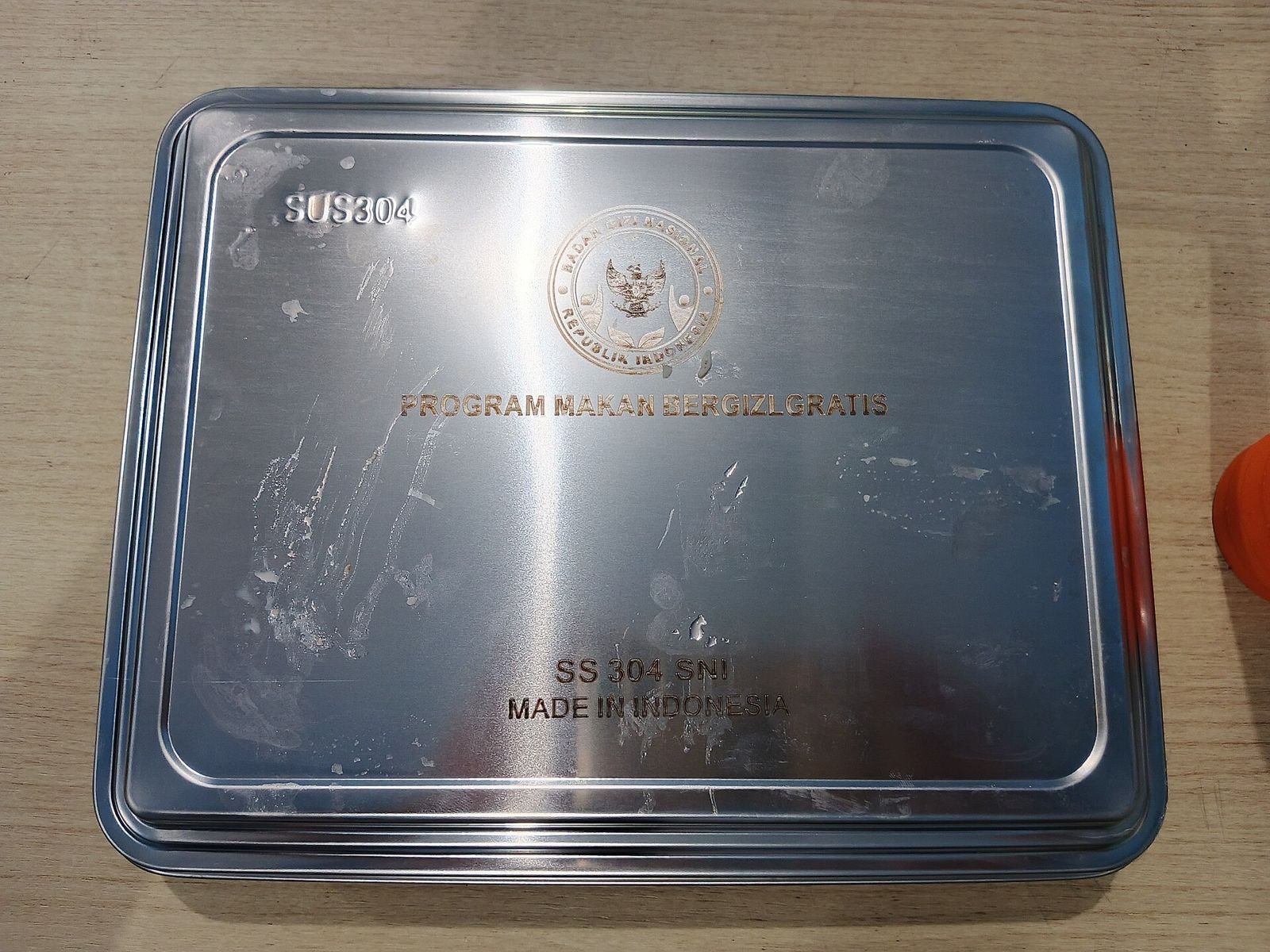
Throughout April 2026, suspected food poisoning linked to kitchens of the national free school meal programme, known as SPPG kitchens, was reported in several regions. In East Jakarta, 72 pupils from four primary schools were admitted to three hospitals after eating a meal from one SPPG kitchen on 2 April, with early suspicion falling on a spaghetti dish (Rachmadina, 2026). In Demak, Central Java, about 180 boarding school students were affected and 70 were admitted after eating food delivered on 18 April. The kitchen already held a hygiene and sanitation certificate (SLHS), the early suspicion was late consumption, and production was halted while laboratory results were awaited (Dikarma, 2026).
Each time this happens, the public waits for one answer: which bacterium or substance was responsible. This literature review asks how often that answer is found, what makes it disappear, and what kitchens can prepare so an investigation does not end without a conclusion.
The Legal Frame
Minister of Health Regulation No. 2 of 2013 on food poisoning outbreaks defines an outbreak as two or more people falling ill with the same or similar symptoms after eating food, where epidemiological analysis proves that food to be the source (Article 1 point 4). A health facility or village head receiving a report must pass it to the community health centre within 1 x 24 hours (Article 3(3)). The agent can be identified from the spread of symptoms and the incubation period, and may be supported by clinical specimens (Article 13(2)), while the district health office must promptly collect, send and test food samples (Article 17(1)). Food handling premises linked to the event must support the epidemiological investigation (Article 12(3)) (Kementerian Kesehatan [Kemenkes], 2013).
This wording matters. In the regulation, an outbreak is established through epidemiological analysis, not through a laboratory result alone (Kemenkes, 2013).
What Is Known
A systematic review of published reports and grey literature from Indonesia between 2000 and 2015 compiled 175 events. Food samples were sent in 78.3 percent of events and supporting laboratory tests were done in 85.6 percent, yet the causative agent was confirmed in only 54.9 percent, with another 38.29 percent classed as suspected. The authors cite late sampling, poor sample handling that damaged samples, and limited laboratory capacity for viruses and histamine. Pathogenic bacteria were the most frequent agent (74.9 percent), and poor processing and improper storage were the main contributing factors (Arisanti et al., 2018).
The same gap appears where surveillance is more mature. From 2009 to 2015, the United States outbreak surveillance system received 5,760 foodborne outbreak reports, but only 2,953 had a single confirmed etiology and only 1,281 had a food that could be assigned to a single category (Dewey-Mattia et al., 2018). From these figures we calculate that about half of the outbreaks had no single confirmed agent.
Lessons From Bantul
An outbreak investigation at a primary school in Bantul in 2023 shows how an investigation can still produce lessons when the laboratory falls short. Active case finding identified 150 cases, followed by a retrospective cohort study. Meatballs were associated with a higher risk of illness (aRR 1.49; 95% CI 1.22 to 1.81), with incubation periods from 1 to 26 hours. Salmonella spp. was suspected, but the laboratory analysis was inconclusive because of sample contamination. The risk factors identified were large-volume refrigerated storage, insufficient reheating and cross-contamination (Iskandar et al., 2024).
The Recurring Gap
Reading this literature, we see two different questions that are often merged. The first is which agent caused the illness, and its answer depends heavily on samples that are appropriate, fresh and well handled. The second is which meal and which step failed, and that can be answered from epidemiological data: who ate what, when it was cooked, when it was dispatched and when it was eaten. Bantul shows that the second question can be answered even when the first cannot (Iskandar et al., 2024).
For mass production kitchens, the second question is the more useful one for prevention. Yet the data to answer it exist only if the kitchen recorded them before the event. The Demak case is also a reminder that a hygiene certificate is a snapshot of fitness at one point in time, while the early suspicion concerned what happened after the food left the kitchen (Dikarma, 2026).
The evidence has limits. The review by Arisanti et al. (2018) relies on reports of uneven quality and ends in 2015, the United States data come from a different system, and Bantul is a single event. We found no study comparing investigation success between kitchens that do and do not retain food samples.
What Kitchens Can Prepare
- Keep a sample of every menu from every batch in a clean, labelled container under refrigeration for several days, so an intact food sample is available when health officers arrive (Arisanti et al., 2018).
- Log the time cooking ends, the time food leaves the kitchen, the time it reaches each recipient and the portions per site, since incubation periods and eating times drive the analysis (Kemenkes, 2013).
- Do not discard leftovers, packaging or raw materials from the day of the event until health officers have finished sampling.
- Name one liaison person and keep recipient lists by menu, so a cohort study like the one in Bantul can start quickly (Iskandar et al., 2024).
- Review reheating, bulk storage and the gap between cooking and eating, because these factors recur across the literature.
How Nusa Safety Helps
Nusa Safety helps production kitchens and caterers turn these steps into written procedures through its technical guidelines and SOP development service, including procedures for retaining food samples and responding to suspected poisoning. Training material for food handlers and kitchen supervisors can be built around local menus and workflows through custom training module development, and time and distribution records can move to digital forms through HSE digitalization. To discuss a specific kitchen, please contact the Nusa Safety team.
This article is general information and not legal or professional advice for any specific case.
References
- Arisanti, R. R., Indriani, C., & Wilopo, S. A. (2018). Kontribusi agen dan faktor penyebab kejadian luar biasa keracunan pangan di Indonesia: Kajian sistematis [Contribution of agents and factors causing foodborne outbreaks in Indonesia: A systematic review]. Berita Kedokteran Masyarakat, 34(3), 99-106. https://doi.org/10.22146/bkm.33852
- Dewey-Mattia, D., Manikonda, K., Hall, A. J., Wise, M. E., & Crowe, S. J. (2018). Surveillance for foodborne disease outbreaks, United States, 2009-2015. MMWR Surveillance Summaries, 67(10), 1-11. https://doi.org/10.15585/mmwr.ss6710a1
- Dikarma, K. (2026, April 21). Sebanyak 180 santri di Demak diduga keracunan MBG, 70 masih dirawat [About 180 students in Demak suspected of school meal poisoning, 70 still hospitalised]. Republika. https://news.republika.co.id/berita/tdtf01409/sebanyak-180-santri-di-demak-diduga-keracunan-mbg-70-masih-dirawat
- Iskandar, S. I., Janah, M., Aryanto, S., & Wiratama, B. S. (2024). Foodborne outbreak investigation in elementary school students in Bantul, Yogyakarta, 2023. Media Kesehatan Masyarakat Indonesia, 20(3), 124-132. https://doi.org/10.30597/mkmi.v20i3.34464
- Kementerian Kesehatan. (2013). Peraturan Menteri Kesehatan Nomor 2 Tahun 2013 tentang Kejadian Luar Biasa Keracunan Pangan [Minister of Health Regulation No. 2 of 2013 on food poisoning outbreaks]. Berita Negara Republik Indonesia Tahun 2013 Nomor 127. https://www.peraturan.go.id/files/bn127-2013.pdf
- Rachmadina, R. (2026, April 4). 72 siswa diduga keracunan MBG masih dirawat di RS, Pramono: Ada yang sudah pulang [72 pupils suspected of school meal poisoning still in hospital]. Kompas.com. https://megapolitan.kompas.com/read/2026/04/04/16065671/72-siswa-diduga-keracunan-mbg-masih-dirawat-di-rs-pramono-ada-yang-sudah