
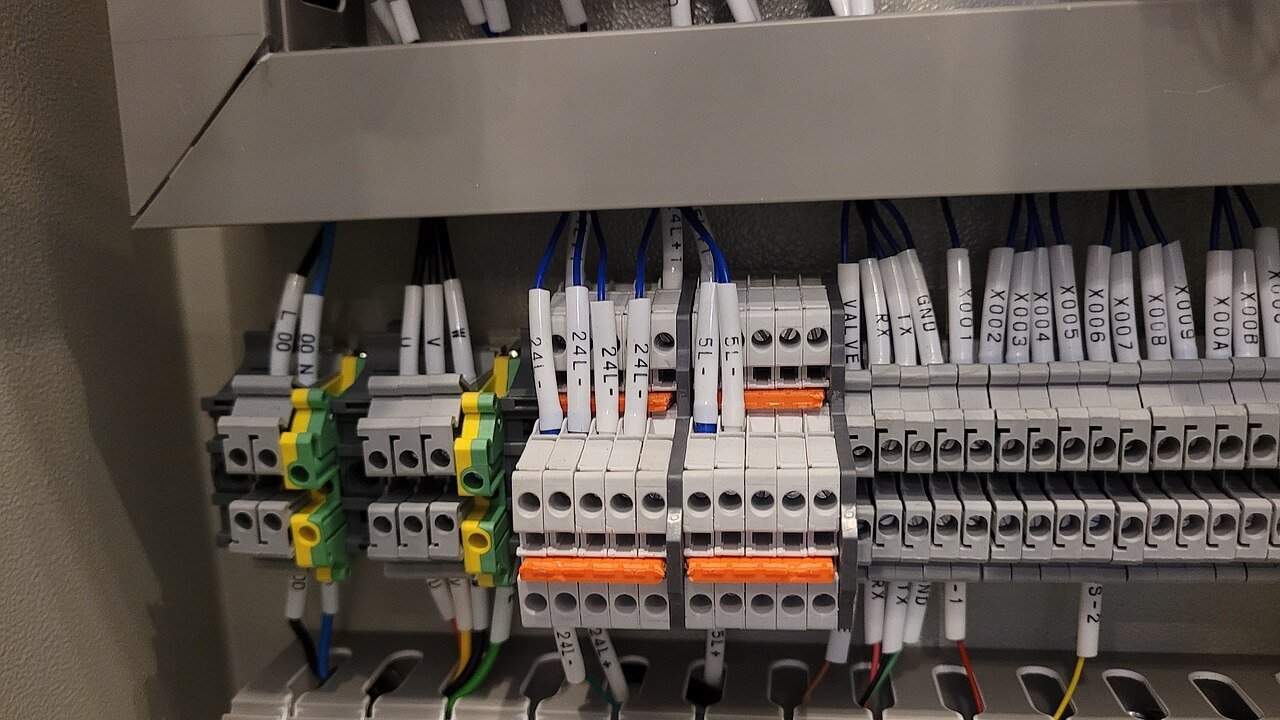
The Jakarta fire and rescue service recorded 1,216 fires between January and August 2026. Of these, 649, or 53.37 percent, were suspected to have an electrical cause, far ahead of the next category, waste burning, with 171 incidents (Suciatiningrum, 2026). The same data show that industrial buildings accounted for only 25 incidents; most fires were in homes. US warehouse data point the same way: electrical distribution or lighting equipment was involved in 19 percent of warehouse fires from 2018 to 2022 and in 22 percent of the direct property damage (McGree, 2025).
Figures like these show how often electricity is recorded as a suspected cause, but say little about conditions inside a plant before a fire. This article draws on our own work to fill part of that gap. In October and November 2026, the Nusa Safety team carried out a Fire Safety and Electrical System Assessment (FS&ESA) for a client with two facilities: a production facility in Central Java and a facility in West Kalimantan. We have deliberately left out the client's identity, precise locations and any data that could point to either site.
The Engagement
The client asked for the assessment on its own initiative, not in response to a fire or an inspector's order, and asked that both facilities be assessed with the same method, criteria and report format so the results could be compared side by side.
The scope covered two fields. Fire safety included fire hazard identification, active and passive protection, means of escape, fire brigade access and emergency readiness. The electrical field covered power supply and distribution, installation condition, protection, earthing and lightning protection. Statutory inspection and testing, which only licensed parties may perform, and arc flash studies were outside the scope.
How We Worked
The work ran in six stages. The first was pre-assessment: each facility completed a questionnaire of about 500 items across eight sheets, covering buildings, fire systems, electrical supply, maintenance, hazardous materials and documents. Any item could be answered "not sure" and checked on site, so nobody had to produce new paperwork.
The second stage was a document review of permits, inspection and test reports, personnel appointments, and the emergency response plan with its drill records. The third was a two-day site assessment at each facility: thermography of panels and motors under load, earth and insulation resistance measurements, lighting measurements, observation of fire protection function tests, and interviews with staff.
The fourth stage was risk rating. We followed the risk identification, analysis and evaluation process of ISO 31000 (International Organization for Standardization [ISO], 2018), using a 5 x 5 likelihood and severity matrix. Scores of 15 to 25 became Priority 1 (critical), 10 to 12 Priority 2, 5 to 9 Priority 3, and 1 to 4 Priority 4. Corrective effort was rated separately: U1 for work the in-house team can finish within 2 weeks, U2 for work that needs procurement or a short planned shutdown within 3 months, and U3 for capital investment or redesign. High effort never lowers the risk priority; it only changes how the response is staged. Every Priority 1 finding needed an interim control within 24 hours of being raised on site.
The fifth stage was a closing meeting at each facility to present preliminary findings, good practices and the action priority matrix. The sixth is our review of each facility's corrective and preventive action plan (CAPA), with a verification visit for Priority 1 and 2 findings in the third or fourth month.
What We Found
At the West Kalimantan facility, the closing meeting recorded several dozen site findings, split roughly evenly between electrical and fire safety. About a third were Priority 1, with the rest spread across Priorities 2 and 3. At the Central Java facility, the electrical findings register held more than a dozen non-conformities, a few of them Priority 1, along with some good practices. All findings are preliminary and may change after data verification and technical review.
Electrical Installations
The first pattern was hot spots. Thermography found overheating at cable terminations in the main low-voltage panel, at contactor terminals in compressor panels, along terminal rows in a production machine panel, and on motors with surface temperatures well above 100°C. In Central Java, a panel showed burn marks inside, with terminations still hot when we checked them. We rated every hot spot above 70°C as Priority 1.
The second pattern was exposed live parts: panels without doors, an outdoor panel with a wide opening, generator battery terminals without covers at both facilities, and loose cable ends without insulation. The third concerned earthing and bonding: a medium-voltage panel with earth resistance above the 5 Ω reference value we use, socket outlets without a protective conductor, a machine frame showing signs of induced voltage, and fuel tanks without bonding at both facilities.
The fourth pattern was the state of electrical rooms: dust inside panels at both sites, old cardboard stored in a panel room, no insulating rubber mats, cable penetrations without fire stopping, cable joints without junction boxes, and breakers switched off without a lock or isolation tag. The rest concerned labels, missing single line diagrams, colour coding and poor lighting in a panel room.
There were good practices too. Earth resistance for the transformer and the lightning protection system in West Kalimantan was below 5 Ω, and the lightning protection earthing in Central Java was in good condition. Permenaker 31/2015 requires lightning protection installations to be inspected and tested by a specialist labour inspector or a company electrical safety expert (Kementerian Ketenagakerjaan [Kemnaker], 2015b), so good readings still need a valid statutory report behind them.
Fire Protection
The fire safety patterns in this section and the next come mainly from the West Kalimantan facility. The most serious finding was the absence of automatic fire detection and alarm in several higher-risk areas, including warehouses, panel rooms and the workshop. At that facility, it was the only finding we rated U3. Some areas also lacked manual call points and emergency lighting. Regulation PER.02/MEN/1983 on automatic fire alarm installations requires weekly, monthly and annual maintenance and testing (Article 57) (Departemen Tenaga Kerja, 1983), so a new installation also brings a new maintenance load.
Portable fire extinguishers showed a familiar pattern: none in the substation and transformer room, spacing of more than 15 metres in some corridors and warehouses, wrong mounting heights, pressure outside the normal range, and units blocked by pallets. Regulation PER.04/MEN/1980 sets a maximum spacing of 15 metres (Article 4(5)), places the top of the extinguisher at 1.2 m above the floor (Article 8), and requires inspection twice a year (Article 11) (Departemen Tenaga Kerja dan Transmigrasi, 1980).
On the passive side, cable penetrations into panels and the switchgear room had not been sealed with fire stopping. Ministerial Regulation 26/PRT/M/2008 sets technical requirements for means of escape and for passive and active fire protection in buildings, from design through to use (Kementerian Pekerjaan Umum, 2008).
Materials and Escape
The next group concerned combustible materials and exits. We found workshop housekeeping that mixed plastic, paper and chemicals; a chemical stored right next to a fuel tank with no separation; a tank without secondary containment; unsecured gas cylinders; a gas line without a flashback arrestor; and forklift charging next to stacked material. On the escape side there were locked exit doors without push bars, an inadequate exit route in production, an escape route blocked by goods, a staircase with a handrail on one side only, and signs pointing the wrong way. A safe assembly point was already in place.
For emergency organisation, our recommendations stressed drills that involve every shift, including the night shift. Decree KEP.186/MEN/1999 on workplace fire response units requires regular fire drills, a written emergency plan for workplaces with more than 50 workers or with medium or high fire risk (Article 2(2)), and at least 2 fire wardens for every 25 workers (Article 6(1)) (Departemen Tenaga Kerja, 1999).
Reading the Pattern
Here the electrical and fire findings were hard to separate. The same panel room held an ignition source in the form of hot terminations, fuel in the form of dust and cardboard, a spread path through unsealed cable penetrations, and no detector to give early warning. Babrauskas (2022) describes two main mechanisms by which electric current ignites fires: arcing or sparking, and hot surfaces. Both appear in our findings list.
Loose connections are the clearest example. An investigation of an electrical cabinet fire by Zhang et al. (2025) concluded that poor electrical contact was the primary cause. Their simulation showed that the temperature rise from poor contact can reach 1,040°C and that thermal stress can move a busbar by 6.2 mm until it touches another phase. The hot spots above 70°C that we measured are far from that, but the direction is the same: a connection that heats up tends to get worse if nothing is done. Because the heat appears while equipment is running, thermography can pick it up without contact (Ukiwe et al., 2023).
Why did the same pattern appear at two facilities so far apart? In our view, maintenance at both was organised around availability: machines get fixed when they stop. Slow deterioration, such as terminations working loose or dust building up, goes unrecorded because it does not stop production. NFPA 70B, which became a standard rather than a recommended practice with its 2023 edition, treats the condition of maintenance of electrical equipment as the basis for the safety of the people who work on it (Hannahs, 2023). Indonesian rules already set a floor. Permenaker 12/2015 requires periodic inspection of electrical installations at least once a year and periodic testing at least once every five years (Article 11) (Kemnaker, 2015a). An annual inspection captures one day, and hot spots can develop between two of them.
The spread of corrective effort supports that reading. In West Kalimantan, most findings were rated U1, a smaller share U2, and only one group needed capital investment (U3). Several Priority 1 findings could be closed with low effort, such as replacing socket outlets in a wet area, bonding a fuel tank, sealing cable openings in a panel, chaining gas cylinders and moving a chemical away from the fuel tank. Most of the gaps, in other words, were not waiting for a capital budget.
Where Evidence Stops
This case study has limits that should be read alongside the findings. First, it is one engagement with two facilities, so the pattern cannot be generalised statistically. Second, the findings reflect conditions on the assessment days; thermography depends heavily on the load at the time of measurement, and areas we could not access are not recorded. Third, the picture comes from preliminary findings, and for the Central Java facility we describe only the electrical side. To protect confidentiality, we describe finding counts in general terms only. Fourth, reference values such as 70°C for hot spots and 5 Ω for earthing are working criteria we use, not single thresholds set by regulation. Finally, the Jakarta and US data above concern suspected causes in other building types and serve only as background.
Lessons for Others
The most useful lesson came from the client's own approach. It asked for the assessment before anything had happened, accepted the findings at the closing meetings, agreed interim controls for Priority 1 findings, and is now following up through CAPA with a verification visit scheduled. Other facilities could consider the following steps:
- Rate risk and effort separately, then close the high-risk, low-effort findings first: cover open panels, clear storage out of electrical rooms, seal cable penetrations, unlock exit doors and clear access to extinguishers.
- Make thermography of main and machine panels a periodic check with temperatures recorded over time, not a one-off survey.
- Complete statutory inspection and testing of electrical and lightning protection installations with a company electrical safety expert and a licensed PJK3, as required by Permenaker 12/2015 and Permenaker 31/2015 (Kemnaker, 2015a, 2015b).
- Schedule extinguisher inspections and alarm tests at the frequencies in PER.04/MEN/1980 and PER.02/MEN/1983, and keep the records.
- Review the emergency plan, the number of fire wardens and drills on every shift against KEP.186/MEN/1999.
- Use one set of criteria for all sites so results can be compared, and bring CAPA status into the OHS management review.
For low-voltage installations in industrial premises, PUIL 2020 (SNI 0225:2020) is a mandatory standard (Kementerian Energi dan Sumber Daya Mineral [Kementerian ESDM], 2021), so corrective work that touches design and installation should be done by installers working to that standard.
Working With Us
Nusa Safety helps companies assess fire protection and emergency readiness through its Fire & Emergency Safety Audit (FESA) and the condition of electrical installations, including thermography and earthing, through its Electrical System Assessment. As a third party, the Nusa Safety team builds risk-based findings, reviews CAPA and verifies close-out. Statutory inspection and testing is coordinated through our riksa uji service with licensed PJK3 partners, and emergency drills can be designed through emergency preparedness training and drills. Nusa Safety does not issue competency certificates, licences or statutory inspection certificates.
Details of this case study have been anonymised to protect client confidentiality, and this article is general information, not legal or professional advice for any specific case.
References
- Babrauskas, V. (2022). Minimum values of voltage, current, or power for the ignition of fire. Fire, 5(6), 201. https://doi.org/10.3390/fire5060201
- Departemen Tenaga Kerja dan Transmigrasi. (1980). Peraturan Menteri Tenaga Kerja dan Transmigrasi Nomor PER.04/MEN/1980 tentang Syarat-syarat Pemasangan dan Pemeliharaan Alat Pemadam Api Ringan [Regulation on the installation and maintenance of portable fire extinguishers]. https://www.its.ac.id/burb/wp-content/uploads/sites/106/2023/07/PER.04-1980-APAR.pdf
- Departemen Tenaga Kerja. (1983). Peraturan Menteri Tenaga Kerja Nomor PER.02/MEN/1983 tentang Instalasi Alarm Kebakaran Automatik [Regulation on automatic fire alarm installations]. https://betterwork.org/wp-content/uploads/781-3-Per-02_MEN_1983-Tentang-Instalasi-Alarm-Kebakaran-Automatik.pdf
- Departemen Tenaga Kerja. (1999). Keputusan Menteri Tenaga Kerja Nomor KEP.186/MEN/1999 tentang Unit Penanggulangan Kebakaran di Tempat Kerja [Decree on fire response units in the workplace]. https://jdih.kemnaker.go.id/peraturan/detail/3122/keputusan-menteri-tenaga-kerja-nomor-186-tahun-1999
- Hannahs, C. (2023, March 8). Safely maintain electrical equipment according to NFPA 70B. National Fire Protection Association. https://www.nfpa.org/news-blogs-and-articles/blogs/2023/03/08/nfpa-70b-is-a-critical-tool-for-reliability-and-safety
- International Organization for Standardization. (2018). ISO 31000:2018 Risk management, guidelines. https://www.iso.org/standard/65694.html
- Kementerian Energi dan Sumber Daya Mineral. (2021). Peraturan Menteri Energi dan Sumber Daya Mineral Nomor 7 Tahun 2021 tentang Standardisasi di Bidang Ketenagalistrikan dan Pembubuhan Tanda Standar Nasional Indonesia dan/atau Tanda Keselamatan [Regulation on electricity standardisation and SNI and safety marking]. https://jdih.esdm.go.id/storage/document/Permen%20ESDM%20No.%207%20Tahun%202021.pdf
- Kementerian Ketenagakerjaan Republik Indonesia. (2015a). Peraturan Menteri Ketenagakerjaan Nomor 12 Tahun 2015 tentang Keselamatan dan Kesehatan Kerja Listrik di Tempat Kerja [Regulation on electrical occupational safety and health in the workplace]. Berita Negara Republik Indonesia Tahun 2015 Nomor 540. https://jdih.kemnaker.go.id/peraturan/detail/610/peraturan-menteri-nomor-12-tahun-2015
- Kementerian Ketenagakerjaan Republik Indonesia. (2015b). Peraturan Menteri Ketenagakerjaan Nomor 31 Tahun 2015 tentang Perubahan atas Peraturan Menteri Tenaga Kerja Nomor PER.02/MEN/1989 tentang Pengawasan Instalasi Penyalur Petir [Amendment to the regulation on lightning protection installations]. https://jdih.kemnaker.go.id/peraturan/detail/1154/peraturan-menteri-nomor-31-tahun-2015
- Kementerian Pekerjaan Umum. (2008). Peraturan Menteri Pekerjaan Umum Nomor 26/PRT/M/2008 tentang Persyaratan Teknis Sistem Proteksi Kebakaran pada Bangunan Gedung dan Lingkungan [Regulation on technical requirements for fire protection systems in buildings]. https://peraturan.bpk.go.id/Details/104475/permen-pupr-no-26-prtm2008
- McGree, T. (2025). Warehouse structure fires. National Fire Protection Association. https://www.nfpa.org/education-and-research/research/nfpa-research/fire-statistical-reports/warehouse-structure-fires
- Suciatiningrum, D. (2026, September 22). Jakarta membara, kasus kebakaran tembus 1.216 hingga Agustus 2026 [Jakarta ablaze: fire cases pass 1,216 by August 2026]. IDN Times. https://www.idntimes.com/news/indonesia/jakarta-membara-kasus-kebakaran-tembus-1-216-hingga-agustus-2026-00-481xk-1qcgvh
- Ukiwe, E. K., Adeshina, S. A., & Tsado, J. (2023). Techniques of infrared thermography for condition monitoring of electrical power equipment. Journal of Electrical Systems and Information Technology, 10(1), 49. https://doi.org/10.1186/s43067-023-00115-z
- Zhang, J., Li, C., Su, G., & Mi, W. (2025). Case study on investigation of electrical cabinet fire caused by poor electrical contact. Fire, 8(11), 412. https://doi.org/10.3390/fire8110412

