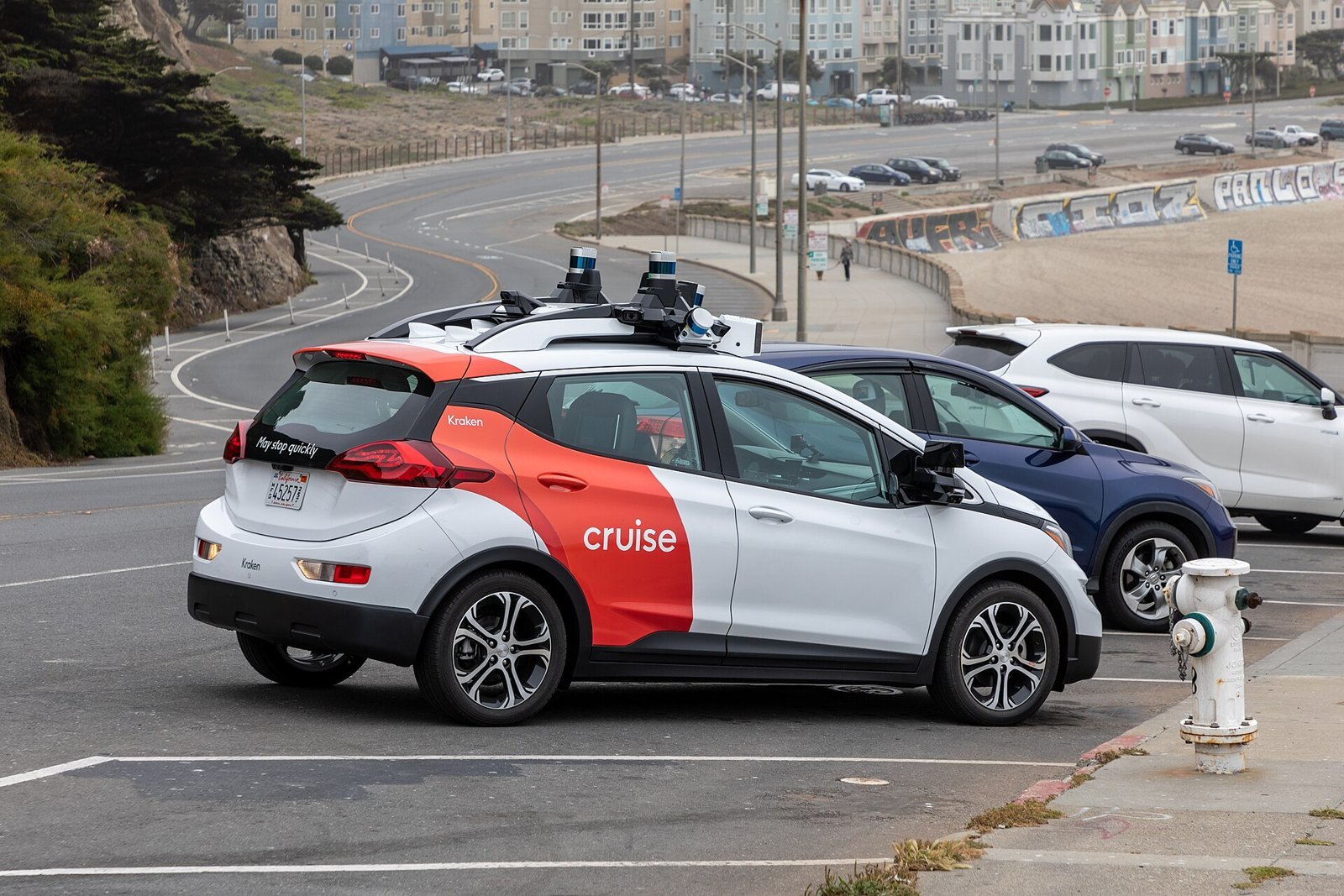
On 14 November 2024, the US Attorney's Office for the Northern District of California announced a deferred prosecution agreement with a San Francisco autonomous vehicle company. The company admitted that it had given the National Highway Traffic Safety Administration (NHTSA) an inaccurate and incomplete report about a crash involving one of its robotaxis, and agreed to pay a US$500,000 criminal fine (Bellan, 2024; Fang, 2024). The three-year agreement requires cooperation with government investigations, a safety compliance programme and annual reports to the prosecutors. In September 2024, NHTSA had already imposed a US$1.5 million penalty because the same crash was not fully reported (Bellan, 2024).
The case matters for occupational safety in Indonesia because workplaces increasingly use systems that make their own decisions, from automated vehicles and forklifts to sensors and incident reporting apps. This case study draws on the investigation report that the company's boards commissioned from the law firm Quinn Emanuel, which includes a technical root cause analysis by the engineering firm Exponent as an appendix, and on official regulator statements. We do not name the victim.
What Happened
On the night of 2 October 2023 in San Francisco, a human-driven car struck a pedestrian in a crosswalk and threw her into the path of an autonomous vehicle in the next lane. The autonomous vehicle hit the pedestrian, stopped briefly, then moved off again to pull over, reaching up to 7.7 miles per hour and travelling about 20 feet while dragging her beneath the vehicle (Quinn Emanuel Urquhart & Sullivan, 2024). On 24 October 2023, the California Department of Motor Vehicles [DMV] suspended the company's driverless permits, citing among other grounds that its vehicles were not safe for public operation and that the company had misrepresented safety information (California DMV, 2023).
Technical Factors
Exponent found that classification and tracking of the pedestrian became intermittent after she was hit by the first car. At the moment of impact she was largely hidden from the lidar sensors, so the tracking data used by the collision detection system did not reflect her actual position. The system concluded that the impact was to the side rather than the front. That wrong conclusion is identified as the root cause of the post-collision movement, because a side impact triggered a milder response, pulling over to the outermost lane, instead of an emergency stop. The vehicle came to a final stop about 8.8 seconds after first contact, after wheel speed sensors detected an anomaly. Exponent also judged that the initial impact was probably unavoidable, even for a reasonable human driver (Quinn Emanuel Urquhart & Sullivan, 2024).
Organisational Factors
The report found that by the morning of 3 October, company leaders and more than 100 employees knew that the vehicle had dragged the pedestrian about 20 feet. In meetings with regulators that day, the company played the full video and let it speak for itself without explaining the pull-over and the dragging, although internet connection problems probably kept regulators from seeing the video clearly in three of those meetings. Leaders were also fixated on correcting media reports that the autonomous vehicle had caused the initial collision. The report attributes the failings to poor leadership, mistakes in judgement, lack of coordination, an us-versus-them attitude toward regulators and a misunderstanding of obligations of accountability and transparency, while finding no evidence of intent to mislead (Quinn Emanuel Urquhart & Sullivan, 2024). According to prosecutors, the one-day report to NHTSA omitted the dragging, and a follow-up report 10 days later did not correct it (Fang, 2024).
Analysis and Lessons
We read this case as two failures in different layers. The first is system logic: the post-collision response depended on a classification produced from incomplete sensor data. In our view, the principle to test in any automated system at work is how it responds when data are uncertain, whether it falls back to the safest state or carries on with its task. The second layer is reporting. A faulty algorithm can be fixed, but an incomplete report costs the trust of regulators and the public, and in this case it became the basis for sanctions from more than one agency.
In Indonesia, Minister of Manpower Regulation No. PER.03/MEN/1998 on Accident Reporting and Investigation Procedures requires managers or employers to report every accident, including other dangerous occurrences (Article 2), in writing within 2 x 24 hours, with an oral report allowed first (Article 4) (Departemen Tenaga Kerja [Depnaker], 1998). The practical lessons we draw:
- Test failure scenarios in automated systems, including what happens when sensors are blocked or an object cannot be classified.
- Preserve complete system logs after an incident, and decide who is authorised to read them.
- Make sure incident report forms, including those in OHS apps, capture follow-on events and allow recorded corrections when new facts emerge.
- Keep media communication separate from reports to inspectors, and state facts that are unfavourable to the company explicitly.
The limits of this case study should be noted. The investigation report was commissioned by the company itself, and the regulatory framework is that of the United States.
How Nusa Safety Helps
Nusa Safety helps companies design complete and traceable digital incident reporting workflows through its HSE digitalisation and custom HSSE software services. Internal investigation teams can be trained to examine both technical and organisational factors through incident investigation and root cause analysis training.
This article is general information and is not legal or professional advice for any specific case.
References
- Bellan, R. (2024, November 15). GM's Cruise to pay $500,000 fine to DOJ, admits submitting false report. TechCrunch. https://techcrunch.com/2024/11/15/gms-cruise-to-pay-500000-fine-to-doj-admits-submitting-false-report/
- California Department of Motor Vehicles. (2023, October 24). DMV statement on Cruise LLC suspension. https://www.dmv.ca.gov/portal/news-and-media/dmv-statement-on-cruise-llc/
- Departemen Tenaga Kerja. (1998). Peraturan Menteri Tenaga Kerja Nomor PER.03/MEN/1998 tentang Tata Cara Pelaporan dan Pemeriksaan Kecelakaan [Minister of Manpower Regulation No. PER.03/MEN/1998 on Accident Reporting and Investigation Procedures]. https://jdih.kemnaker.go.id/peraturan/detail/2214/peraturan-menteri-tenaga-kerja-nomor-3-tahun-1998
- Fang, T. (2024, November 14). Cruise admits to false report in 2023 dragging of San Francisco pedestrian. CBS News Bay Area. https://www.cbsnews.com/sanfrancisco/news/cruise-automation-admits-false-report-sf-pedestrian-dragging/
- Quinn Emanuel Urquhart & Sullivan. (2024). Report to the Boards of Directors of Cruise LLC, GM Cruise Holdings LLC, and General Motors Holdings LLC regarding the October 2, 2023 accident in San Francisco (Attachment A to Cruise LLC's informational filing with the California Public Utilities Commission, January 25, 2024). https://docs.cpuc.ca.gov/PublishedDocs/Efile/G000/M524/K929/524929444.PDF