On the night of Saturday 25 November 2023, two security guards at a glove factory in Jambidan, Banguntapan, Bantul, checked the windows and doors of the production room at 20.35, after employees had worked overtime until 20.00 to meet an export target. Shortly after the guards returned to their post, an explosion was heard from the production room, followed by flames. The fire was out by 24.00 and cooling continued until 01.15. Police said no one was killed, while the material losses were still under investigation (Pertana, 2023).
The cause of that fire is not yet known and no official report is available, so we do not discuss it further. It does, however, raise a question rarely asked in sustainability reports: how likely is a single fire to stop a business altogether? To explore it, we turn to a case whose official investigation is complete, the 2019 fire at the Philadelphia Energy Solutions (PES) refinery in the United States.
The Event
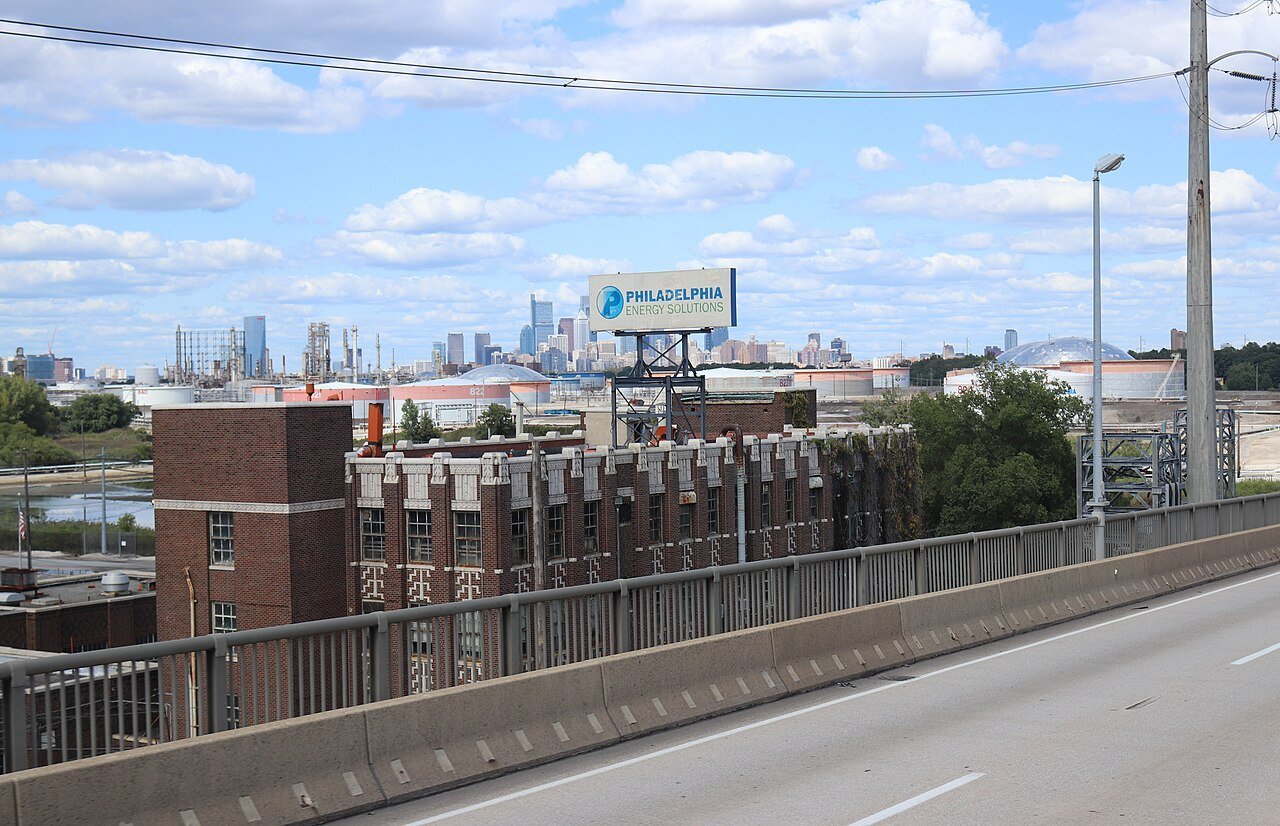
According to the final report of the U.S. Chemical Safety and Hazard Investigation Board, released on 11 October 2022, a pipe elbow in the PES hydrofluoric acid (HF) alkylation unit ruptured on the morning of 21 June 2019. A vapour cloud made up mostly of propane engulfed part of the unit and ignited two minutes later. The operator activated the rapid acid deinventory system, which drained about 339,000 pounds of HF to a separate drum, but the pumps feeding the HF mitigation water cannons could not be started remotely because control system communication and the backup power supply had failed. Three explosions followed, and a vessel fragment weighing about 38,000 pounds was thrown across the river. About 40 minutes into the release a worker started the pump manually (U.S. Chemical Safety and Hazard Investigation Board [CSB], 2022).
An estimated 3,271 pounds of HF reached the atmosphere, five workers and a firefighter suffered minor injuries, and property damage was estimated at 750 million US dollars. Five days later PES announced that the refining complex, which employed about 1,026 people, would shut down. The company filed for bankruptcy again in July 2019, and the refinery was later sold to a redevelopment firm that, when the report was published, was demolishing it (CSB, 2022).
Causal Factors
The CSB concluded that the cause was the rupture of a steel pipe elbow with high nickel and copper content that HF had corroded faster than the components around it. Its wall, 0.322 inch thick when installed in 1973, was 0.011 inch at its thinnest. A contributing factor was the absence of any requirement to inspect all existing piping components after the industry began, in 2003, to quantify the nickel and copper levels considered safe for HF service. Severity was increased by the lack of remotely operated emergency isolation valves and by damage the event itself did to the water mitigation system (CSB, 2022).
Reading the Hierarchy
The CSB used the hierarchy of controls and the distinction between active and passive safeguards to interpret this case. Active safeguards, which need a person or technology to trigger them, proved able to fail in a major fire and explosion, as the PES water mitigation system did when the controls and power it relied on were damaged. The report also urged evaluation of inherently safer designs, such as alkylation technologies that do not use HF (CSB, 2022).
We would add one reading. Of the two kinds of barrier, the preventive one, mechanical integrity, failed because new knowledge about a hazard was not turned into re-inspection of old assets, and the mitigating one failed because remote isolation had never been installed. Both were asset management decisions made years before the event, not errors by operators that morning.
From an ESG standpoint, the striking point is the gap between injury figures and business impact. The GRI 403 disclosure standard asks companies to report, among other things, work-related injuries and their rates (Global Reporting Initiative [GRI], 2018). In our view, an event with only minor injuries such as PES barely registers in indicators like these, yet it ended the refinery's operations. We also note that PES had already been through bankruptcy in January 2018 (CSB, 2022), so the closure cannot be attributed to the fire alone.
Lessons for Plants
- Re-examine old assets whenever new knowledge or standards about their hazards emerge, not only newly installed equipment (CSB, 2022).
- Make sure large inventories of flammable material can be isolated from a safe distance without approaching them (CSB, 2022).
- Protect active safeguards, including control cables, power supplies and pumps, from the very fires and explosions they are meant to suppress (CSB, 2022).
- Include major fire scenarios in business impact analysis and business continuity planning (International Organization for Standardization [ISO], 2019).
- Report process safety events and fires alongside injury statistics in sustainability reports (GRI, 2018).
How Nusa Safety Helps
Nusa Safety helps companies test the strength of their layers of protection through Process Safety Management Review and HAZOP and LOPA Studies. For manufacturing plants, the reliability of fire protection and emergency readiness can be examined through a Fire and Emergency Safety Audit (FESA) and practised through Emergency Preparedness and Drills. Nusa Safety issues internal training certificates only and is not a PJK3.
This article is general information and not legal or professional advice for any specific case.
References
- Global Reporting Initiative. (2018). GRI 403: Occupational health and safety 2018. https://www.globalreporting.org/pdf.ashx?id=12565
- International Organization for Standardization. (2019). Security and resilience - Business continuity management systems - Requirements (ISO Standard No. 22301:2019). https://www.iso.org/standard/75106.html
- Pertana, P. R. (2023, November 26). Kebakaran pabrik sarung tangan di Pleret Bantul, sempat ada ledakan [Glove factory fire in Pleret, Bantul, preceded by an explosion]. detikJogja. https://www.detik.com/jogja/berita/d-7056780/kebakaran-pabrik-sarung-tangan-di-pleret-bantul-sempat-ada-ledakan
- U.S. Chemical Safety and Hazard Investigation Board. (2022). Investigation report: Fire and explosions at Philadelphia Energy Solutions refinery hydrofluoric acid alkylation unit (Report No. 2019-04-I-PA). https://www.csb.gov/philadelphia-energy-solutions-pes-refinery-fire-and-explosions-/