
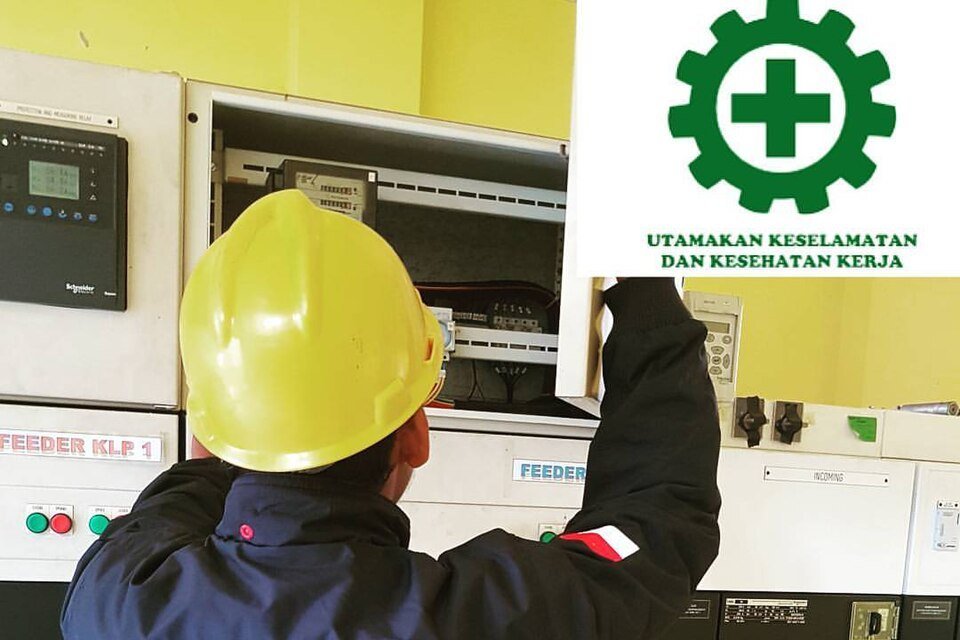
On 22 January 2026, Indonesia's Minister of Manpower said that today's occupational safety and health challenge is not only compliance with rules but also mistaken mindsets and safeguards that do not work. He said that about 80 percent of accident sequences are often attributed to human error, yet only about 30 percent of that share is purely individual error, while 70 percent stems from weaknesses in organisation and work systems. Companies were asked to audit and improve their OHS systems regularly and to close risk findings fully rather than stop at documents (Hayat, 2026).
The statement touches an old question for OHS management systems: does a system that looks complete on paper actually change conditions on the ground? This review reads two studies that approach the question from different directions, one survey in Indonesia and one case study in Denmark.
Research Context
In Indonesia, an OHS management system known as SMK3 is mandatory for companies that employ at least 100 people or have a high hazard potential, under Article 5(2) of Government Regulation No. 50 of 2012 on the implementation of OHS management systems (PP 50/2012). Assessment uses tiered criteria, with 64 criteria at the initial level, 122 at the transition level and 166 at the advanced level, and a score of 85 to 100 percent is rated satisfactory (Pemerintah Republik Indonesia, 2012). Because assessment is criteria-based, it is natural for companies to focus on evidence that can be checked.
Two Studies
Mayansara et al. (2025) ran a cross-sectional survey of 110 employees of an electricity company, selected by simple random sampling. SMK3 implementation was measured with a 20-item Likert questionnaire based on PP 50/2012 and analysed with chi-square tests and odds ratios. In all, 59.1 percent of respondents rated SMK3 implementation as poor, and 63.6 percent said their workplace carried a risk of accidents. Poorly rated implementation was significantly associated with accident risk, with an odds ratio of 6.641 (p < 0.001).
Hohnen and Hasle (2011) took a different route. They studied a Danish manufacturing company with a certified and in many ways successful OHS management system and treated it as a critical case. They found that even a compliant system struggled with complex work environment problems. Certification pushed the system to produce measurable and auditable facts, because the system also served to show safety to an outside audience. As a result, it did not always tackle the most urgent issues and could leave out aspects such as psychosocial factors.
Where Evidence Stops
Both studies need careful reading. Mayansara et al. (2025) measured SMK3 implementation and accident risk through employee perceptions at a single point in time, not through accident records. The association does not show cause and effect and was not adjusted for other factors such as job type or length of service. Hohnen and Hasle (2011) studied one company in a country whose oversight system differs from Indonesia's, so their findings explain a mechanism rather than show how often it occurs.
Lessons for Practice
At first glance the studies seem to point in opposite directions: one links SMK3 with lower risk, the other shows certification can shift attention towards what is easy to audit. We read them as two sides of the same problem. Mayansara et al. (2025) measured implementation as employees experience it, not the completeness of documents, and it is that measure that tracks perceived risk. Hohnen and Hasle (2011) explain why the measures auditors use can drift away from what workers experience.
In our view, these findings support the minister's point that improvement must not stop at documents (Hayat, 2026). A high audit score still matters, but it cannot replace a simple question to workers: does this system feel like it works where you do your job?
Recommended Steps
- Pair document audits with worker interviews and field observation, including contractor staff and night shifts.
- Run regular worker perception surveys as a check on audit results, with questions built from the PP 50/2012 elements.
- Measure how many audit findings are closed, not only how many are raised, and recheck whether fixes last.
- Involve workers in hazard identification and performance evaluation, as ISO 45001:2018 requires consultation and participation of workers (International Organization for Standardization [ISO], 2018).
- Set aside management review time for issues that are hard to audit, such as workload, fatigue and psychosocial factors.
How Nusa Safety Helps
Nusa Safety helps companies test the gap between documents and practice through an SMK3 internal audit that combines evidence review, interviews and field observation, and through a safety culture maturity assessment. For companies building or rebuilding their system, the Nusa Safety team also supports SMK3 and ISO 45001 implementation.
This article is general information and not legal or professional advice for any specific case.
References
- Hayat, W. N. (2026, January 26). Menaker ungkap pentingnya K3 bagi pekerja dan perusahaan, simak! [Manpower minister explains why OHS matters for workers and companies]. CNBC Indonesia. https://www.cnbcindonesia.com/news/20260126110026-4-705263/menaker-ungkap-pentingnya-k3-bagi-pekerja-dan-perusahaan-simak
- Hohnen, P., & Hasle, P. (2011). Making work environment auditable: A 'critical case' study of certified occupational health and safety management systems in Denmark. Safety Science, 49(7), 1022-1029. https://doi.org/10.1016/j.ssci.2010.12.005
- International Organization for Standardization. (2018). Occupational health and safety management systems: Requirements with guidance for use (ISO Standard No. 45001:2018). https://www.iso.org/standard/63787.html
- Mayansara, A., Atnang, M., Dwiyanti, D., & Banudi, L. (2025). Risiko kecelakaan kerja: Perspektif pegawai terhadap implementasi sistem manajemen keselamatan dan kesehatan kerja [Work accident risk: Employee perspectives on the implementation of an OHS management system]. Health Information: Jurnal Penelitian, 17(2), 176-186. https://doi.org/10.36990/hijp.v17i2.1543
- Pemerintah Republik Indonesia. (2012). Peraturan Pemerintah Nomor 50 Tahun 2012 tentang Penerapan Sistem Manajemen Keselamatan dan Kesehatan Kerja [Government Regulation No. 50 of 2012 on the implementation of OHS management systems]. https://jdih.kemnaker.go.id/peraturan/detail/58/peraturan-pemerintah-nomor-50-tahun-2012

