
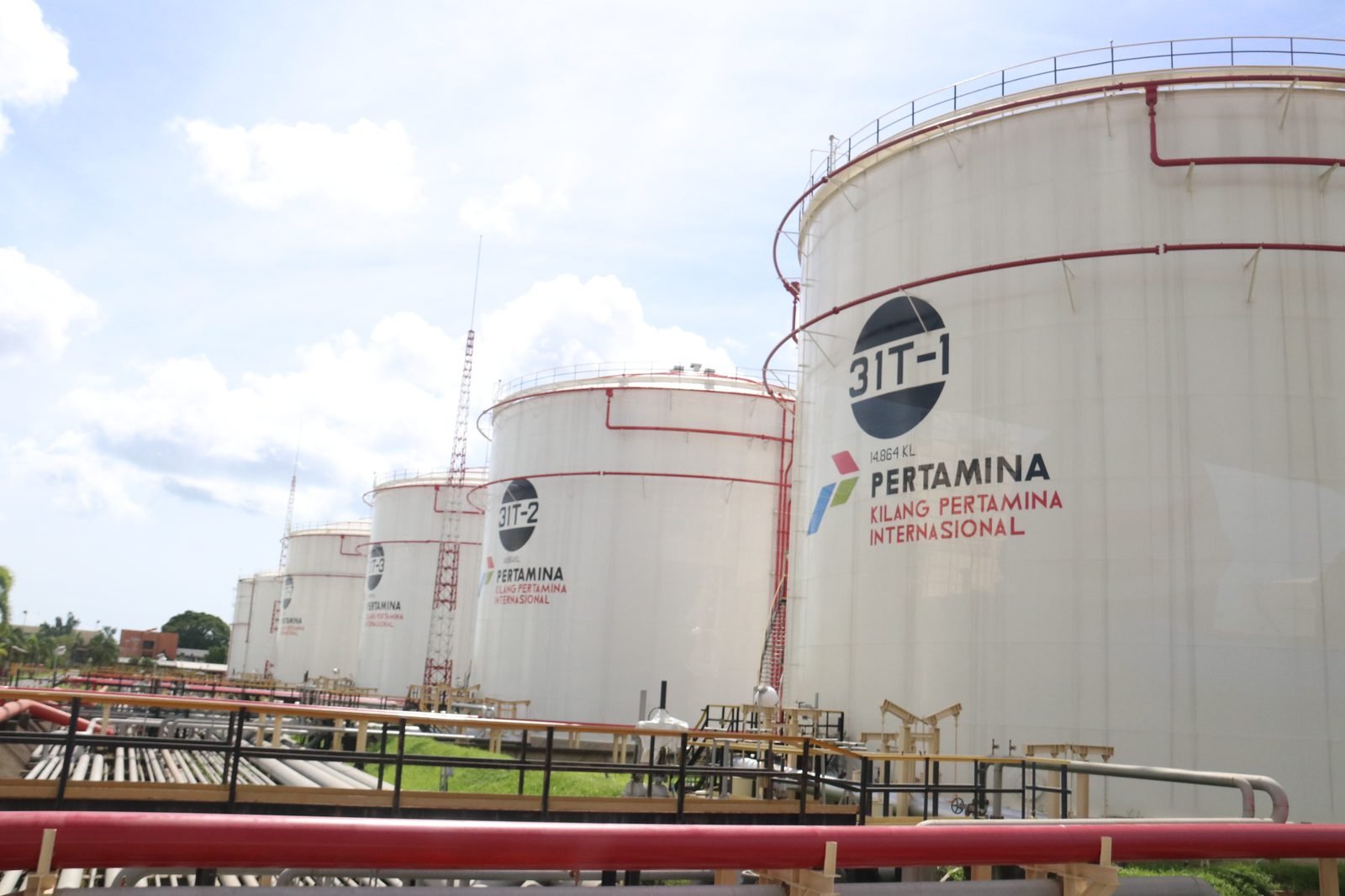
Pertamina's refinery in Dumai, Riau, caught fire on the evening of Wednesday 1 October 2025. The fire started at about 21.00 and was under control by about 23.30, and the accompanying blast was heard some 2 kilometres away. Press reports noted that it was the refinery's second fire in just over two years, after an April 2023 fire caused by a hydrogen leak (The Jakarta Post, 2025). Two days later the Directorate General of Oil and Gas said the cause could not yet be determined because the full report from its field team had not arrived (Cindy, 2025).
The cause of the Dumai fire is a matter for the official investigation, and we do not speculate on it. Every plant and warehouse manager can still ask a more basic question: has the fire risk at their own site been assessed systematically, written down and reviewed? This article explains one widely used way of doing that.
Duty and Concept
Minister of Manpower Decree No. KEP.186/MEN/1999 on fire response units at the workplace requires employers to prevent, reduce and extinguish fires, among other things by controlling every form of energy, providing detection, alarm, extinguishing and evacuation equipment, and controlling the spread of smoke, heat and gas (Departemen Tenaga Kerja [Depnaker], 1999, Article 2). Workplaces with more than 50 workers, or with a medium or heavy fire hazard, must also keep a fire emergency response plan that includes information on potential fire hazards and how to prevent them. Annex I of the decree sorts workplaces into fire hazard classes from light to heavy; warehousing falls in medium III and oil refining in the heavy class (Depnaker, 1999).
The decree sets out what must be in place, but not how to find the hazards. That is where a fire risk assessment helps. The UK government guide for factories and warehouses sets it out in five steps, starting from the fire triangle: a fire needs a source of ignition, fuel and oxygen, so keeping the three apart lowers the chance of a fire (Department for Communities and Local Government [DCLG], 2006).
The Five Steps
- Step 1, identify fire hazards: ignition sources such as contractors' hot work, overloaded electrical installations, frictional heat from machinery, static charge and self-heating of oily rags, along with the materials that could burn. Near-miss signs such as charred or discoloured sockets help reveal hidden hazards.
- Step 2, identify people at risk: lone workers, staff in isolated areas such as crane operators and maintenance crews, contractors and visitors unfamiliar with the site, and anyone who cannot leave quickly.
- Step 3, evaluate, remove, reduce and protect: judge how a fire could start, whether accidentally, through acts or omissions or deliberately, then set controls and protection.
- Step 4, record, plan, inform, instruct and train.
- Step 5, review, especially after process changes, building alterations, more storage of hazardous substances, failure of fire precautions or a rise in the number of people (DCLG, 2006).
A Worked Example
The same guide gives reference figures for testing step 3 findings. An escape route 1,050 mm wide can serve up to 200 people in a normal-risk area, with an extra 75 mm for every additional 15 people or part of 15. A packing area with 230 people is 30 over that figure, or two blocks of 15, so it needs 1,050 + (2 x 75) = 1,200 mm. Suggested travel distances in a normal-risk area are 45 m where there is more than one escape route and 25 m where there is only one. In a higher-risk area they fall to 25 m and 12 m, and in places of special fire hazard such as paint spraying rooms to 18 m and 9 m (DCLG, 2006).
These figures come from guidance for England, and we use them only to show the arithmetic. For buildings in Indonesia, the yardstick remains the national technical requirements for buildings.
Limits of the Method
The method's strength is its simplicity, and so is its limit. The DCLG guide is written for less complex factories and warehouses, and for more complex premises it points to assessors with comprehensive training or experience (DCLG, 2006). Refineries, chemical plants and facilities that hold flammables inside closed processes need process hazard studies such as HAZOP and LOPA. A five-step assessment complements those studies; it does not replace them.
Experience in Indonesia suggests the biggest findings often sit in steps 4 and 5. A five-step assessment of a school building in Bogor Regency found that extinguishers were present but poorly maintained and not regularly tested, that there was no documented emergency plan, and that a full evacuation drill had never been held (Sabrina et al., 2025). We see the same pattern in many workplaces: the equipment is bought, but the system that keeps it working falls behind. That study covered a single building with a qualitative approach, so its findings cannot be generalised.
Practical Steps
- Start from the floor plan and a list of processes, then mark every ignition source and every pile of combustible material.
- Check the workplace classification against Annex I of KEP.186/MEN/1999, since the class decides how the fire response unit is staffed.
- Write down the findings and the emergency plan, then test them with an evacuation drill.
- Review the assessment whenever processes, layouts or stored materials change, not only once a year.
- For units operating at high pressure or temperature, add a process hazard study.
Fire protection is often seen as a cost, yet a sound assessment shows where the money does most good, such as widening an escape route or moving stock away from an electrical panel.
Nusa Safety helps companies carry out this work through its Fire and Emergency Safety Audit (FESA), which reviews fire hazards, protection systems, escape routes and emergency readiness. For process units, the Nusa Safety team can facilitate HAZOP and LOPA studies, and fire brigade members can attend fire brigade training delivered with licensed PJK3 partners.
This article is general information and not legal or professional advice for any specific case.
References
- Cindy, P. R. (2025, October 3). ESDM masih selidiki penyebab kilang Pertamina di Dumai terbakar [Energy ministry still investigating the cause of the Pertamina Dumai refinery fire]. Bloomberg Technoz. https://www.bloombergtechnoz.com/detail-news/85977/esdm-masih-selidiki-penyebab-kilang-pertamina-di-dumai-terbakar
- Departemen Tenaga Kerja. (1999). Keputusan Menteri Tenaga Kerja Nomor KEP.186/MEN/1999 tentang Unit Penanggulangan Kebakaran di Tempat Kerja [Minister of Manpower Decree No. KEP.186/MEN/1999 on fire response units at the workplace]. https://jdih.kemnaker.go.id/asset/data_puu/1999kmnaker186.pdf
- Department for Communities and Local Government. (2006). Fire safety risk assessment: Factories and warehouses. https://assets.publishing.service.gov.uk/media/5a796640e5274a3864fd6ae7/fsra-factories-warehouses.pdf
- Sabrina, D. S., Ahmad, E. F., & Nasution, M. I. (2025). Analisis penilaian risiko kebakaran sebagai upaya pengendalian pada gedung SMAN 1 Cisarua Kabupaten Bogor [Fire risk assessment as a control effort at the SMAN 1 Cisarua building, Bogor Regency]. Jurnal Pengembangan Ketenagakerjaan, 3(2), 50-56. https://doi.org/10.59574/jpk.v3i2.238
- The Jakarta Post. (2025, October 2). Pertamina ensures fuel supply despite Dumai refinery fire. https://www.thejakartapost.com/indonesia/2025/10/02/pertamina-ensures-fuel-supply-despite-dumai-refinery-fire

