
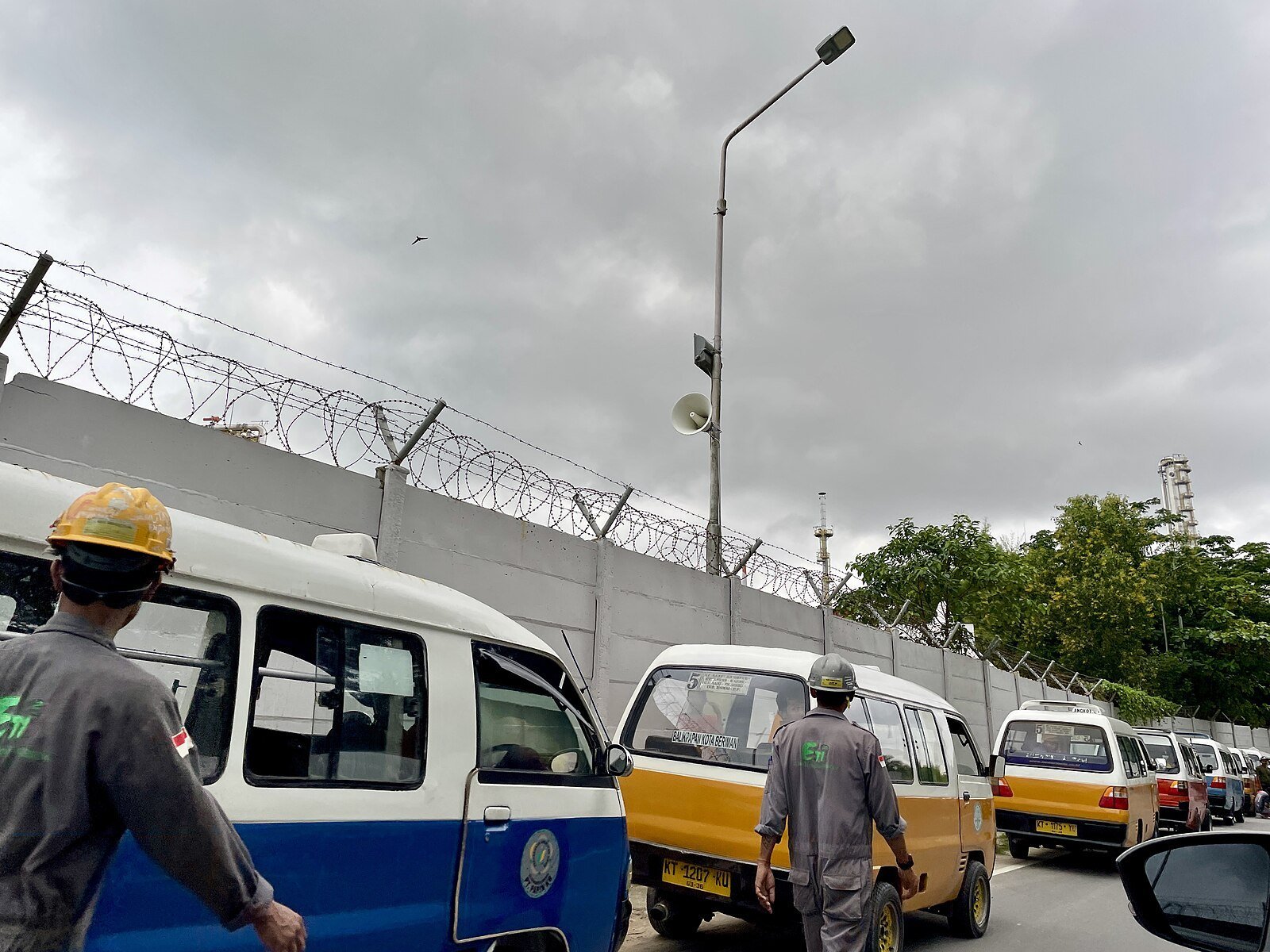
Up to the first week of November 2025, Indonesia's Directorate General of Oil and Gas recorded 8 fatal accidents across upstream and downstream operations. In the upstream sector, 50% of the fatal accidents occurred during inspection and maintenance, 25% during construction and 25% during drilling; downstream, 75% occurred during inspection and maintenance and 25% during construction (Direktorat Jenderal Minyak dan Gas Bumi [Ditjen Migas], 2025). Two months later, at the National OSH Month forum on 19 January 2026, the directorate's seven messages for 2026 included making sure the contractor safety management system (CSMS) runs properly from procurement through to work execution, and that all work done by contractors is overseen by a competent safety supervisor (Ditjen Migas, 2026).
Public procurement moved in the same direction. Presidential Regulation 46 of 2025, the second amendment to the government procurement regulation, inserted a paragraph stating that qualification requirements must at least include the supplier's performance, and listed health and safety guarantees among the social aspects of sustainable procurement (Presiden Republik Indonesia, 2025). Both the oil and gas regulator and the procurement rules therefore put weight on choosing contractors well.
This review asks a narrow question. Do the safety criteria used to select contractors predict how those contractors will perform on site, and where in the contract lifecycle does the most useful evidence come from? We read Indonesian regulation, two industry frameworks, international research on safety indicators and the few Indonesian studies we could find.
What Owners Assess
In public construction, Minister of Public Works and Housing Regulation No. 10 of 2021 on Guidelines for Construction Safety Management Systems sets the safety content of tenders. The selection documents must assess the bidder's construction safety plan (RKK) and evaluate its managerial safety personnel, and they must include the owner's own risk description, hazard identification and risk level, together with the SMKK cost in the owner's estimate (Article 21(1) to (3)). The required personnel scale with risk: for large-risk work a principal-level construction OSH expert or an intermediate-level expert with at least 3 years of experience; for small-risk work a junior expert or a construction safety officer (Article 21(7)). The assessed plan is then completed and approved at the pre-construction meeting (Article 21(5)) (Kementerian Pekerjaan Umum dan Perumahan Rakyat [Kementerian PUPR], 2021).
The same regulation does not stop at the tender. The owner supervises the plan and evaluates SMKK performance every month, and the contractor must improve according to the result (Articles 25(3) and 29). At final handover the owner issues a zero construction accident certificate, or, where accidents occurred, a certificate that lists them together with any warning letters (Article 32(3) and (4)) (Kementerian PUPR, 2021).
The general procurement rules sit above this. Presidential Regulation 16 of 2018, amended in 2021 and again in 2025, uses a pass or fail system for qualification of construction bidders, applies prequalification to complex procurement, which it defines to include high-risk work, and waives proof of qualification for firms already qualified in the supplier performance information system (Article 44) (Presiden Republik Indonesia, 2018, 2021, 2025). The commitment-making official is responsible for assessing supplier performance (Article 11) (Presiden Republik Indonesia, 2025).
In industry, the International Association of Oil & Gas Producers frames contractor management as eight phases, from Phase One, planning, to Phase Eight, final evaluation and close-out, with the transfer of learnings as part of the last phase. Its supplements cover a contractor HSE capability assessment and scoring system and the preparation of HSE plans and bridging documents (International Association of Oil & Gas Producers [IOGP], 2017). ISO 45001 requires organisations to coordinate procurement with contractors and to apply OH&S criteria when selecting them (clause 8.1.4.2) (International Organization for Standardization [ISO], 2018).
What Predicts Performance
The research literature separates two kinds of evidence. Lagging indicators count injuries after the fact, while leading indicators measure the safety process. Hinze et al. (2013) showed with a simple study that leading indicators can distinguish projects with different safety performance, and divided them into passive indicators, such as the policies and programmes a firm has in place, and active indicators that measure how well those programmes work during the job.
The strongest test we found in a contractor setting comes from oil and gas. Salas and Hallowell (2016) analysed 261 contractors and more than 60,000 data points, built models that predicted recordable incident rates and severity rates from leading indicators, and validated the models on a new set of contractor data. A later meta-analysis of the published construction studies found that factors such as safety record, safety resources, staffing for safety, owner involvement, safety training and orientation, personal protective equipment and safety incentive programmes were significantly correlated with worksite injuries (Alruqi & Hallowell, 2019).
The most widely used lagging number fares badly as a selection tool. Hallowell et al. (2021) analysed 3.26 trillion work hours supplied by 10 construction organisations over 15 years. Changes in the total recordable incident rate (TRIR) were 96% to 98% random, at least 100 months of data were needed before past rates had reasonable predictive power, and TRIR showed no discernible association with fatalities. Precision is the core problem. A firm with 5 recordable injuries in 1 million work hours, a TRIR of 1.0 per 200,000 hours, has a 95% confidence interval of 0.43 to 2.34, and reporting a TRIR of 1.0 to within 0.1 requires about 300 million work hours. The authors conclude that TRIR should not be the primary metric for prequalifying contractors, because a client that hires a contractor with a TRIR of 0.75 cannot reasonably expect the same result on its own project (Hallowell et al., 2021).
Evidence From Indonesia
Indonesian evidence on contractor selection and later safety performance is thin, and none of what we found tests prediction directly. Pradani et al. (2021) studied CSMS at PT X, an oil and gas services company that introduced CSMS in 2018 after a lost-time accident caused by a contractor. The system had two phases and six stages: risk assessment, prequalification and selection, then pre-job activity, work in progress and final evaluation. Of the 40 companies under contract, 27 were classed as high risk. In the third-quarter 2020 self-declaration, prequalification was recorded as achieved for 20 contractors (50%), pre-job activity for 6 (15%), work in progress and final evaluation for 3 each (8%), and risk assessment and selection for 2 each (5%), giving a total cycle score of 15%. After the 2018 accident, no further contractor accident was recorded up to October 2020, while the company's total recordable incidents went from 1 in 2018 to 3 in 2019 and 5 by October 2020. The CSMS team reported delayed verification audits because schedules could not be aligned, and late information about contracts already running (Pradani et al., 2021).
Public works shows a similar shape. A document study of a government housing rehabilitation project in Tanjung Redeb found that safety planning was well documented, while leadership and worker participation, support, operations and performance evaluation needed strengthening, particularly records of toolbox meetings, internal safety audits, near-miss reporting and safety training (Maulana & Hakim, 2026).
Where Evidence Conflicts
The studies do not line up neatly. The meta-analysis lists safety record among the factors correlated with injuries (Alruqi & Hallowell, 2019), while the TRIR analysis finds past rates almost useless for predicting a single firm's next period (Hallowell et al., 2021). Our reading is that both can hold. A correlation pooled across many projects can coexist with an imprecise estimate for one firm with modest hours, and the second is the situation a tender panel actually faces.
The PT X authors judged CSMS fairly effective because no contractor accidents followed its introduction (Pradani et al., 2021). Read alongside the precision problem, less than three years without a recorded contractor accident at a company with 40 contractors is weak evidence either way, especially when only 15% of the cycle was recorded as done.
The gaps are clear. Most predictive work comes from the United States and from large oil and gas or construction firms. The Indonesian studies are single cases, qualitative or document based, and partly self-reported. In our search we found no Indonesian study that links RKK scores at tender, or CSMS prequalification scores, to safety outcomes on the subsequent project.
Reading the Lifecycle
Mapped onto the IOGP phases, Indonesian rules are not silent on execution. Permen PUPR 10/2021 has a monthly evaluation and a handover certificate, and Perpres 46/2025 makes past performance part of qualification. The weakness we see lies in what flows between phases. Selection depends mainly on documents and certificates, which correspond to passive indicators. The richer information, the active indicators Hinze et al. (2013) describe, is generated during the work, and at PT X those stages were the least completed (Pradani et al., 2021). The texts we read do not say whether the monthly SMKK evaluation or the handover certificate feeds the supplier performance record, so we cannot tell whether the loop IOGP describes in Phase Eight closes in public works.
The zero accident certificate deserves particular care. It is a lagging measure, and for a small contract with few work hours, a clean record says little about the system that produced it (Hallowell et al., 2021). Used as the main proof of past performance, it carries the same weakness as TRIR.
Practical Steps for Owners
The evidence supports moving effort along the lifecycle, without dropping prequalification.
- Set the depth of assessment by risk. Use the owner's risk level, as Permen PUPR 10/2021 already requires for personnel and plans, or a contract risk assessment as in IOGP Phase One, so high-risk scopes get verification and low-risk scopes a lighter check (Kementerian PUPR, 2021; IOGP, 2017).
- Read lagging numbers as ranges. Ask for work hours alongside TRIR or accident-free claims, and do not rank bidders on small differences (Hallowell et al., 2021).
- Ask for evidence of the system in use. For high-risk work, verify the bidder's safety plan and personnel against site records rather than relying on the submitted documents alone (IOGP, 2017; ISO, 2018).
- Treat the pre-construction meeting as a bridging step. Completing and approving the RKK there is a legal requirement (Kementerian PUPR, 2021); use it to agree who supervises what, including the competent safety supervisor the oil and gas regulator asks for (Ditjen Migas, 2026).
- Track a few active indicators monthly. Inspection findings closed, near-miss reports, toolbox meeting records and training are the items Indonesian studies found weakest (Maulana & Hakim, 2026), and leading indicators of this kind have shown predictive value (Salas & Hallowell, 2016).
- Close the loop. Record a final evaluation that the next prequalification can use, as IOGP Phase Eight and the supplier performance assessment in Perpres 46/2025 both envisage (IOGP, 2017; Presiden Republik Indonesia, 2025).
One common belief needs correcting. CSMS is often treated as the paperwork a contractor submits to pass a tender. In both IOGP 423 and the six-stage scheme at PT X it is a cycle that runs until the contract closes, and the prequalification gate is only its second stage.
How Nusa Safety Helps
Nusa Safety works as an independent third party for both sides of the contract. For contractors, the team prepares CSMS documentation and site readiness for owner assessment through CSMS development and prequalification. For owners, Nusa Safety carries out field verification of contractor HSE implementation through the HSE and CSMS audit, and helps turn risk-based selection, bridging and monthly evaluation into working procedures through SOP and technical guideline development.
Active indicators depend on supervisors who record and act on what they see. The team supports this with HSE leadership training for line management, and the Hazard Report and Observation Card apps can capture near misses and field observations from contractor crews. Nusa Safety issues internal training certificates only, does not hold a PJK3 licence, and runs certified programmes with licensed partners.
This article is general information and not legal or professional advice for any specific case.
References
- Alruqi, W. M., & Hallowell, M. R. (2019). Critical success factors for construction safety: Review and meta-analysis of safety leading indicators. Journal of Construction Engineering and Management, 145(3), 04019005. https://doi.org/10.1061/(ASCE)CO.1943-7862.0001626
- Direktorat Jenderal Minyak dan Gas Bumi. (2025, November 15). Dirtekling serukan penguatan komitmen keselamatan pada Forkom Keselamatan Migas 2025 [Director calls for stronger safety commitment at the 2025 oil and gas safety communication forum] [Press release]. Kementerian Energi dan Sumber Daya Mineral. https://migas.esdm.go.id/post/dirtekling-serukan-penguatan-komitmen-keselamatan-pada-forkom-keselamatan-migas-2025
- Direktorat Jenderal Minyak dan Gas Bumi. (2026, January 22). Dirtekling Migas tekankan lesson learned keselamatan migas pada Forum HSSE Bulan K3 Nasional tahun 2026 [Director stresses oil and gas safety lessons at the 2026 National OSH Month HSSE forum] [Press release]. Kementerian Energi dan Sumber Daya Mineral. https://migas.esdm.go.id/post/dirtekling-migas-tekankan-lesson-learned-keselamatan-migas-pada-forum-hsse-bulan-k3-nasional-tahun-2026
- Hallowell, M., Quashne, M., Salas, R., Jones, M., MacLean, B., & Quinn, E. (2021). The statistical invalidity of TRIR as a measure of safety performance. Professional Safety, 66(4), 28-34. https://www.proquest.com/docview/2509360489
- Hinze, J., Thurman, S., & Wehle, A. (2013). Leading indicators of construction safety performance. Safety Science, 51(1), 23-28. https://doi.org/10.1016/j.ssci.2012.05.016
- International Association of Oil & Gas Producers. (2017). HSE management: Guidelines for working together in a contract environment (Report 423, Version 3.0). https://www.iogp.org/bookstore/product/hse-management-guidelines-for-working-together-in-a-contract-environment/
- International Organization for Standardization. (2018). ISO 45001:2018 Occupational health and safety management systems: Requirements with guidance for use. https://www.iso.org/standard/63787.html
- Kementerian Pekerjaan Umum dan Perumahan Rakyat. (2021). Peraturan Menteri Pekerjaan Umum dan Perumahan Rakyat Nomor 10 Tahun 2021 tentang Pedoman Sistem Manajemen Keselamatan Konstruksi [Minister of Public Works and Housing Regulation No. 10 of 2021 on Guidelines for Construction Safety Management Systems]. https://pasal.id/peraturan/permen/permen-pupr-no-10-tahun-2021
- Maulana, M., & Hakim, E. A. (2026). Evaluasi implementasi Sistem Manajemen Keselamatan Konstruksi (SMKK) pada proyek bangunan pemerintah (studi kasus rehabilitasi rumah negara Kantor Imigrasi Kelas III Non TPI Tanjung Redeb) [Evaluating SMKK implementation on a government building project]. SENTRI: Jurnal Riset Ilmiah, 5(9), 4847-4858. https://doi.org/10.55681/sentri.v5i9.7114
- Pradani, M. R., Maharani, M. D. D., & Ramli, S. (2021). Efektifitas implementasi Contractor Safety Management System (CSMS) terhadap penurunan tingkat kecelakaan kerja di PT X [Effectiveness of CSMS implementation in reducing work accidents at PT X]. Jurnal Migasian, 5(1), 19-29. https://doi.org/10.36601/jurnal-migasian.v5i1.146
- Presiden Republik Indonesia. (2018). Peraturan Presiden Nomor 16 Tahun 2018 tentang Pengadaan Barang/Jasa Pemerintah [Presidential Regulation No. 16 of 2018 on Government Procurement of Goods and Services]. Lembaran Negara Republik Indonesia Tahun 2018 Nomor 33. https://peraturan.bpk.go.id/Details/73586/perpres-no-16-tahun-2018
- Presiden Republik Indonesia. (2021). Peraturan Presiden Nomor 12 Tahun 2021 tentang Perubahan atas Peraturan Presiden Nomor 16 Tahun 2018 tentang Pengadaan Barang/Jasa Pemerintah [First amendment]. Lembaran Negara Republik Indonesia Tahun 2021 Nomor 63. https://pasal.id/peraturan/perpres/perpres-no-12-tahun-2021
- Presiden Republik Indonesia. (2025). Peraturan Presiden Nomor 46 Tahun 2025 tentang Perubahan Kedua atas Peraturan Presiden Nomor 16 Tahun 2018 tentang Pengadaan Barang/Jasa Pemerintah [Second amendment]. Lembaran Negara Republik Indonesia Tahun 2025 Nomor 67. https://peraturan.bpk.go.id/Details/318647/perpres-no-46-tahun-2025
- Salas, R., & Hallowell, M. (2016). Predictive validity of safety leading indicators: Empirical assessment in the oil and gas sector. Journal of Construction Engineering and Management, 142(10), 04016052. https://doi.org/10.1061/(ASCE)CO.1943-7862.0001167

