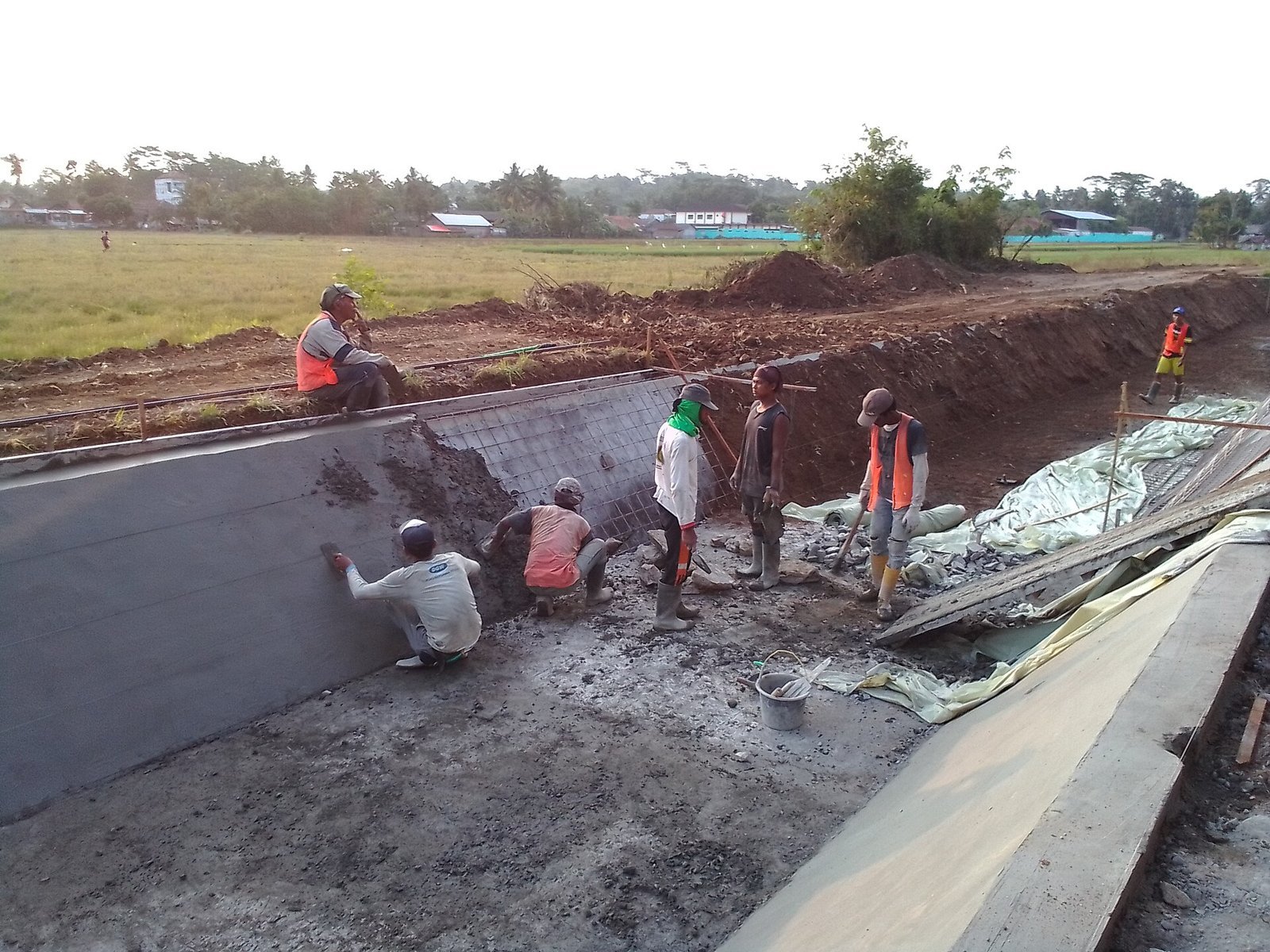
On 24 June 2026, Indonesia's Corruption Eradication Commission (KPK) announced the results of a governance study of BPJS Ketenagakerjaan, the national workers' social security agency, carried out from March to December 2025. One finding concerns the construction sector directly. The design of coverage for construction services was judged to risk unbalanced protection and to leave room for irregular payments of death benefit (JKM) and work accident benefit (JKK) claims. The KPK also found that contributions for construction services do not yet reflect work risk in terms of contract duration or termination (Feisal, 2026). A day earlier, BPJS Ketenagakerjaan, the KPK and the Ministry of Manpower signed an action plan to follow up the study (BPJS Ketenagakerjaan, 2026).
For project owners and contractors this is more than an institutional governance matter. Construction services coverage is the first safety net for daily and piece-rate workers when an accident happens on site. This article reads the figures available as of early July 2026, and sets out what they can and cannot tell us.
Sources of the Numbers
We use three sets of data. The first is the February 2026 National Labour Force Survey by Statistics Indonesia (BPS): 147.67 million people were employed, and the construction share rose from 5.97 percent in February 2025 to 6.07 percent (Andrianto, 2026). Simple multiplication puts that share at roughly 8.96 million people; this is our calculation, not an official BPS figure.
The second is BPJS Ketenagakerjaan membership at the end of February 2026: 47.26 million workers covered, made up of 26.65 million formal workers, 13.86 million non-wage workers, 6 million construction service workers and 691 thousand migrant workers (Ibrahim, 2026).
The third is the Ministry of Manpower's 2025 work accident data: 319,382 cases, of which 90.61 percent involved wage-earning members, 8.27 percent non-wage members and 1.13 percent the construction services segment (Rendanianti, 2026). By our calculation, 1.13 percent is about 3,600 cases.
The legal basis is Government Regulation No. 44 of 2015 on the work accident and death benefit programmes. In its original text, construction employers must register daily, piece-rate and fixed-term workers in JKK and JKM. The JKK contribution is 1.74 percent of monthly wages where wages are known; otherwise it is calculated from the contract value in tiers, starting at 0.21 percent for contracts up to Rp100 million and falling for each higher band to 0.09 percent on the portion above Rp5 billion (Pemerintah Republik Indonesia, 2015).
Reading the Numbers
The first temptation is to set 6 million members against 8.96 million construction workers and conclude that a third are unprotected. In our view that comparison does not hold. BPS counts people by the industry of their main job, including tradespeople working for themselves on private homes. Construction services coverage at BPJS Ketenagakerjaan is tied to a project contract, and Regulation 44/2015 places daily, piece-rate and fixed-term construction workers in it (Pemerintah Republik Indonesia, 2015). On our reading, permanent staff of construction firms sit in the wage-earner segment. One person may also move between several projects in a year. The two figures measure different things.
The same applies to accidents. Construction accounts for about 6 percent of workers, yet the construction services segment recorded only 1.13 percent of cases. Part of the gap may come from classification, since accidents to contractor employees registered as wage earners fall into another segment, and part may come from accidents that were never reported. The published data does not let us separate the two, so an accident rate per construction worker cannot be derived from these figures.
What is more solid is the logic of the contribution. A contribution based on contract value makes registration simple, but it does not move when a project overruns, when workers change, or when person-hours balloon. The KPK finding that contributions ignore contract duration and termination (Feisal, 2026) matches our reading: protection on paper can differ from the real risk exposure on site. The limits of this analysis should be stated. We have not reviewed the full KPK report, and project-level coverage data is not public.
Steps for Project Owners
Project owners do not need to wait for a redesign of contributions to close the gap on their own sites. The following steps fit within contractor management:
- Make proof of construction services coverage for every contract, including subcontracts and piece-rate work, a condition before mobilisation.
- Reconcile the registered worker list against gate access or attendance records regularly, especially when headcount surges before a deadline.
- Ask contractors to update worker data whenever people change, and check again when a contract is extended or its value changes.
- Record person-hours and incidents per contractor, so project accident figures can be read without relying on segment classification.
- Include social security compliance in contractor performance reviews and in prequalification for the next tender.
How Nusa Safety Helps
Nusa Safety helps project owners and contractors organise contractor management from the tender stage. Through the HSE and CSMS Audit, the Nusa Safety team checks whether contractor requirements, including proof of coverage and person-hour records, are actually applied on site, while CSMS Development and Prequalification helps set the assessment criteria. For regular matching of worker and incident data, there is HSE digitalisation. Legal questions about social security obligations are best referred to a lawyer or to BPJS Ketenagakerjaan.
This article is general information and not legal or professional advice for any specific case.
References
- BPJS Ketenagakerjaan. (2026, June 23). BPJS Ketenagakerjaan dan KPK perkuat tata kelola, tingkatkan kepercayaan publik. https://www.bpjsketenagakerjaan.go.id/berita/29602/BPJS-Ketenagakerjaan-Dan-Kpk-Perkuat-Tata-Kelola,-Tingkatkan-Kepercayaan-Publik-
- Andrianto, R. (2026, May 5). Penduduk RI paling banyak kerja jadi petani, tembus 42,50 juta. CNBC Indonesia. https://www.cnbcindonesia.com/news/20260505120000-4-732335/penduduk-ri-paling-banyak-kerja-jadi-petani-tembus-4250-juta
- Feisal, R. (2026, June 24). KPK mengidentifikasi risiko korupsi pada program BPJS Ketenagakerjaan. ANTARA. https://jogja.antaranews.com/berita/837396/kpk-mengidentifikasi-risiko-korupsi-pada-program-bpjs-ketenagakerjaan
- Ibrahim, M. (2026, March 25). Jurus BPJS Ketenagakerjaan kejar target 63,3 juta peserta di 2026. Infobanknews. https://infobanknews.com/jurus-bpjs-ketenagakerjaan-kejar-target-633-juta-peserta-di-2026/
- Pemerintah Republik Indonesia. (2015). Peraturan Pemerintah Nomor 44 Tahun 2015 tentang Penyelenggaraan Program Jaminan Kecelakaan Kerja dan Jaminan Kematian [Government Regulation No. 44 of 2015 on work accident and death benefit programmes]. https://peraturan.bpk.go.id/Details/5612/pp-no-44-tahun-2015
- Rendanianti, A. (2026, April 13). Indonesia catat 319 ribu kasus kecelakaan kerja pada 2025, Jawa Timur terbanyak. GoodStats. https://data.goodstats.id/statistic/indonesia-catat-319-ribu-kasus-kecelakaan-kerja-pada-2025-jawa-timur-terbanyak-Fejk9