
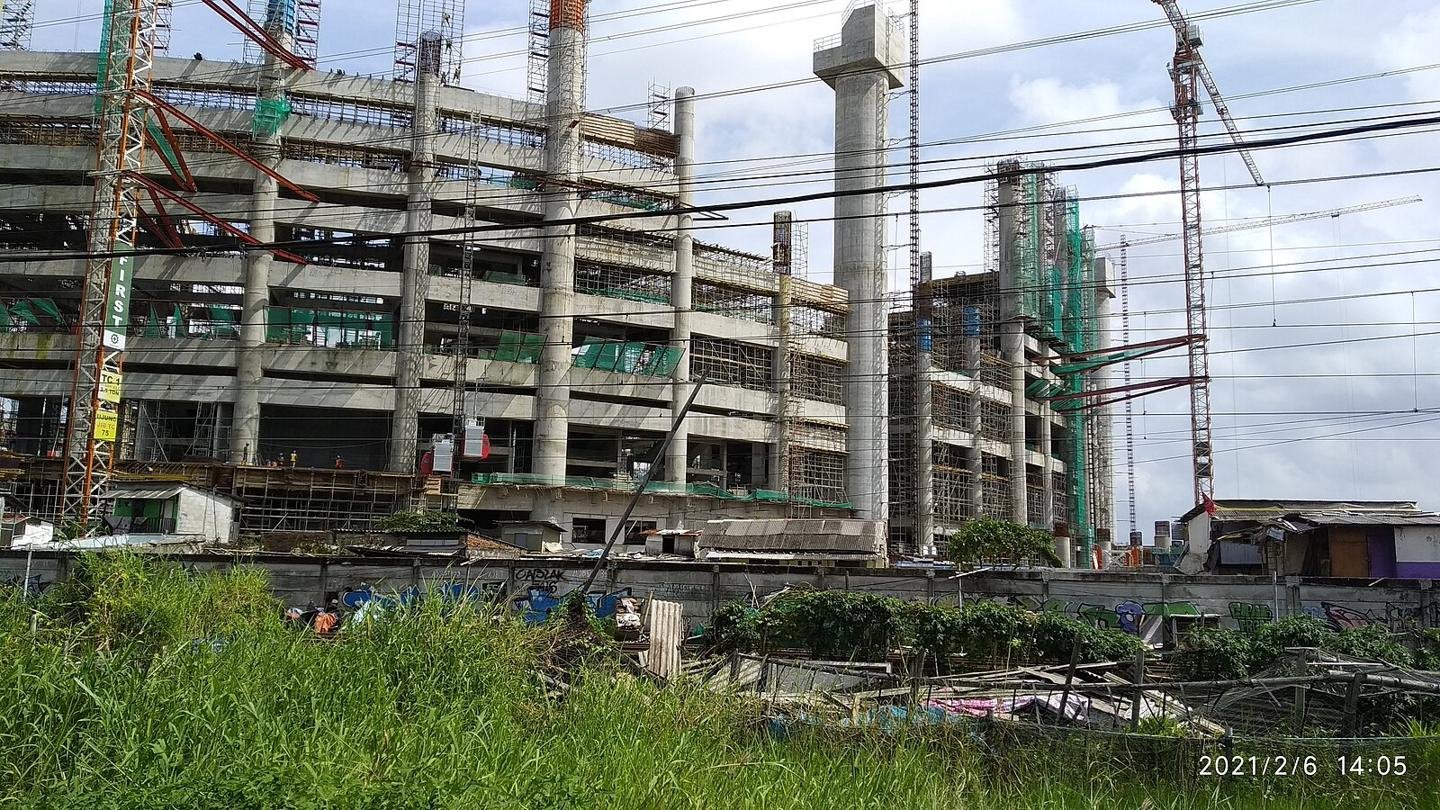
On 19 August 2025 the head of Statistics Indonesia (BPS) told an audience at the Ministry of Public Works that construction accounted for 9.48 per cent of gross domestic product in the second quarter of 2025, the fourth-largest sector after manufacturing, agriculture and trade. According to the February 2025 National Labour Force Survey (Sakernas), the sector employed more than 8.7 million people, or about 5.97 per cent of the employed population. At the same event BPS and the ministry signed an agreement on providing and developing statistics for public works (Arini, 2025).
The figures came two weeks after BPS released second-quarter growth. This article reads them from the point of view of project owners and contractors.
Data Sources
We use three sets of data. First, the BPS growth releases for the first and second quarters of 2025, as reported on the day of release. Second, the February 2025 Sakernas figures on people employed in construction. Third, BPJS Ketenagakerjaan membership data presented to the House of Representatives in May 2025.
What the Numbers Show
In the first quarter of 2025 construction grew only 2.18 per cent, with a 9.84 per cent share of GDP, while the economy as a whole grew 4.87 per cent (Masitoh, 2025). In the second quarter construction grew 4.98 per cent. BPS linked the growth to construction activity financed by the private sector and households, reflected in a rising construction value index, higher imports of construction materials and cement procurement (Rahmad, 2025).
On worker protection, BPJS Ketenagakerjaan, the national employment social security agency, counted 39.7 million active participants in April 2025, down from 45.22 million in December 2024. Of these, 4.64 million were active participants in the construction services category, known as Jakon (BPJS Ketenagakerjaan, 2025a). Construction coverage works differently from the usual scheme: the project is registered, and every worker on it is covered for work injury and death benefits, provided the employer submits worker data with valid national ID numbers and pays contributions on time (BPJS Ketenagakerjaan, 2025b). The scheme exists because most construction workers are daily or piece-rate workers who move frequently between sites. The agency also warns that protection applies only while membership is active; if contributions are in arrears when an accident happens, the company must bear the medical costs and benefits itself (BPJS Ketenagakerjaan, 2025b).
How to Read Them
Dividing 4.64 million by 8.7 million gives about 53 per cent. It is tempting to read that as a coverage rate, but we advise against it. Sakernas counts people working in construction at the time of the survey, whereas Jakon participants are workers registered through projects. Permanent employees of construction firms may well be recorded in the wage-earner segment rather than Jakon, and the two figures refer to different months. The ratio is only a rough signal that a protection gap probably exists and deserves checking project by project.
Growth driven by private and household spending also needs careful reading. We interpret it as a sign of more projects outside government budgets, including small and medium jobs that are often delivered through layers of subcontractors and gang leaders. Research with UK main contractors found that subcontracting has an adverse influence on health and safety, and that main contractors counter it by restricting the layers of subcontractors, working with a regular chain of subcontractors, rewarding good safety performance, and insisting on non-working subcontractor foremen with direct responsibility for their workers' safety (Manu et al., 2013).
Data Limitations
The BPS growth figures contain no accident data, and BPJS membership data is not broken down by project size or source of finance. Nor have we found a second-quarter table splitting construction value by source of finance. The link this article draws between private project growth and safety risk is therefore our interpretation, not a measurement.
Meaning for Projects
Project owners and main contractors do not need to wait for more detailed national data to act:
- Require proof of the project's BPJS Ketenagakerjaan registration and a worker list with ID numbers before mobilisation, including for subcontractors.
- Limit the number of subcontracting layers and record every gang leader who brings workers to site.
- Assess prospective subcontractors' safety systems at prequalification, not after work has started.
- Appoint subcontractor foremen who are accountable for their crew's safety.
These steps are simple, but in our view they are the ones most easily skipped when a schedule is accelerated and workers arrive in waves through several gang leaders at once.
Nusa Safety Support
Nusa Safety helps project owners and contractors set up contractor safety management and prequalification systems and carries out CSMS audits of contractors and subcontractors already on site. Nusa Safety does not issue Kemnaker or BNSP safety certificates or licences and is not a PJK3.
This article is general information and not legal or professional advice for any specific case.
References
- Arini, S. C. (2025, August 19). Sektor konstruksi punya peran besar ke ekonomi, serap 8,7 juta tenaga kerja [Construction plays a big role in the economy, employing 8.7 million workers]. detikFinance. https://finance.detik.com/infrastruktur/d-8068264/sektor-konstruksi-punya-peran-besar-ke-ekonomi-serap-8-7-juta-tenaga-kerja
- BPJS Ketenagakerjaan. (2025a, May 20). BPJS Ketenagakerjaan catat jumlah peserta aktif 39,7 juta orang per April 2025 [BPJS Ketenagakerjaan records 39.7 million active participants as of April 2025]. https://www.bpjsketenagakerjaan.go.id/berita/29486/BPJS-Ketenagakerjaan-Catat-Jumlah-Peserta-Aktif-39%2C7-Juta-Orang-per-April-2025
- BPJS Ketenagakerjaan. (2025b, May 27). BPJS Ketenagakerjaan Plaza BPJamsostek ingatkan pentingnya perlindungan pekerja proyek konstruksi [BPJS Ketenagakerjaan Plaza BPJamsostek stresses the importance of protecting construction project workers]. https://www.bpjsketenagakerjaan.go.id/berita/29526/BPJS-Ketenagakerjaan-Plaza-BPJamsostek-Ingatkan-Pentingnya-Perlindungan-Pekerja-Proyek-Konstruksi
- Manu, P., Ankrah, N., Proverbs, D., & Suresh, S. (2013). Mitigating the health and safety influence of subcontracting in construction: The approach of main contractors. International Journal of Project Management, 31(7), 1017-1026. https://doi.org/10.1016/j.ijproman.2012.11.011
- Masitoh, S. (2025, May 5). BPS: Industri pertambangan mengalami kontraksi 1,23% pada kuartal I 2025 [BPS: Mining contracted 1.23% in Q1 2025]. Kontan.co.id. https://nasional.kontan.co.id/news/bps-industri-pertambangan-mengalami-kontraksi-123-pada-kuartal-i-2025
- Rahmad, M. K. (2025, August 5). Industri pengolahan penopang utama pertumbuhan ekonomi 5,12% di kuartal II-2025, begini kontribusinya [Manufacturing the main support of 5.12% economic growth in Q2 2025]. Investortrust.id. https://investortrust.id/macro/74742/industri-pengolahan-penopang-utama-pertumbuhan-ekonomi-5-12-di-kuartal-ii-2025-begini-kontribusinya

