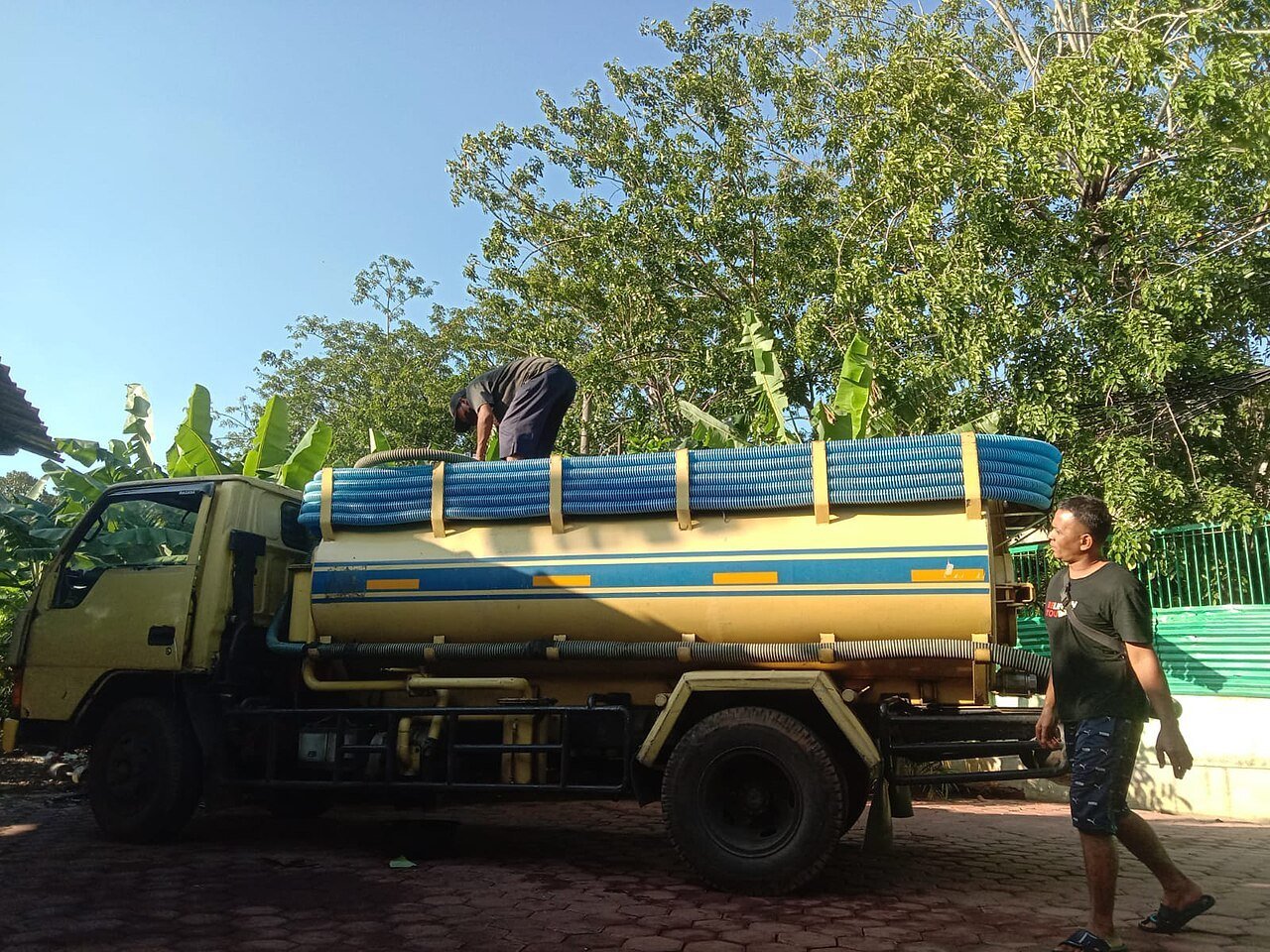
At about 01.30 WIB on Wednesday, 31 December 2025, three cleaning workers died inside a septic tank next to a parking building in the Gelora Bung Karno (GBK) area of Central Jakarta. According to the Central Jakarta police chief, citing the job supervisor, one worker had a seizure while cleaning inside the tank, a second worker went down to help and also began to convulse, and a third went down with the same intention and suffered the same fate. The supervisor, who tried to evacuate them, had difficulty breathing, and the bodies were only recovered at about 04.10 WIB. Police said the initial suspicion was inhalation of toxic gas and that they were examining whether safety procedures had been breached (JawaPos.com, 2026).
As of 12 January 2026 we have found no official investigation report on the incident, so we draw no conclusion about its exact cause. What can be examined is the pattern: the death toll grew because people went in to help. This review reads two studies by the same research group on exactly that pattern.
The Two Studies
The first study, Selman et al. (2018), analysed work-related fatal injuries involving confined spaces, compared fatality rates between similarly industrialised countries and contrasted the mechanisms of death for entrants and for people attempting a rescue. The second study, Selman et al. (2019), builds on those findings and proposes a confined space rescue procedure for on-site rescue teams, adapted from the procedures used by professional emergency services.
Main Findings
Selman et al. (2018) estimated the confined space fatality rate at between 0.05 and 0.08 deaths per 100,000 workers, of which no more than 17% were people undertaking a rescue, most of them in hurried, ad hoc rescue attempts. The mechanisms differed. Entrants died mainly from toxic atmospheres and physical hazards, whereas rescuers died overwhelmingly from toxic atmospheres.
Selman et al. (2019) stress that rescue should be planned before anyone enters and carried out by trained people. Their five-step procedure, abbreviated REALE, rests on two orders of priority. The first is who is protected first: rescuers, then bystanders, then the casualty. The second is the level of rescue: self-rescue, then non-entry rescue, and only then entry rescue. The five steps are reconnaissance of the rescue task, elimination or reduction of hazards, accessing the casualty with as few rescuers as possible, life-saving first aid, and extrication.
Strength of Evidence
Selman et al. (2018) state that their figures are probably an underestimate, because safety authorities rarely record an incident as having occurred in a confined space. Their data also come from countries whose recording systems and emergency services differ from Indonesia's. As far as we can tell, the procedure in Selman et al. (2019) is a literature-based proposal whose effect on fatality numbers has not been tested. We also found no Indonesian national data that separate confined space deaths from other work accidents.
Meaning for Practice
The GBK pattern, as reported so far, matches the finding that rescuers are almost always overcome by the atmosphere (Selman et al., 2018). A person climbing down to help can see a colleague collapse but cannot see or smell what caused it. In our view the key lesson is therefore preparation rather than courage: rescue is designed before the first person enters, and the first option is to pull the casualty out from outside.
Indonesia already has the legal framework. Minister of Manpower Regulation No. 11 of 2023 on occupational safety and health in confined spaces names tanks, and wells or pits with a top opening deeper than 1.5 metres, as confined spaces (Article 3), and spaces with hazardous atmospheric gases are among those that require an entry permit (Article 5). Work may not start before a permit is issued, and the permit is granted by the area manager after an OHS Expert (Ahli K3) has checked the safety conditions (Article 7), including gas testing, continuous ventilation, communication, personal protective equipment and emergency rescue (Article 8). Gas must be tested before and during the work with calibrated instruments (Article 12), and a written emergency response plan must list first aiders and designated confined space rescue officers (Article 17) (Kementerian Ketenagakerjaan [Kemnaker], 2023).
The practical steps we recommend are:
- List every septic tank, inspection chamber, drain and pump pit in the building, then close, lock and mark their access points (Kemnaker, 2023).
- Prefer methods that need no entry, such as pumping out from the surface, so that people go in only when there is no alternative.
- Where entry is unavoidable, issue a permit, test the atmosphere from outside before and throughout the work, and provide mechanical ventilation or supplied-air respirators where natural ventilation is not enough (Kemnaker, 2023).
- Station an attendant outside who must not enter, with a retrieval line, tripod and full-body harness so that a non-entry rescue is possible (Selman et al., 2019).
- Train every worker that the first action when a colleague collapses is to call for help and pull from outside, not to climb in after them.
- Make sure cleaning and building maintenance contractors follow the same rules, because this kind of work is often handed to third parties.
How Nusa Safety Helps
Nusa Safety runs Confined Space Entry training covering space classification, gas testing, entry permits and non-entry rescue, delivered with licensed PJK3 partners where a certified programme is required. Entry permit procedures and emergency response plans for buildings or projects can be prepared through Technical Guidelines and SOP Development and then tested in Emergency Preparedness and Drills. Gas detectors, harnesses and rescue equipment are also available from the Nusa Safety PPE store. Nusa Safety itself issues internal training certificates only and is not a PJK3.
This article is general information and not legal or professional advice for any specific case.
References
- JawaPos.com. (2026, January 1). Malam tahun baru kelabu di GBK, 3 petugas kebersihan tewas di dalam septic tank [A grim New Year's Eve at GBK: Three cleaning workers die in a septic tank]. https://www.jawapos.com/jabodetabek/2601010121/malam-tahun-baru-kelabu-di-gbk-3-petugas-kebersihan-tewas-di-dalam-septic-tank
- Kementerian Ketenagakerjaan. (2023). Peraturan Menteri Ketenagakerjaan Nomor 11 Tahun 2023 tentang Keselamatan dan Kesehatan Kerja di Ruang Terbatas [Minister of Manpower Regulation No. 11 of 2023 on occupational safety and health in confined spaces]. https://jdih.kemnaker.go.id/peraturan/detail/2412/peraturan-menteri-ketenagakerjaan-nomor-11-tahun-2023
- Selman, J., Spickett, J., Jansz, J., & Mullins, B. (2018). An investigation into the rate and mechanism of incident of work-related confined space fatalities. Safety Science, 109, 333-343. https://doi.org/10.1016/j.ssci.2018.06.014
- Selman, J., Spickett, J., Jansz, J., & Mullins, B. (2019). Confined space rescue: A proposed procedure to reduce the risks. Safety Science, 113, 78-90. https://doi.org/10.1016/j.ssci.2018.11.017