
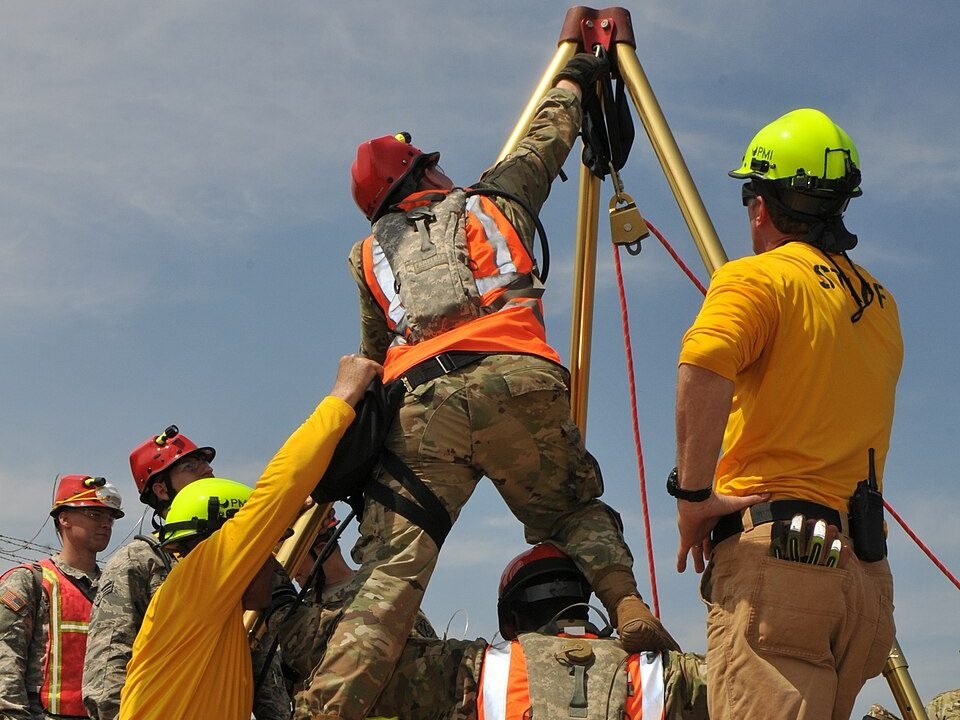
Indonesia's Minister of Manpower Regulation No. 11 of 2023 on Occupational Safety and Health in Confined Spaces was signed on 21 November 2023 and took effect on promulgation on 28 November 2023 (Kementerian Ketenagakerjaan [Kemnaker], 2023, Article 31). Almost three months on, many companies are still working out what has changed: space classification, entry permits, gas testing, emergency plans and licensed personnel.
National figures show a rising accident burden. From January to November 2023, workplace accidents that resulted in work injury insurance claims reached 360,635 cases (BPJS Ketenagakerjaan, 2024). We have not, however, found any published national statistics specific to confined space accidents. This article therefore uses data from a country that records them in detail to read the risks the new rules are meant to control.
The Data Sources
The first source is the US Bureau of Labor Statistics census of fatal occupational injuries. Its 2020 fact sheet records 1,030 workers killed in incidents involving confined spaces from 2011 to 2018. By type of space, the largest numbers died inside tanks, bins and vats (205 deaths, most often by engulfment in collapsing material), in ditches and trenches (203 deaths, mainly trench collapse), in silos and grain bins (107 deaths), and in sewers and manholes (61 deaths, most often by inhaling a harmful substance) (U.S. Bureau of Labor Statistics [BLS], 2020).
The second is a study by Wilson et al. (2012) of US federal data from 1992 to 2005, limited to confined space incidents involving toxic or oxygen-deficient atmospheres. The study also surveyed 21 large companies and asked 10 senior fire officers to estimate rescue times.
What the Numbers Show
Wilson et al. (2012) found 431 incidents that killed 530 people, about 0.63 percent of the 84,446 occupational deaths in the United States over the period. Of these incidents, 87, or 20 percent, killed more than one person. Of the 21 companies surveyed, 12 (57 percent) relied on the fire department for permit-required confined space rescue. Fire engines arrived in about 5 minutes and technical rescue units in about 7 minutes on median, but the officers estimated the rescue itself would take 48 to 123 minutes, rising to 70 to 173 minutes when hazardous materials were present.
How to Read Them
Confined space deaths are a small share of all work deaths, but the pattern is distinctive. In our view, the 20 percent of incidents with more than one death is the most important signal. It suggests that in toxic or oxygen-deficient air, a second and third person can become victims too, for example when trying to help without proper equipment. Wilson et al. (2012) concluded that in a life-threatening emergency, fire departments usually cannot complete a confined space rescue in time, and that their proper role is to support a trained on-site rescue team.
The BLS (2020) data also show that confined space hazards are not only about gas. Engulfment in tanks and silos and trench collapses account for many deaths, while gas features more prominently in sewers and manholes.
Link to the Rules
Regulation 11/2023 addresses both patterns. Permit-required confined spaces are characterised by hazardous atmospheres, liquids or solids that can engulf a worker, configurations that can trap a worker, or other hazards (Kemnaker, 2023, Article 5). A hazardous atmosphere is defined to include oxygen below 19.5 percent or above 23.5 percent, flammables above 10 percent of the lower explosive limit, and toxic substances above the threshold limit value (Article 1).
The entry permit is issued by the area responsible person after an OHS expert has checked gas testing, continuous ventilation, energy isolation, communication, electrical supply of no more than 50 volts in dry and 25 volts in damp conditions, PPE and emergency rescue (Articles 7 and 8). A written emergency plan is mandatory and must list first aiders and confined space rescue personnel (Article 17). OHS personnel comprise confined space technicians, gas detection technicians and rescue personnel, all of whom need a competency certificate and an OHS licence (Articles 19 to 22).
Limits of the Data
The data come from the United States, use a definition of confined space that does not fully match Regulation 11/2023, and partly cover an older period. Indonesian work injury claims data are not broken down by type of space, so the size of the problem in Indonesia cannot yet be measured. The pattern remains relevant because the mechanisms, oxygen deficiency, toxic gas and engulfment, do not depend on the country.
Practical Steps
- Inventory and classify every confined space, then restrict access with covers, locks, tags and signs.
- Make sure every entry permit records gas test results from a calibrated instrument, the name of the standby rescuer and the rescue equipment.
- Drill rescues and time them, from the alarm to the casualty being outside the space, then compare that time with the arrival time of outside help.
How Nusa Safety Helps
Nusa Safety runs confined space entry training for entrants, supervisors and rescue personnel, with certified classes delivered together with licensed PJK3 partners, and helps companies prepare and test rescue plans through Emergency Preparedness and Drills.
This article is general information and not legal or professional advice for any specific case.
References
- BPJS Ketenagakerjaan. (2024, January 3). Kecelakaan kerja makin marak dalam lima tahun terakhir [Workplace accidents increasingly common over the past five years]. https://www.bpjsketenagakerjaan.go.id/berita/28681/Kecelakaan-Kerja-Makin-Marak-dalam-Lima-Tahun-Terakhir
- Kementerian Ketenagakerjaan. (2023). Peraturan Menteri Ketenagakerjaan Nomor 11 Tahun 2023 tentang Keselamatan dan Kesehatan Kerja di Ruang Terbatas [Minister of Manpower Regulation No. 11 of 2023 on occupational safety and health in confined spaces]. https://pasal.id/peraturan/permen/permenaker-no-11-tahun-2023
- U.S. Bureau of Labor Statistics. (2020). Fatal occupational injuries involving confined spaces, 2011-18 [Fact sheet]. https://www.bls.gov/iif/factsheets/fatal-occupational-injuries-confined-spaces-2011-19.htm
- Wilson, M. P., Madison, H. N., & Healy, S. B. (2012). Confined space emergency response: Assessing employer and fire department practices. Journal of Occupational and Environmental Hygiene, 9(2), 120-128. https://doi.org/10.1080/15459624.2011.646644

