
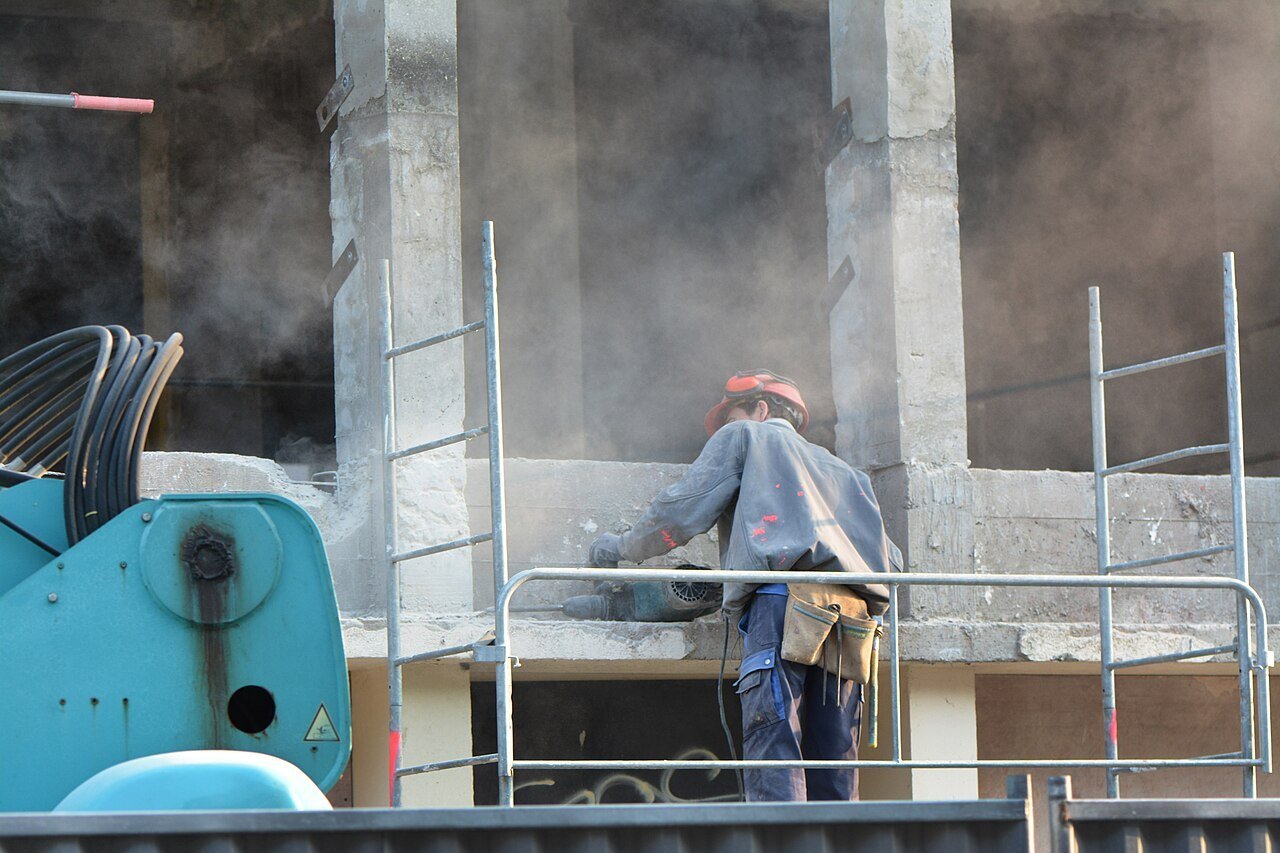
On Wednesday, 14 January 2026, the US House Judiciary Subcommittee on Courts, Intellectual Property, Artificial Intelligence, and the Internet held a hearing on litigation against manufacturers and distributors of stone slab products. According to the committee's notice, the industry contributes 30 billion US dollars to the economy and employs well over 100,000 workers (U.S. House Committee on the Judiciary, 2026). The lawsuits have their roots in silicosis among workers who cut and finish engineered stone for kitchen countertops.
The legal dispute is not the subject here. We examine the cases as an occupational health lesson, based on an official CDC surveillance report and a California Department of Public Health case series, and read them through the control framework in Indonesian regulation.
The Cases in Brief
The CDC report described 18 cases of silicosis, including 2 deaths, among stone fabrication workers in California, Colorado, Texas and Washington from 2017 to 2019. Most were Hispanic workers who mainly handled engineered stone, and 11 of the 18 were under 50 years old with severe, progressive disease. The first California patient worked from 2004 to 2013 polishing slabs and dry-cutting and grinding stone edges. A state safety inspection in 2009 measured respirable crystalline silica at up to 22 times the exposure limit in force at the time, and he died in 2018 at the age of 38 (Rose et al., 2019).
A later California case series identified 52 patients with engineered stone silicosis between 2019 and 2022. The median age at diagnosis was 45, and 51 were Latino immigrants. Diagnosis was delayed in 30 patients (58%), most often because the illness was first treated as bacterial pneumonia or tuberculosis. Twenty patients (38%) already had progressive massive fibrosis at diagnosis, 10 (19%) died at a median age of 46, and 25 (48%) were still fabricating stone after their diagnosis (Fazio et al., 2023).
Contributing Factors
The reports point to several factors. Engineered stone contains far more silica than natural stone, more than 90% compared with under 45% in granite. Many shops are small, with limited awareness, expertise and investment in exposure controls. Many workers are immigrants with limited access to medical care who fear reporting hazards, so they seek care only when the disease is advanced. Medical screening requirements were also recent, so many at-risk workers had probably never been screened (Rose et al., 2019). In California, only 45% of patients reported using water to suppress dust (Fazio et al., 2023).
Reading the Controls
Minister of Manpower Regulation No. 5 of 2018 on occupational safety and health of the work environment requires chemical factors to be controlled below the threshold limit value (NAB) through a hierarchy of elimination, substitution, engineering, administrative controls and personal protective equipment (Article 7). Its annex sets the NAB for crystalline silica (quartz) at 0.025 mg/m³ as the respirable fraction (Kementerian Ketenagakerjaan [Kemnaker], 2018).
Read against that hierarchy, the failures in our view pile up at the top. Substituting a lower-silica material is hard at shop level because engineered stone keeps growing in popularity; US quartz surface imports rose by about 800% between 2010 and 2018 (Rose et al., 2019). Engineering controls, namely water-fed tools and well-designed local exhaust ventilation, are the prevention the CDC report names (Rose et al., 2019), yet dry cutting persisted. When engineering controls are weak, the burden shifts to respirators and health checks, the two layers that depend most on discipline, cost and workers' access.
The second lesson concerns recognition. More than half of the California patients were first diagnosed with something else (Fazio et al., 2023). When nobody asks about the job, occupational disease is recorded as ordinary illness. We suspect this pattern is relevant to Indonesia, where stone, concrete, ceramics and sand are cut and ground every day, although we have found no national sector-level silicosis data to test that.
The evidence has limits. The cases come from the United States, with different surveillance systems, workforces and regulations, and the CDC report states that the true prevalence of silicosis among stone fabrication workers remains unknown without systematic screening and surveillance (Rose et al., 2019).
Lessons for Indonesia
- Inventory every task that cuts, grinds, drills or polishes silica-containing materials, including work by contractors and supplier workshops.
- Measure respirable silica dust with standard methods through an authorised laboratory and compare the results with the NAB (Kemnaker, 2018).
- Put wet cutting and local exhaust ventilation in place before relying on respirators (Rose et al., 2019).
- Where respirators are used, choose the right type, fit-test them and train workers to wear them.
- Add silica exposure history to periodic health examinations, and ask doctors to take a work history when they find unusual lung disease (Fazio et al., 2023).
- Ban dry sweeping and blowing dust off with compressed air; use vacuum or wet cleaning instead.
How Nusa Safety Helps
Nusa Safety helps companies build dust control and respiratory protection programmes, from wet cutting, housekeeping and respirator selection procedures through Technical Guidelines and SOP Development to tailored training material for workers and supervisors through Custom Training Module Development. Health surveillance and work environment monitoring can be built into the management system cycle through SMK3 and ISO 45001 Implementation. Respirators and respiratory protective equipment are also available from the Nusa Safety PPE store. Nusa Safety issues internal training certificates only and is not a PJK3.
This article is general information and not legal or professional advice for any specific case.
References
- Fazio, J. C., Gandhi, S. A., Flattery, J., Heinzerling, A., Kamangar, N., Afif, N., Cummings, K. J., & Harrison, R. J. (2023). Silicosis among immigrant engineered stone (quartz) countertop fabrication workers in California. JAMA Internal Medicine, 183(9), 991-998. https://doi.org/10.1001/jamainternmed.2023.3295
- Kementerian Ketenagakerjaan. (2018). Peraturan Menteri Ketenagakerjaan Nomor 5 Tahun 2018 tentang Keselamatan dan Kesehatan Kerja Lingkungan Kerja [Minister of Manpower Regulation No. 5 of 2018 on occupational safety and health of the work environment]. https://jdih.kemnaker.go.id/peraturan/detail/1546/peraturan-menteri-ketenagakerjaan-nomor-5-tahun-2018
- Rose, C., Heinzerling, A., Patel, K., Sack, C., Wolff, J., Zell-Baran, L., Weissman, D., Hall, E., Sooriash, R., McCarthy, R. B., Bojes, H., Korotzer, B., Flattery, J., Weinberg, J. L., Potocko, J., Jones, K. D., Reeb-Whitaker, C. K., Reul, N. K., LaSee, C. R., . . . Harrison, R. (2019). Severe silicosis in engineered stone fabrication workers: California, Colorado, Texas, and Washington, 2017-2019. Morbidity and Mortality Weekly Report, 68(38), 813-818. https://doi.org/10.15585/mmwr.mm6838a1
- U.S. House Committee on the Judiciary. (2026, January 14). Between a rock and a hard place: Protecting the U.S. stone slab industry from lawfare [Hearing]. https://judiciary.house.gov/committee-activity/hearings/between-rock-and-hard-place-protecting-american-stone-slab-industry

