
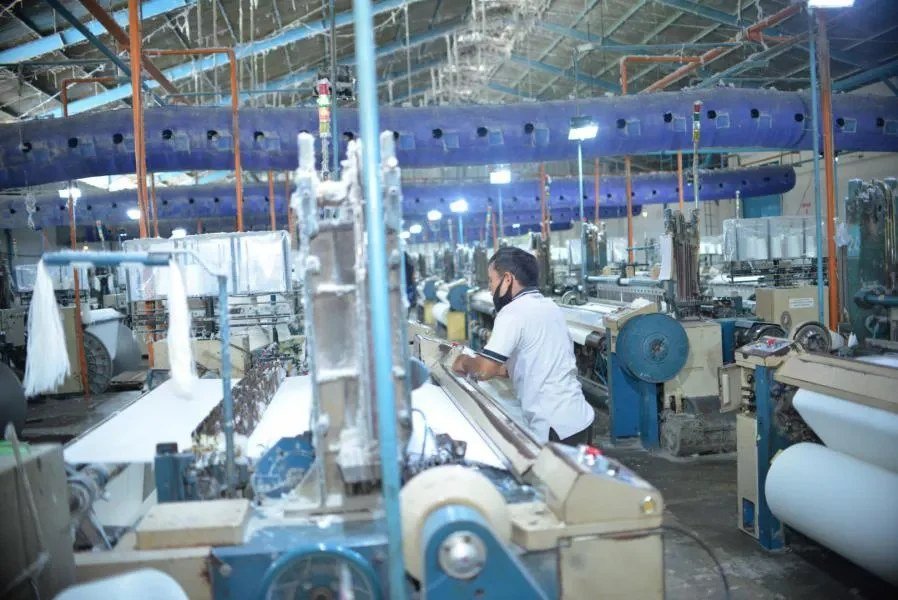
Between 1 August and 29 September 2025, researchers measured noise at 100 workstations in the weaving rooms of a textile mill in Surakarta, Central Java. The readings averaged 103.06 dB and ranged from 100 to 113 dB (Setyawan, Rahma, et al., 2026). Under Minister of Manpower Regulation No. 5 of 2018 on Occupational Safety and Health of the Work Environment, the threshold limit value (NAB) for noise is 85 dBA for 8 hours a day, and the accompanying table allows only 7.5 minutes a day at 103 dBA (Kementerian Ketenagakerjaan [Kemnaker], 2018a, 2018b).
From that mill came a finding that spread quickly in 2026: weavers reported feeling more tired while they wore earmuffs. It touches a complaint that most occupational health teams have heard on the shop floor, and it arrives at a time when hearing loss already affects more than 1.5 billion people worldwide (World Health Organization [WHO], 2021) and an estimated 16% of disabling hearing loss in adults is attributed to occupational noise (Nelson et al., 2005). By late October 2026, both open peer reviewers of the most detailed paper had rated it not approved (Audet, 2026; Fink, 2026).
This review reads the studies closely, sets out what their reviewers found, and then looks at the same mill through the lens that industrial hygienists normally use for noise: exposure against the NAB, what a hearing protector can realistically deliver, and the hierarchy of controls.
Three Linked Studies
The work comes from a research group whose first author is based at Universitas Sebelas Maret, studying weaving operators at a Surakarta mill that two of the papers anonymise as IT Co. Ltd. The first paper, published in 2024, compared weavers who wore earmuffs with a control group that did not, over 6 working days. Earmuffs did not significantly reduce hearing loss complaints from the second to the sixth day, and the average subjective stress score rose significantly (Setyawan et al., 2024).
The second, published in April 2026, followed 33 weaving machine operators for 6 working days: one day without earmuffs, then 5 days with them. Hearing function impairment and fatigue were scored with a questionnaire. Scores varied significantly over the period, with the lowest average on day 1 and the highest on day 6, and the authors concluded that earmuffs increased average impairment and fatigue scores (Setyawan, Kusuma, et al., 2026).
The third, published on F1000Research in June 2026, is the most detailed and is the focus here (Setyawan, Rahma, et al., 2026). The papers do not say whether the 33 earmuff wearers in the 2026 studies are the same people, so we treat them as related reports rather than independent replications.
Noise at this kind of mill is not a new finding. An earlier study at a textile firm making grey cloth and printed batik, also anonymised as PT IT, found 11 of 16 measurement points in the weaving department above the NAB, and workers there reported communication problems as well as physiological and psychological complaints (Suhardi et al., 2019).
How the Trial Ran
The F1000Research study used a non-equivalent control group design. It enrolled 100 female morning-shift weavers with more than a year of service, since 98% of the mill's weaving operators are women. Thirty-three wore earmuffs (the intervention group) and 67 wore no hearing protection (the control group). Groups were assigned by room, weaving room A for the intervention and weaving room B for the control, with partitions to limit contact. On day 1 nobody wore earmuffs; on days 2 to 6 the intervention group did, and supervisors who had been briefed by the researchers reprimanded anyone not wearing them correctly. Participants averaged 46.60 years of age (Setyawan, Rahma, et al., 2026).
Fatigue was measured with a 19-item yes or no questionnaire covering physical, mental and general symptoms, each item scored 1 or 2. Noise was measured with a sound level meter at 100 locations. The two groups were compared day by day with the Mann-Whitney test (Setyawan, Rahma, et al., 2026).
What It Reported
The between-group difference in fatigue was not significant on days 1 to 3 (p = 0.111, 0.100 and 0.213), was significant on day 4 (p = 0.029) and day 5 (p = 0.011), and was not significant on day 6 (p = 0.070). Table 2 gives one mean per day for all 100 participants, rising from 32.58 on day 1 to 33.79 on day 6, while the abstract presents the rise from 32.58 to 33.48 by day 5 as a change among earmuff wearers. The authors read the pattern as a temporary rise in fatigue while workers adjust to earmuffs, and they are candid about its limits: a short intervention, unequal groups, self-reported fatigue, and no control for sleep quality, workload, heat, psychosocial stress or the menstrual cycle. They state that the findings show correlation rather than cause, and that discomfort, disrupted communication and psychological adaptation were possible mechanisms that the study did not measure (Setyawan, Rahma, et al., 2026).
What Reviewers Flagged
Both reviewers found the question worthwhile, and both raised problems that go to the heart of the result. Because the table reports only pooled figures, a reader can see that the groups differed on days 4 and 5 but not which group was more tired or by how much. Six separate tests also do not fit data in which the same people were measured six times; a repeated-measures model that tests the group-by-time interaction is needed before anyone can say the effect changed over the days, and day-by-day tests would need correction for multiple comparisons (Audet, 2026; Fink, 2026).
Fink (2026) added four further points. The day 1 maximum of 43 is impossible on a scale that runs from 19 to 38. Room and group are completely confounded, and noise was not reported separately for rooms A and B. The earmuff make, model and attenuation rating are not given, nor whether the devices were new or their cushions inspected. And six working days in a 40-hour, five-day week means a weekend probably fell inside the observation period, which could reset accumulated fatigue. Audet (2026) asked which frequency weighting the dB figures used and at what time of day the questionnaire was filled in.
We would add one point about the companion papers. Noise-induced hearing loss develops over years and is diagnosed by audiometry. A questionnaire about hearing complaints, completed while wearing a device designed to block sound, may well register muffled speech as impairment. In our reading, rising "hearing impairment" scores over 5 days of earmuff use say more about the experience of wearing protection than about damage to the ear.
Reading It as Exposure
Set the fatigue question aside for a moment and look at the exposure. The NAB table follows a 3 dB exchange rate, so allowable time halves with every 3 dB above 85 dBA (Kemnaker, 2018b), which matches the NIOSH recommended exposure limit of 85 dBA as an 8-hour time-weighted average (National Institute for Occupational Safety and Health [NIOSH], 1998). At 103 dBA the allowance is 7.5 minutes. A full 8-hour shift at that level would therefore be 64 times the allowable dose, or about 6,400%. Two caveats apply. The study used area readings from a sound level meter rather than personal dosimetry, and it did not state the weighting (Audet, 2026). Our figure is an order of magnitude, not a measured dose.
That order of magnitude matters for any protector. NIOSH (1998) recommends derating a protector's labelled noise reduction rating (NRR) by 25% for earmuffs and subtracting a further 7 dB when working from A-weighted levels. As an illustration, an earmuff labelled NRR 30 would be expected to deliver about 15.5 dB in the field, leaving roughly 87.5 dBA at the ear at 103 dBA, still above the NAB. To reach 85 dBA with earmuffs alone, the label would need to exceed about NRR 33. NIOSH (1998) also advises that workers whose 8-hour exposure exceeds 100 dBA wear earplugs and earmuffs together, notes that this adds only 5 to 10 dB, and cautions that even double protection is inadequate above 105 dBA. Some points in this mill reached 113 dB (Setyawan, Rahma, et al., 2026).
Seen this way, the fatigue question is secondary. Even a perfectly tolerated earmuff probably could not have brought these weavers below the limit. Permenaker 5/2018 requires control wherever measurements exceed the NAB, through a hearing loss prevention programme that runs from removing the noise source, replacing equipment and processes, and installing barriers or enclosures, to limiting exposure time and only then appropriate personal protective equipment (Kemnaker, 2018a). The general hierarchy in Pasal 7 ayat (3) follows the same order. NIOSH (1998) calls hearing protectors the last resort, and lists discomfort among the reasons they fail in real workplaces.
The broader evidence supports both halves of that message. A Cochrane review found no controlled field studies of engineering noise control, but uncontrolled case studies reported immediate reductions of 11.1 to 19.7 dB(A) from new equipment, segregating sources, or panels and curtains. Protectors cut exposure by about 20 dB(A) on average (low-quality evidence), instruction in earplug insertion improved attenuation by 8.59 dB (moderate-quality evidence), and within hearing loss prevention programmes, better use of protectors was linked to lower risk of hearing loss (odds ratio 0.40, very low-quality evidence) (Tikka et al., 2017). Closer to home, a cross-sectional study of 40 textile workers with audiometry found both noise intensity (prevalence ratio 7.667) and not using personal protective equipment (prevalence ratio 4.172) associated with hearing disorders (Anggraini, 2022).
The stakes are not only clinical. Presidential Regulation No. 7 of 2019 on Occupational Diseases lists hearing damage caused by noise among occupational diseases, and workers diagnosed with an occupational disease are entitled to work accident benefits even after employment ends, provided the disease appears within 3 years (Presiden Republik Indonesia, 2019).
Our reading of the earmuff studies is therefore cautious. Discomfort from earmuffs is real and well documented as a reason for poor use (NIOSH, 1998), and the Surakarta weavers were already reluctant to wear them for that reason (Setyawan, Rahma, et al., 2026). The data published so far do not show that earmuffs cause fatigue. What they do show is a workplace where personal protection alone cannot carry the load.
Practical Steps for Employers
The steps below follow Permenaker 5/2018 and the NIOSH programme elements.
- Measure exposure properly. Map area noise with the SNI test method required by Pasal 6 ayat (2) (Kemnaker, 2018a), such as SNI 7231:2009 used by Suhardi et al. (2019), and add personal dosimetry for each similar exposure group, measured without regard for protectors worn (NIOSH, 1998). Periodic external testing is required at least once a year (Kemnaker, 2018a, Pasal 62 ayat (1)).
- Start at the source. Prioritise loom maintenance, partial enclosures, barriers and quieter equipment at purchase, and record the dB reduction each change achieves (Kemnaker, 2018a; Tikka et al., 2017).
- Limit time where levels stay high. Limiting exposure and arranging working hours are listed controls in Permenaker 5/2018, which makes rotation out of the loudest rows a legitimate option (Kemnaker, 2018a).
- Choose protectors by attenuation and by wearability. Check that derated attenuation brings the ear below 85 dBA, require double protection above 100 dBA, offer several styles, and consider temperature, humidity and the need to communicate (NIOSH, 1998). Inspect and replace cushions (Fink, 2026).
- Train fitting, not just issuing. Insertion training measurably improves earplug performance (Tikka et al., 2017).
- Measure hearing with audiometry. Take a baseline audiogram and repeat it annually for workers at or above 85 dBA, consider twice-yearly tests above 100 dBA, and use the NIOSH criterion of a 15 dB shift at 500 to 6,000 Hz confirmed by a repeat test (NIOSH, 1998).
- Treat complaints as data. Record discomfort and fatigue with a clear group comparison, so that a complaint leads to a better protector or less noise, not to bare ears at 103 dB.
How Nusa Safety Helps
Nusa Safety helps manufacturers turn noise data into a working hearing loss prevention programme. Through ergonomics and work environment assessment, the team maps noise and identifies exposure groups for internal decision-making, while the periodic work environment testing required by Permenaker 5/2018 is coordinated with licensed partners. Noise control options at the source can be assessed through engineering studies and risk assessments, and the programme itself, from protector selection and double protection rules to audiometry follow-up, can be written into procedures through SOP and technical guideline development.
Protector fit and acclimatisation are skills that supervisors can teach. Nusa Safety builds in-house modules for this through custom training module development. Nusa Safety issues internal training certificates only, does not hold a PJK3 licence, and runs certified programmes and statutory testing with licensed partners.
This article is general information and not legal or professional advice for any specific case.
References
- Anggraini, M. T. (2022). Hubungan intensitas kebisingan dan penggunaan alat pelindung diri dengan gangguan pendengaran pada pekerja pabrik tekstil. Jurnal Ilmiah Kesehatan, 21(3). https://doi.org/10.33221/jikes.v21i03.2088
- Audet, D. J. (2026). Reviewer report for: Short-term fatigue responses to hearing protection devices in high-noise textile work environments [version 1; peer review: 2 not approved]. F1000Research, 15, 860. https://doi.org/10.5256/f1000research.198594.r533126
- Fink, N. (2026). Reviewer report for: Short-term fatigue responses to hearing protection devices in high-noise textile work environments [version 1; peer review: 2 not approved]. F1000Research, 15, 860. https://doi.org/10.5256/f1000research.198594.r512615
- Kementerian Ketenagakerjaan. (2018a). Peraturan Menteri Ketenagakerjaan Nomor 5 Tahun 2018 tentang Keselamatan dan Kesehatan Kerja Lingkungan Kerja. Berita Negara Republik Indonesia Tahun 2018 Nomor 567. https://pasal.id/peraturan/permen/permenaker-no-5-tahun-2018
- Kementerian Ketenagakerjaan. (2018b). Pedoman teknis penerapan K3 lingkungan kerja: Penjelasan tambahan Peraturan Menteri Ketenagakerjaan Nomor 05 Tahun 2018 tentang Keselamatan dan Kesehatan Kerja Lingkungan Kerja. Direktorat Jenderal Pembinaan Pengawasan Ketenagakerjaan dan Keselamatan dan Kesehatan Kerja. https://www.its.ac.id/burb/wp-content/uploads/sites/106/2023/07/Pedoman-Permenaker-No.5-Th.-2018-13072018-ttg-penerapan-K3-lingkungan-kerja.pdf
- National Institute for Occupational Safety and Health. (1998). Criteria for a recommended standard: Occupational noise exposure, revised criteria 1998 (DHHS [NIOSH] Publication No. 98-126). https://www.cdc.gov/niosh/docs/98-126/
- Nelson, D. I., Nelson, R. Y., Concha-Barrientos, M., & Fingerhut, M. (2005). The global burden of occupational noise-induced hearing loss. American Journal of Industrial Medicine, 48(6), 446-458. https://doi.org/10.1002/ajim.20223
- Presiden Republik Indonesia. (2019). Peraturan Presiden Nomor 7 Tahun 2019 tentang Penyakit Akibat Kerja. https://peraturan.bpk.go.id/Details/101622/perpres-no-7-tahun-2019
- Setyawan, H., Kusuma, N. N., Rahma, R. A. A., & Prasetya, T. A. E. (2026). The impact of earmuff use on hearing function impairment and fatigue: A time series study among weaving workers in Surakarta, Indonesia. The Indonesian Journal of Public Health, 21(1), 57-71. https://doi.org/10.20473/ijph.v21i1.2026.57-71
- Setyawan, H., Qadrijati, I., Fajariani, R., Rahma, R. A. A., & Prasetya, T. A. E. (2024). The effect of using earmuffs on hearing loss complaints and subjective stress: A quasi-experimental study among weaving workers in Surakarta, Indonesia. The Indonesian Journal of Occupational Safety and Health, 13(2), 163-172. https://doi.org/10.20473/ijosh.v13i2.2024.163-172
- Setyawan, H., Rahma, R. A. A., Kusuma, N. N., & Ramli, A. B. (2026). Short-term fatigue responses to hearing protection devices in high-noise textile work environments [version 1; peer review: 2 not approved]. F1000Research, 15, 860. https://doi.org/10.12688/f1000research.180021.1
- Suhardi, B., Navi, M. A. H., & Astuti, R. D. (2019). Noise level analysis to reduce noise exposure at PT. IT. Cogent Engineering, 6(1), 1666629. https://doi.org/10.1080/23311916.2019.1666629
- Tikka, C., Verbeek, J. H., Kateman, E., Morata, T. C., Dreschler, W. A., & Ferrite, S. (2017). Interventions to prevent occupational noise-induced hearing loss. Cochrane Database of Systematic Reviews, 2017(7), CD006396. https://doi.org/10.1002/14651858.CD006396.pub4
- World Health Organization. (2021). World report on hearing: Executive summary. https://cdn.who.int/media/docs/default-source/documents/health-topics/deafness-and-hearing-loss/world-report-on-hearing/wrh-executive-summary2-en.pdf

