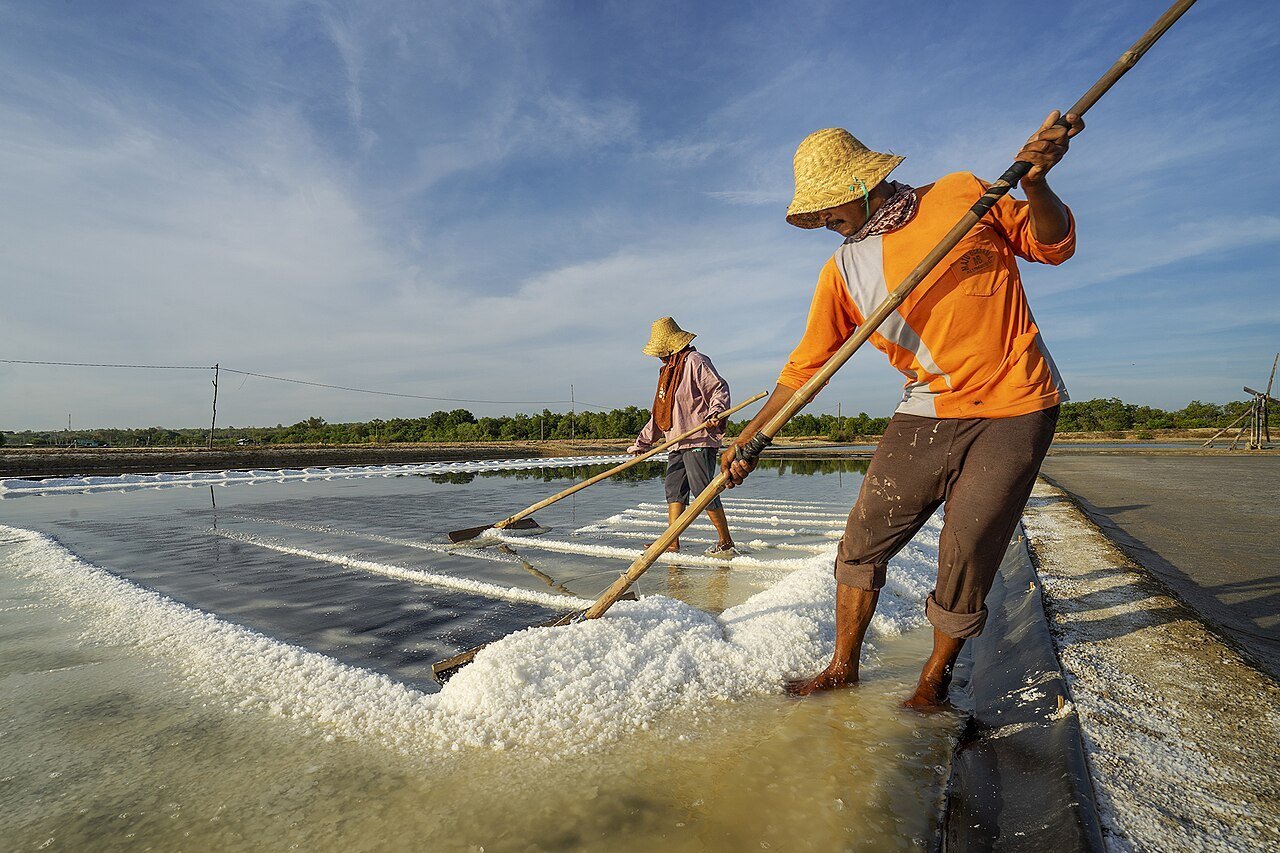
Ahead of the World Day for Safety and Health at Work on 28 April 2024, the International Labour Organization (ILO) published a global report on safety and health at work in a changing climate on 22 April 2024. It estimates that at least 2.41 billion workers are exposed to excessive heat at work every year. That heat is linked each year to 22.85 million occupational injuries, 18,970 work-related deaths and 2.09 million disability-adjusted life years (DALYs) (International Labour Organization [ILO], 2024).
Three days later, on 25 April 2024, Indonesia's Ministry of Manpower launched its National OHS Programme document for 2024-2029 under the theme "Ensuring Safety and Health at Work in a Changing Climate" (Rizki, 2024). The issue now meets the corporate ESG agenda. Below are five common questions, answered with sources available up to 26 April 2024.
What Did ILO Find?
The ILO report covers six climate change impacts on occupational safety and health (OSH): excessive heat, ultraviolet (UV) radiation, extreme weather, workplace air pollution, vector-borne diseases and changes in agrochemical use. Besides the heat figures above, about 1.6 billion workers are exposed to solar UV radiation each year, with more than 18,960 work-related deaths from non-melanoma skin cancer alone. Air pollution is linked to 860,000 work-related deaths a year among outdoor workers. Groups at high risk from heat include workers in agriculture, construction, refuse collection, emergency repair, transport and tourism, as well as indoor workers in poorly ventilated workplaces (ILO, 2024).
These are global estimates. The ILO itself notes that data for some hazards, such as extreme weather and vector-borne diseases, remain limited.
How Is Indonesia Responding?
The Minister of Manpower described the 2024-2029 National OHS Programme as a follow-up to the National OHS Profile prepared in 2018 and 2022, in line with Article 5 of ILO Convention No. 187 on the promotional framework for OSH. The document is expected to guide national OHS development in line with the 2024-2029 national medium-term development plan, raise OHS culture maturity, and reduce occupational accidents and diseases (Rizki, 2024). We do not discuss sector-level programme details here, as we have not reviewed the full document.
Why Is This ESG?
Financial Services Authority Regulation No. 51/POJK.03/2017 on the application of sustainable finance for financial services institutions, issuers and public companies requires a sustainability report. Its employment aspect covers, among other things, a decent and safe working environment (Otoritas Jasa Keuangan [OJK], 2017). The GRI 403 standard on occupational health and safety, widely used in sustainability reporting, asks for disclosure of hazard identification and risk assessment, work-related injuries and work-related ill health (Global Sustainability Standards Board [GSSB], 2018).
In our view, the gap lies in how companies separate topics. Climate risk is usually written up in the environmental section, as emissions and energy, while OHS sits in the social section. The ILO report shows the two meet in the worker: heat, UV and air pollution are OHS hazards that climate change makes worse. For readers of a sustainability report, data on heat exposure and heat-related cases also show whether a company understands the physical risk of climate change to its workforce, not only to its assets and supply chain.
What Rules Cover Heat?
In Indonesia, hot working climates are regulated by Minister of Manpower Regulation No. 5 of 2018 on occupational safety and health of the work environment. It assesses heat using the wet bulb globe temperature index (ISBB in Indonesian), calculated from dry air temperature, natural wet bulb temperature and globe temperature, and sets threshold limit values as time-weighted averages for work of 8 hours a day or 40 hours a week (Kementerian Ketenagakerjaan Republik Indonesia [Kemnaker], 2018). Internationally, the ILO points to its code of practice on ambient factors in the workplace, in particular the chapter on heat and cold (ILO, 2024).
Companies therefore do not need to wait for new rules to act. The framework for measurement and control already exists.
Which Practical Steps?
- Map outdoor work and hot indoor areas, then measure the wet bulb globe temperature at the hottest hours.
- Set work and rest cycles, provide drinking water and shade, and give new workers time to acclimatise.
- Record heat-related complaints and cases as part of OHS data, so they can be reported as injury or ill-health indicators.
- Add heat, UV and air pollution to the company's climate risk register, so that sustainability and HSE teams work from the same data.
How Nusa Safety Helps
Nusa Safety helps companies measure working climate and other work environment factors through ergonomics and work environment assessment, align climate risk controls with the OHS management system through SMK3 and ISO 45001 implementation, and prepare OHS records that are ready for sustainability reporting through HSE digitalization.
This article is general information and not legal or professional advice for any specific case.
References
- Global Sustainability Standards Board. (2018). GRI 403: Occupational health and safety 2018. Global Reporting Initiative. https://www.globalreporting.org/standards/media/1910/gri-403-occupational-health-and-safety-2018.pdf
- International Labour Organization. (2024). Ensuring safety and health at work in a changing climate. https://www.ilo.org/publications/ensuring-safety-and-health-work-changing-climate
- Kementerian Ketenagakerjaan Republik Indonesia. (2018). Peraturan Menteri Ketenagakerjaan Nomor 5 Tahun 2018 tentang Keselamatan dan Kesehatan Kerja Lingkungan Kerja [Minister of Manpower Regulation No. 5 of 2018 on occupational safety and health of the work environment]. https://jdih.kemnaker.go.id/peraturan/detail/1546
- Otoritas Jasa Keuangan. (2017). Peraturan Otoritas Jasa Keuangan Nomor 51/POJK.03/2017 tentang Penerapan Keuangan Berkelanjutan bagi Lembaga Jasa Keuangan, Emiten, dan Perusahaan Publik [Financial Services Authority Regulation No. 51/POJK.03/2017 on the application of sustainable finance for financial services institutions, issuers and public companies]. https://peraturan.go.id/files/ojk51-2017bt.pdf
- Rizki, M. J. (2024, April 26). Luncurkan Program K3 Nasional, ini harapan Menteri Ida soal keselamatan pekerja [Launching the National OHS Programme, Minister Ida's hopes for worker safety]. Hukumonline. https://www.hukumonline.com/berita/a/luncurkan-program-k3-nasional--ini-harapan-menteri-ida-soal-keselamatan-pekerja-lt662b86afe2298