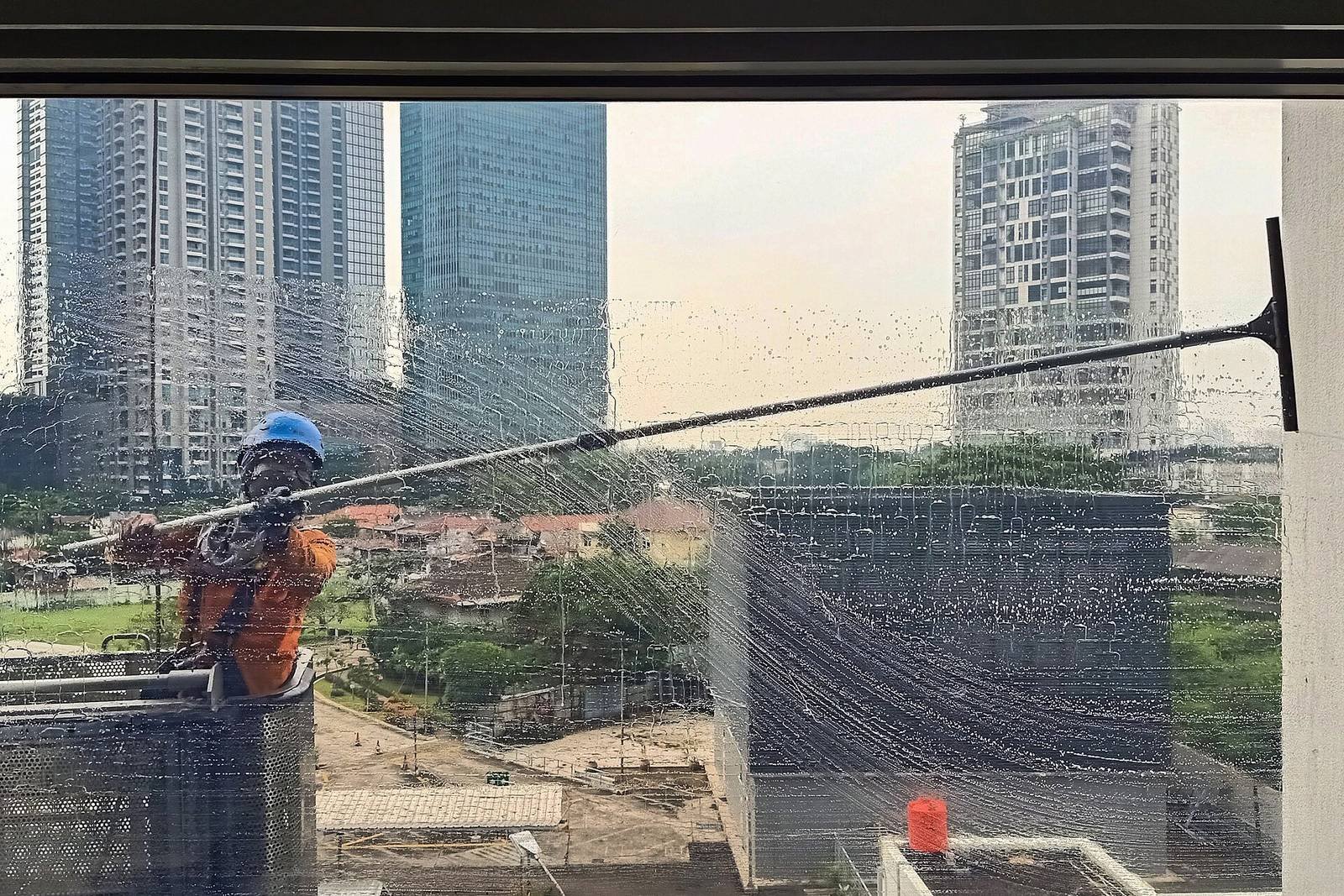
Indonesia's National Occupational Safety and Health (OHS) Month 2025 began on 12 January and ends on 12 February 2025, under the theme "Strengthening Human Resource Capacity to Support the Implementation of OHS Management Systems (SMK3) to Increase Productivity" (Kementerian Ketenagakerjaan [Kemnaker], 2024). At the launch in the Batang Integrated Industrial Estate on 14 January 2025, the Minister of Manpower said work accidents, including occupational diseases, rose from 298,137 cases in 2022 to 370,747 in 2023 and reached 356,383 between January and October 2024. He asked companies to develop three cultures: leaders who do not readily blame workers, a culture of reporting incidents, and a culture of continually improving work systems (Susanto, 2025).
The year matters for another reason. The annex to the decree that governs OHS Month 2025 records that in 2015 the government set a policy direction toward "a self-reliant Indonesian society with a sustainable OHS culture by 2025" (Kemnaker, 2024). In other words, 2025 is the target year of that policy. This analysis reads the decree and considers what it means for safety culture inside companies.
Legal Basis
The guidelines were set by Minister of Manpower Decree No. 316 of 2024 on Implementation Guidelines for the 2025 National OHS Month, dated 12 December 2024. Its preamble cites the implementation of Law No. 1 of 1970 on Work Safety and the national movement to make OHS part of the culture. Its legal references include Presidential Regulation No. 34 of 2014, which ratified ILO Convention 187, and Minister of Manpower Decree No. KEP.425/MEN/1990 on National OHS Day (Kemnaker, 2024).
The second article of the decree makes the guidelines a reference for ministries, agencies, provincial governments, state and regional enterprises, OHS bodies, trade unions, employers' associations, educational institutions, companies and the public. The third sets the period of 12 January to 12 February 2025 and states that activities are to continue on an ongoing basis (Kemnaker, 2024).
What the Decree Says
The annex lists five objectives, among them raising awareness of and compliance with OHS norms, building excellent OHS human resources, and increasing participation in a self-reliant OHS culture. Its five targets include more companies applying SMK3 and more companies with zero accidents. Activities fall into three groups: strategic (launches, assemblies, awards, OHS forums), promotional (campaigns, seminars, competitions, the Healthy Worker Movement) and implementation (guidance, inspection and testing, health examinations, work environment measurement, SMK3 audits). Companies report their activities to the provincial manpower office, which reports to the governor for onward reporting to the minister (Kemnaker, 2024).
Against the Convention
ILO Convention 187 defines a national preventative safety and health culture as one in which the right to a safe and healthy working environment is respected at all levels, government, employers and workers actively take part through a system of defined rights, responsibilities and duties, and prevention is given the highest priority (International Labour Organization [ILO], 2006). At company level, Government Regulation No. 50 of 2012 requires SMK3 for companies with at least 100 workers or a high hazard potential, from setting the OHS policy through to reviewing and improving performance (Pemerintah Republik Indonesia, 2012, Pasal 5 and Pasal 6).
ISO 45001 likewise asks top management to develop, lead and promote a culture that supports the OHS management system, and to protect workers from reprisals when they report incidents, hazards and risks (International Organization for Standardization [ISO], 2018, clause 5.1). The minister's three cultures match the framework of Reason (1998), who describes a safe culture as an informed culture supported by a reporting culture, a just culture, a flexible culture and a learning culture.
Implications for Companies
The decree is an implementation guideline, not a new technical regulation, so it adds no OHS obligations or sanctions. The obligations that apply are those already in place, including SMK3 under PP 50/2012, plus reporting OHS Month activities to the provincial office as the annex describes (Kemnaker, 2024).
In our view, there is a gap between the culture defined in Convention 187 and the way the OHS Month targets are measured. The number of companies with SMK3 and the number with zero accidents are output measures; neither shows whether workers dare to report or whether supervisors respond fairly, which are the very points the minister stressed. The rise in accident numbers also needs careful reading: it could reflect more events, better reporting or wider social security coverage, and the data we found do not separate the three.
Steps a company can take during and after OHS Month:
- Use OHS Month to review the company's OHS policy and objectives, not just to hold an assembly.
- Set culture indicators, such as the number of hazard reports, time to follow-up and feedback to reporters, alongside accident rates.
- Write down just culture rules: honest errors lead to learning, deliberate violations go through a clear disciplinary process (Reason, 1998).
- Measure how workers and supervisors perceive safety and compare the results with SMK3 audit findings.
- Keep evidence of activities for reporting to the provincial manpower office.
Nusa Safety helps companies read safety culture beyond accident numbers through its Safety Climate Survey (NOSACQ-50) and Safety Culture Maturity Assessment. For companies that must apply SMK3 there is an SMK3 internal audit, and supervisors can practise responding to reports through HSE Leadership for Line Management. Nusa Safety is not a PJK3 and issues internal training certificates only.
This article is general information and not legal or professional advice for any specific case.
References
- International Labour Organization. (2006). Promotional Framework for Occupational Safety and Health Convention, 2006 (No. 187). https://normlex.ilo.org/dyn/nrmlx_en/f?p=NORMLEXPUB:12100:0::NO::P12100_ILO_CODE:C187
- Kementerian Ketenagakerjaan Republik Indonesia. (2024). Keputusan Menteri Ketenagakerjaan Nomor 316 Tahun 2024 tentang Petunjuk Pelaksanaan Bulan Keselamatan dan Kesehatan Kerja Nasional Tahun 2025 [Minister of Manpower Decree No. 316 of 2024 on implementation guidelines for the 2025 National OHS Month]. https://jdih.kemnaker.go.id/peraturan/detail/2613/keputusan-menteri-ketenagakerjaan-nomor-316-tahun-2024
- International Organization for Standardization. (2018). Occupational health and safety management systems - Requirements with guidance for use (ISO Standard No. 45001:2018). https://www.iso.org/standard/63787.html
- Pemerintah Republik Indonesia. (2012). Peraturan Pemerintah Nomor 50 Tahun 2012 tentang Penerapan Sistem Manajemen Keselamatan dan Kesehatan Kerja [Government Regulation No. 50 of 2012 on the implementation of OHS management systems]. https://peraturan.bpk.go.id/Details/5263/pp-no-50-tahun-2012
- Reason, J. (1998). Achieving a safe culture: Theory and practice. Work & Stress, 12(3), 293-306. https://doi.org/10.1080/02678379808256868
- Susanto, V. Y. (2025, January 14). Menteri Ketenagakerjaan soroti tren peningkatan jumlah kecelakaan kerja [Manpower minister highlights rising trend in work accidents]. Kontan. https://nasional.kontan.co.id/news/menteri-ketenagakerjaan-soroti-tren-peningkatan-jumlah-kecelakaan-kerja