
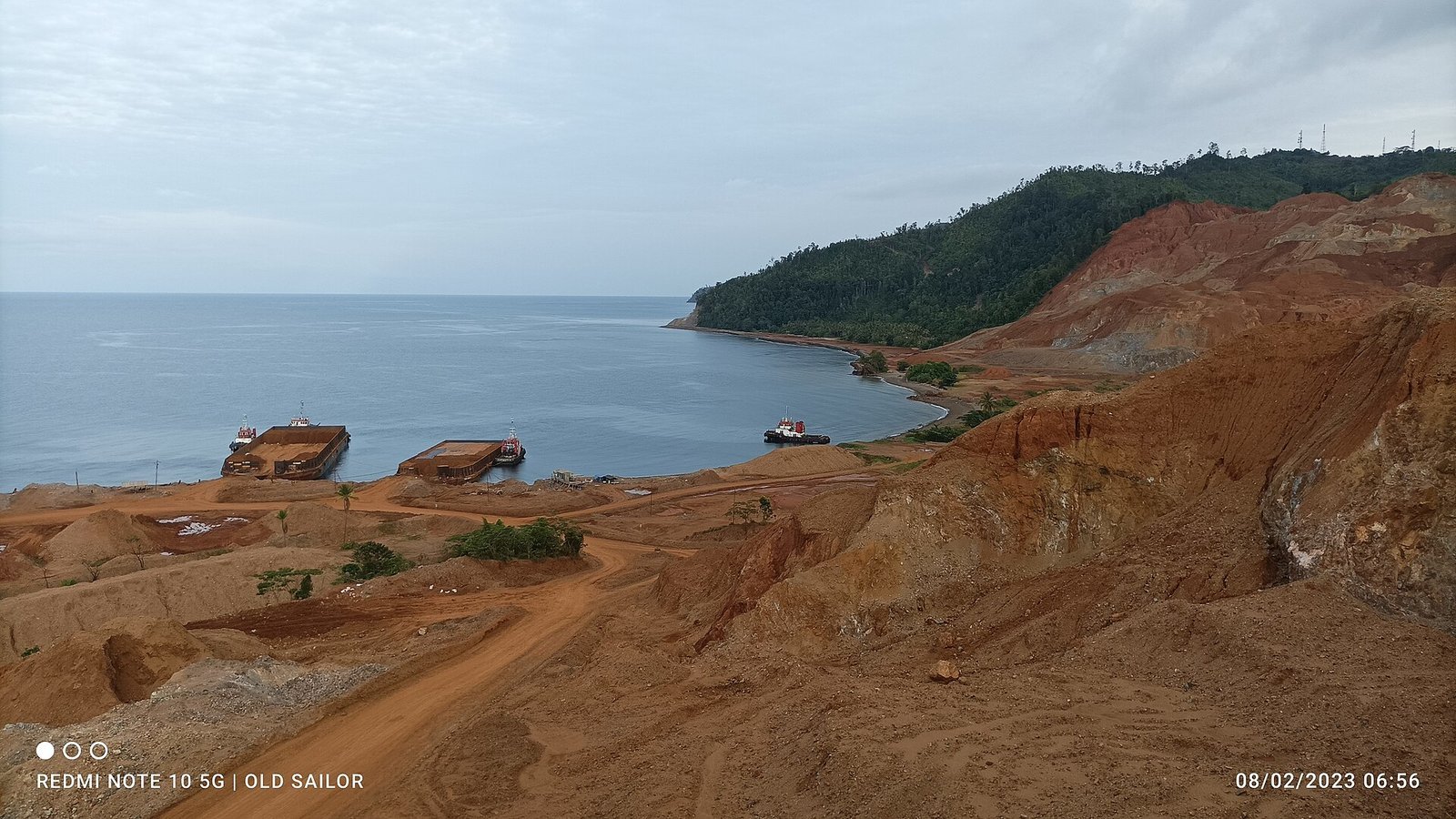
A news report on 8 August 2024 quoted the Southeast Sulawesi Manpower and Transmigration Office on an investigation by the Ministry of Manpower's labour inspection directorate at a nickel refining smelter in Morosi, Konawe Regency. The investigation followed the death of an employee. Social security (BPJS Ketenagakerjaan) data accessed online showed 133 work injury (JKK) claims by the company's employees between 1 June 2023 and 30 June 2024, while only 8 accident reports had reached the provincial labour office, including a fatal accident on 6 August 2024 (Langit Sultra, 2024).
The team also found that the company was not running an OSH management system and had not put up safety signs in work areas. According to the labour office official, the company's accident reports often stated that employees had not complied, even though basic OSH requirements in the work areas had not been met (Langit Sultra, 2024). This article reads those numbers as safety culture data, not as a verdict on one company.
Two Data Sources
The figures 133 and 8 come from two different systems. The first is JKK claims with BPJS Ketenagakerjaan. According to the labour office, a JKK claim requires the KK1 and KK2 forms, so the agency should be coordinating with the office (Langit Sultra, 2024). The second is accident reporting to the labour authority.
That second duty is set by Minister of Manpower Regulation No. PER.03/MEN/1998 on procedures for reporting and investigating accidents. Employers must report every accident at their workplace, covering work accidents, fires or explosions, and other dangerous occurrences (Article 2). The duty applies whether or not the employer has enrolled its workers in social security (Article 3), and a written report is due within 2 x 24 hours of the event (Article 4) (Departemen Tenaga Kerja [Depnaker], 1998).
What the Numbers Show
Eight out of 133 means reports to the labour office equal only about 6 percent of the claims. For comparison, a study of 1,390 workers from 38 contractors on a US construction project found a reported injury rate of 3.11 per 100 workers, while injuries that should have been reported but were not reached 10.90 per 100 workers. At companies with a poor safety climate 81 percent of eligible injuries went unreported, against 47 percent at companies with a positive climate (Probst et al., 2008).
The two figures cannot be compared directly, because their definitions and sources differ. They point the same way, though: official data that relies on employer reports can be far smaller than what actually happens, and the gap is widest where the safety climate is weak.
The Culture Behind It
Reason (1998) argues that a safe culture is an informed culture, and that an informed culture depends on a reporting culture underpinned by a just culture, where the line between acceptable and unacceptable behaviour is clearly drawn. Reports that almost always end with "employees did not comply" while basic signs are missing (Langit Sultra, 2024) look to us like a blame culture rather than a learning one.
Other research points to supervisors. Among 1,238 employees in 33 organisations, supervisor safety enforcement predicted accident underreporting, and the effect was weaker in organisations with a positive safety climate (Probst, 2015). In Indonesia, a study of 143 production workers found 67.1 percent reported accidents well, and reporting was associated with, among other things, knowledge, co-worker support, supervisor support and sanctions (Irawanti et al., 2021).
Limits of the Data
Several caveats apply. The figures come from a media report quoting a regional official, not from a published investigation report, and no official report was publicly available at the time of writing. The claim period and the reporting period do not match exactly, an accident can generate a claim filed later, and some claims may have been rejected. It is also a single case and does not describe the smelter industry as a whole. We use it as an example of how to read data, not as a conclusion about the causes of accidents at that company.
Practical Steps
- Reconcile three lists every month: JKK claims, the internal incident register and reports to the labour office. Any gap between them is a finding that needs explaining.
- Report every required category of event within 2 x 24 hours, including other dangerous occurrences (Depnaker, 1998).
- Test every "worker did not comply" conclusion against physical conditions, signs, procedures and workload before closing the report.
- Train supervisors to respond to reports without putting the reporter on the spot, since supervisor behaviour shapes reporting (Probst, 2015).
- Treat very low report numbers in high-risk areas as a signal to investigate, not an achievement (Probst et al., 2008).
How Nusa Safety Helps
Nusa Safety runs incident investigation and root cause analysis training so that reports do not stop at individual error, carries out SMK3 internal audits that cover reporting and follow-up, and measures safety climate across job levels through the NOSACQ-50 Safety Climate Survey.
This article is general information and not legal or professional advice for any specific case.
References
- Departemen Tenaga Kerja. (1998). Peraturan Menteri Tenaga Kerja Nomor PER.03/MEN/1998 tentang Tata Cara Pelaporan dan Pemeriksaan Kecelakaan [Minister of Manpower Regulation No. PER.03/MEN/1998 on procedures for reporting and investigating accidents]. https://jdih.kemnaker.go.id/peraturan/detail/2214/peraturan-menteri-tenaga-kerja-nomor-3-tahun-1998
- Irawanti, Y., Novianus, C., & Setyawan, A. (2021). Faktor-faktor yang berhubungan dengan perilaku pelaporan kecelakaan kerja pada pekerja bagian produksi PT. X tahun 2020 [Factors associated with accident reporting behaviour among production workers at PT X in 2020]. Jurnal Keselamatan Kesehatan Kerja dan Lingkungan, 2(1), 55-63. https://doi.org/10.25077/jk3l.2.1.55-63.2021
- Langit Sultra. (2024, August 8). Kemenaker temukan pelanggaran K3 PT OSS, ratusan data kecelakaan kerja tak dilaporkan [Ministry of Manpower finds OSH violations at PT OSS, hundreds of work accidents unreported]. https://langitsultra.com/2024/08/08/kemenaker-temukan-pelanggaran-k3-pt-oss-ratusan-data-kecelakaan-kerja-tak-dilaporkan/
- Probst, T. M. (2015). Organizational safety climate and supervisor safety enforcement: Multilevel explorations of the causes of accident underreporting. Journal of Applied Psychology, 100(6), 1899-1907. https://doi.org/10.1037/a0039195
- Probst, T. M., Brubaker, T. L., & Barsotti, A. (2008). Organizational injury rate underreporting: The moderating effect of organizational safety climate. Journal of Applied Psychology, 93(5), 1147-1154. https://doi.org/10.1037/0021-9010.93.5.1147
- Reason, J. (1998). Achieving a safe culture: Theory and practice. Work & Stress, 12(3), 293-306. https://doi.org/10.1080/02678379808256868

