
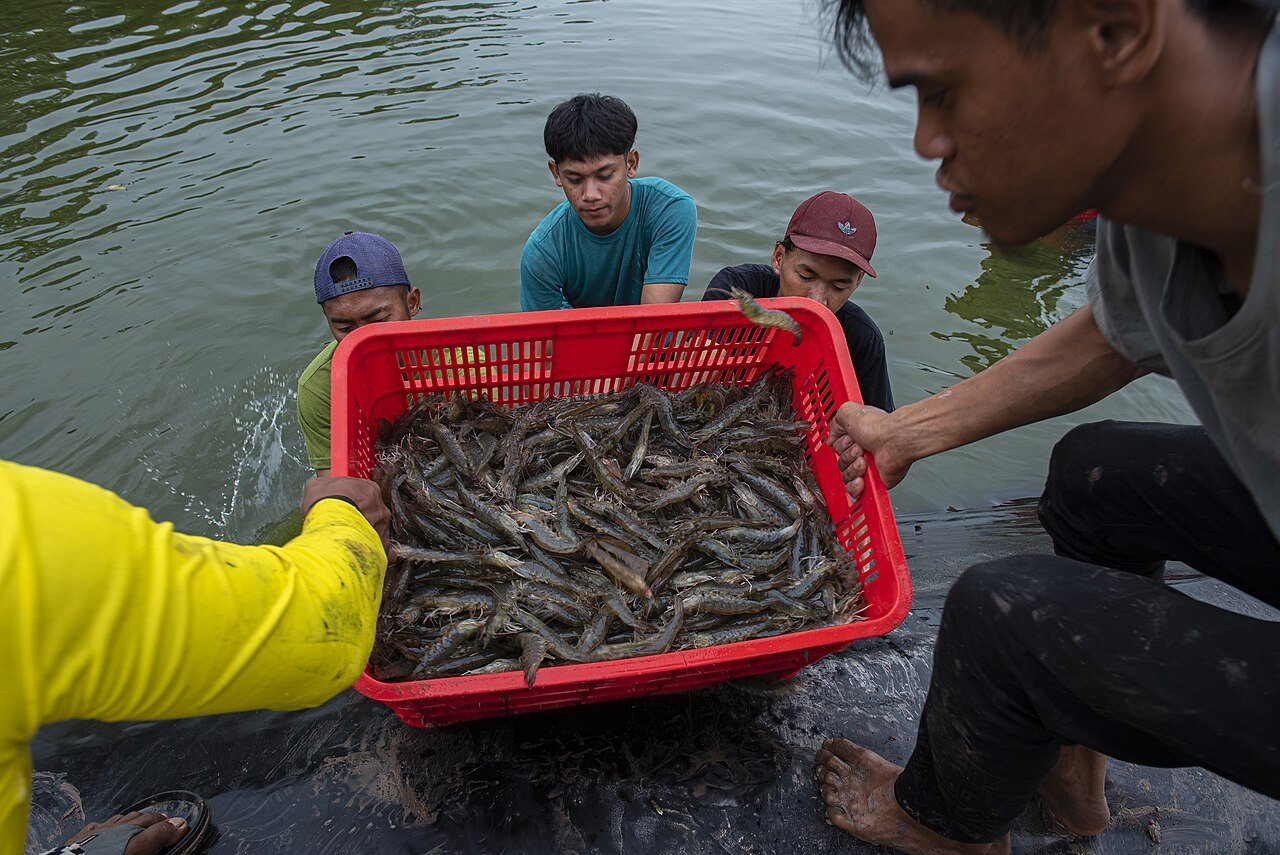
Since 31 October 2025, the US Food and Drug Administration (FDA) has required import certification for shrimp and spices from certain regions of Indonesia. The FDA described this as the first use of the import certification authority in the Food Safety Modernization Act, taken after US Customs and Border Protection detected Cesium-137 (Cs-137) in several shrimp shipments and in a sample of cloves, and the FDA laboratory confirmed the contamination (U.S. Food and Drug Administration [FDA], 2025). Products from the affected regions can now enter that market only with assurances from a designated certifying entity.
This case study is built from official statements by the FDA and Indonesia's Ministry of Environment up to mid-November 2025. The response is still under way, and we have not found a complete investigation report on how the contamination reached the products. The article therefore names no companies and draws no conclusions about responsibility.
What Happened
Following up on the FDA findings, Indonesia's nuclear regulator (Bapeten) tested 2 suspect containers of shrimp. Of 3,250 cartons checked, 494 cartons, or 5.7 tonnes, had Cs-137 contamination on the outer carton surface. The Cs-137 level in the shrimp sample was 10.8 Bq/kg (wet basis), below the clearance level of 100 Bq/kg. The shrimp were nonetheless destroyed on 15 November 2025 in an incinerator at 800 to 900 °C on precautionary grounds, and the ash was encapsulated before going to landfill (Kementerian Lingkungan Hidup/Badan Pengendalian Lingkungan Hidup [KLH/BPLH], 2025).
In the Cikande industrial area of Serang, contaminated factory facilities have been decontaminated and are operating again, several red zone locations have been declared safe by Bapeten and the national research agency BRIN, and 975 tonnes of contaminated material have been moved to interim storage (KLH/BPLH, 2025). Officers also screened 36,769 vehicles entering and leaving the area with Radiation Portal Monitors, and since 17 October 2025 no vehicle has been found carrying Cs-137 (Kompas.com, 2025).
Contributing Factors
According to the environment ministry, Cs-137 exposure in the Cikande red zone was caused by radioactively contaminated slag from metal smelting that residents had used as fill material (Kompas.com, 2025). How the radioactive material entered the metal smelting chain is not explained in the sources we cite. The International Atomic Energy Agency (IAEA) has long noted that radioactive sources that escape regulatory control can end up in scrap metal, so large metal recycling and smelting facilities are advised to monitor incoming scrap, products and wastes for radiation, because a supplier's statement is not an absolute guarantee (International Atomic Energy Agency [IAEA], 2012). The link between that guidance and the Cikande events is a common line of inquiry, not an official finding.
Analysis Through ISO 9001
We read this case through ISO 9001:2015, the requirements standard for quality management systems. It asks organisations to understand external issues that affect their ability to deliver conforming products (clause 4.1), address risks (clause 6.1), control externally provided products and services (clause 8.4), maintain identification and traceability (clause 8.5.2) and take corrective action based on root causes (clause 10.2) (International Organization for Standardization [ISO], 2015).
On the product side, the contamination sat on the outside of the cartons, and the level in the shrimp was below the clearance level (KLH/BPLH, 2025). In our view, this is the central lesson: the quality hazard did not come from the shrimp or the processing steps but from the industrial environment where the product was stored and packed. A hazard list limited to biological, chemical and physical hazards from a company's own materials and processes can easily miss an external issue like this.
Traceability proved its value. Checking carton by carton allowed 494 of 3,250 cartons to be separated and destroyed (KLH/BPLH, 2025). The market impact, by contrast, did not stop at one company: FDA import certification applies by region, so other exporters in the same area also carry the cost of proving their products are clean (FDA, 2025). For metal processing industries, the same risk arises on the scrap supply side (IAEA, 2012).
Lessons for Industry
- Include conditions around the facility, including neighbouring industrial activity, in the analysis of external issues and quality risks.
- Review supplier selection and evaluation criteria, especially for recycled inputs, and do not rely on supplier declarations alone.
- Make traceability work down to lot or carton level so problem products can be separated without holding an entire shipment.
- Keep inspection records and certificates in good order, because export markets increasingly ask for assurance before goods are shipped.
- Train quality teams to run root cause analyses that follow hazard pathways beyond the factory fence.
How Nusa Safety Helps
Nusa Safety helps companies test whether their quality systems are ready for risks like this. Through an ISO Gap Assessment and Internal Audit, the Nusa Safety team checks whether external issue analysis, supplier control and traceability work in practice, while integrated ISO management systems consulting brings quality, environment and OHS into one framework. For facility-level hazard reviews, engineering studies and risk assessments are available. Nusa Safety issues internal training certificates only and is not a certification body.
This article is general information and not legal or professional advice for any specific case.
References
- International Atomic Energy Agency. (2012). Control of orphan sources and other radioactive material in the metal recycling and production industries (IAEA Safety Standards Series No. SSG-17). https://www.iaea.org/node/38033
- International Organization for Standardization. (2015). Quality management systems - Requirements (ISO Standard No. 9001:2015). https://www.iso.org/standard/62085.html
- Kementerian Lingkungan Hidup/Badan Pengendalian Lingkungan Hidup. (2025, November 15). Menteri LH/BPLH tegaskan pemusnahan udang terkontaminasi radioaktif Cesium 137 [Environment minister affirms destruction of shrimp contaminated with radioactive Cesium-137]. https://www.kemenlh.go.id/news/detail/menteri-lhbplh-tegaskan-pemusnahan-udang-terkontaminasi-radioaktif-cesium-137
- Kompas.com. (2025, November 3). KLH targetkan dekontaminasi Cikande selesai akhir November [Environment ministry targets completing Cikande decontamination by end of November]. https://lestari.kompas.com/read/2025/11/03/094444586/klh-targetkan-dekontaminasi-cikande-selesai-akhir-november
- U.S. Food and Drug Administration. (2025, October 3). FDA announces first use of import certification authority for certain shrimp and spices potentially contaminated with Cesium-137. https://www.fda.gov/food/hfp-constituent-updates/fda-announces-first-use-import-certification-authority-certain-shrimp-and-spices-potentially

