
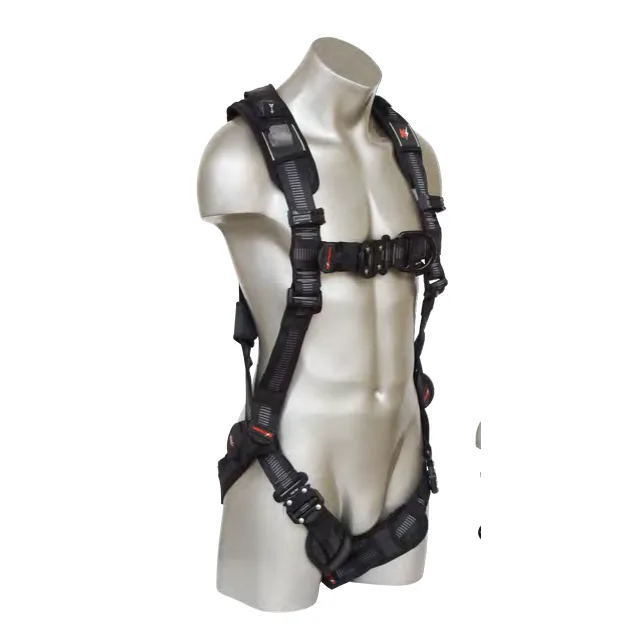
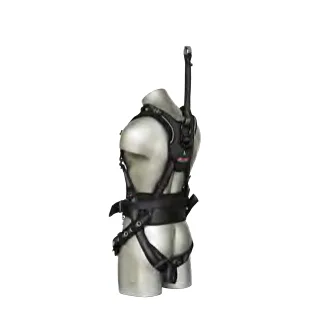
EPIC Monkey Board Belt
Code: AFZ190001
ANSI Z359.11-2014
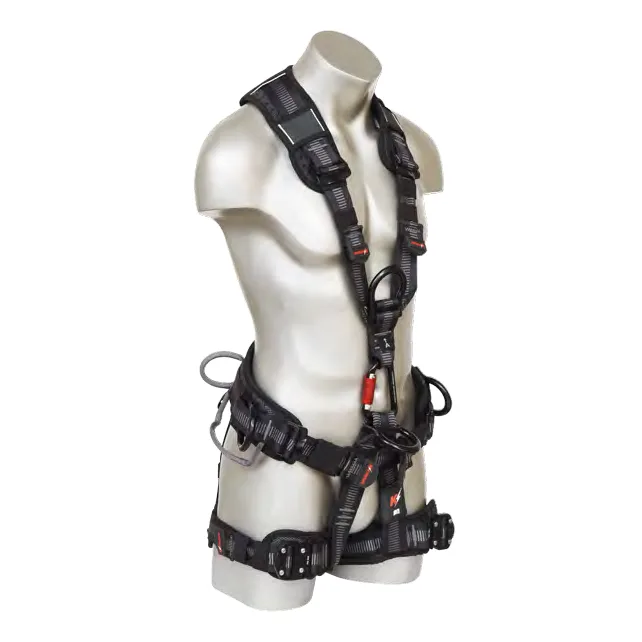
The EPIC Monkey Board Belt has mating buckles that attach directly to the AFH300409 and AFH300410 Derrickman's harnesses. A large frontal pad gives extra comfort while positioning drilling pipes, and two large steel front D-rings provide work positioning options. It is compact and lightweight.
Prices are sent in a quotation once you submit your cart, adjusted to your quantity and delivery location.
Key features
- Large frontal pad for extra comfort while positioning drilling pipes
- Mating buckles attach directly to AFH300409 & AFH300410 harnesses
- Two large steel front D-rings provide work positioning options
- Compact and lightweight
Technical specifications
| Webbing | Polyester |
|---|---|
| Metal components | Alloy Steel |
| Padding | polyester and nylon |
| D-rings | Two large steel front D-rings |
| Compatibility | AFH300409 & AFH300410 Harnesses |
| Size | M-L |
| Weight | 2.0 kg |
| Standards | ANSI Z359.11-2014 |
Used in
Drilling (positioning drilling pipes on the monkey board)
BUYER'S GUIDE
Choosing, Wearing and Inspecting a Full Body Harness
The full body harness is the body support part of an active fall arrest system. It spreads the impact forces across the body during a fall and keeps the fallen worker suspended upright, while still giving enough freedom of movement to do the job safely.
- Pick the attachment points for the task: the dorsal D-ring between the shoulder blades is for fall arrest, the sternal D-ring is for guided type fall arresters when climbing or entering a confined space, the lateral D-rings are for work positioning only, and the ventral point is for rope access and rescue.
- Fall arrest attachment points are marked with an 'A' label; 'A/2' means two similar points must be used together as one attachment point.
- Shoulder rescue loops or D-rings take a spreader bar for confined space entry, exit and retrieval.
- Check the size against the height and weight chart, then put the harness on by holding it from the dorsal D-ring, closing the chest, waist and leg buckles and adjusting every strap to fit.
- Inspect before every use: labels intact and legible, D-rings and buckles undamaged and clicking when engaged, impact indicator not released, and webbing free of cuts, frays, burns, mould or discolouration.
- Have the harness examined by the manufacturer or an authorised representative at least every 12 months (EN 365), and withdraw it from use once it has arrested a fall.
Summarised from the manufacturer's catalogue. Selection must follow your site risk assessment and the competent person's judgement.
More in this family
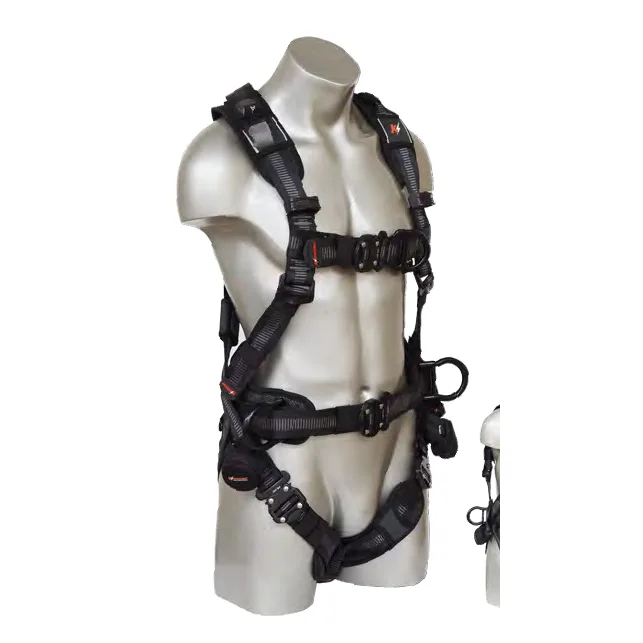
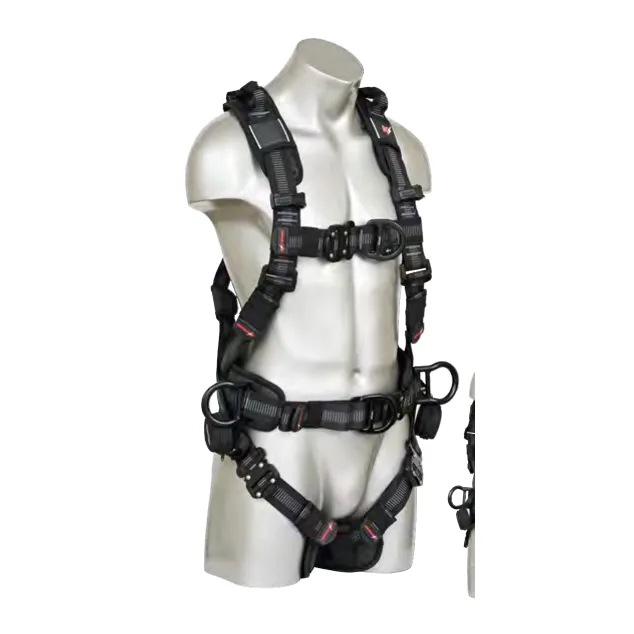
Technical data from the manufacturer's catalogue, page 33. Specifications may change; please confirm with our team before ordering.
