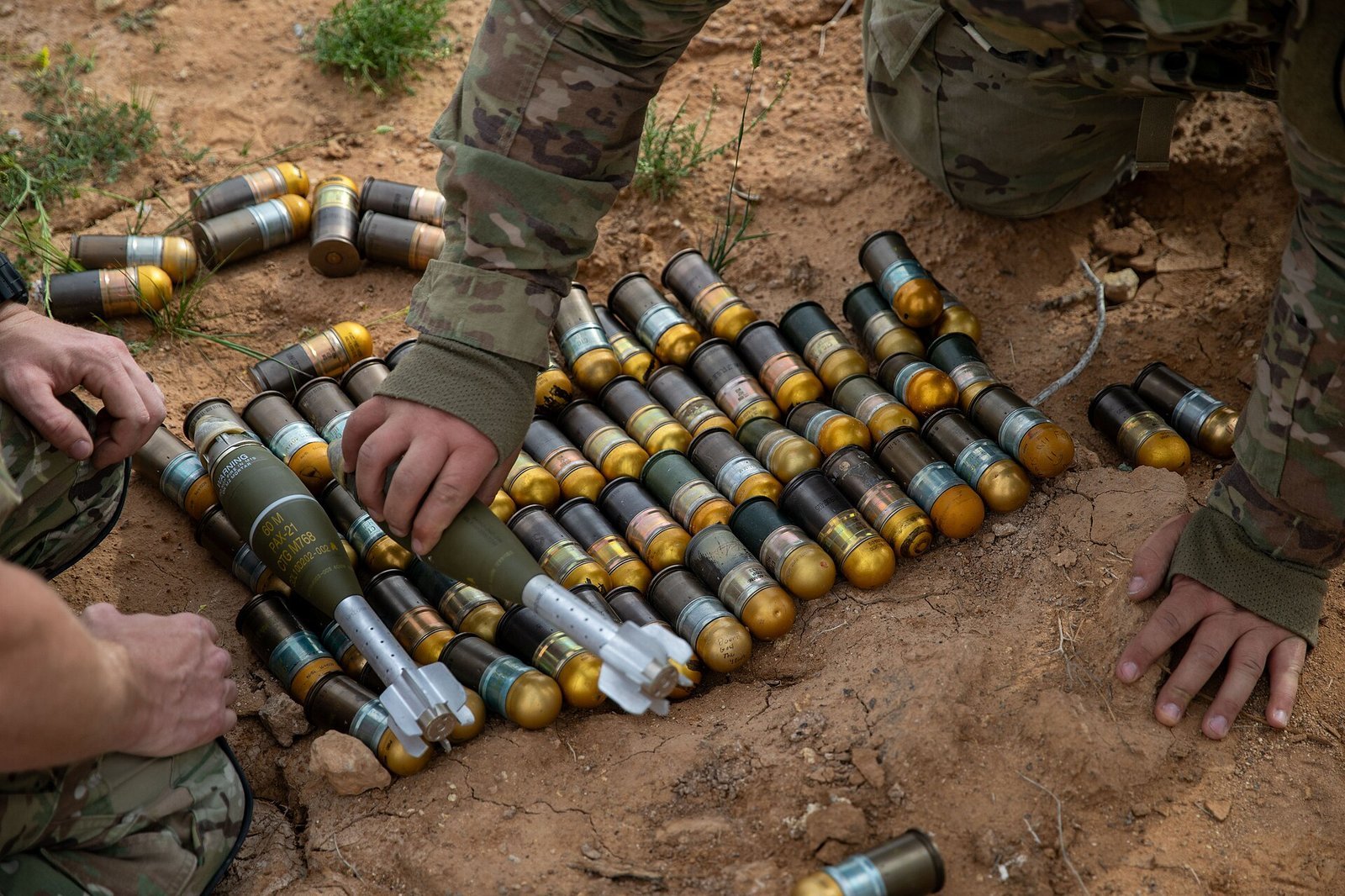
At about 09.30 Western Indonesia Time on Monday 12 May 2025, an explosion occurred while personnel of the Indonesian Army's Central Ammunition Depot III were destroying unserviceable ammunition in Sagara village, Cibalong district, Garut regency, West Java. According to the Army information service, detonations in two prepared pits went safely; the team then placed leftover detonators in a separate pit, and at that moment an explosion came from inside the pit. Thirteen people died (Luxiana, 2025). The next day the Army said its investigation team was still working on site; the dead were 4 soldiers and 9 civilians (Wijayaatmaja, 2025).
This case study draws on official statements and on monitoring findings by Komnas HAM, the national human rights commission, as reported in the media. A full official investigation report had not been published at the time of writing, so we draw no conclusion on the cause. We respect the victims and their families, and the discussion focuses on the work system, not on individuals.
What Was Reported
Komnas HAM monitored the event from 15 to 17 May 2025. Disposal at the site in 2025 ran in two waves, and the blast came on day 11 of the second wave, its final day. The work involved 21 civilians hired as casual day labourers at an average of Rp150,000 per day. According to Komnas HAM, the workers had learned on their own over many years without certified education or training, and were given no special equipment or personal protective equipment (Harahap, 2025).
Komnas HAM also recorded that leftover detonators, usually sunk at sea, were to be buried with a urea mixture on that day. At the time of the blast, the victims were lowering a drum of leftover detonators into the pit, with several people inside the pit and others around it. On the other side of the ledger, there were no-entry signs, notices to residents, guards at a radius of 1 to 1.5 km, a short briefing before work, and loudspeaker warnings before each detonation (Harahap, 2025).
Analytical Frame
We use Reason's (1997) Swiss cheese model, which treats organisational accidents as the result of holes lining up across several layers of defence: latent conditions shaped by organisational decisions, and active failures at the front line. As a technical reference, the OSCE guide on destroying conventional ammunition lists the risks of open detonation as shock waves, fragments, and the chance that not all items are destroyed. These risks are reduced by limiting the amount detonated at one time and by shielding the site, and the guide names qualified personnel as more important than the choice of technology (Organization for Security and Co-operation in Europe [OSCE], 2008).
Thin Layers
From the reported facts, several layers appear thin. This is our interpretation, not an investigation finding.
- Competence: the people handling explosives had learned informally without certified training, while the OSCE guide stresses qualified personnel (Harahap, 2025; OSCE, 2008).
- Protection: workers had no personal protective equipment, while the OSCE guide recommends protective equipment for disposal personnel, at least against exposure to pollutants (Harahap, 2025; OSCE, 2008).
- Exposure: several people were inside and around the pit at the same time. The number of people in the danger zone sets the scale of harm when energy is released uncontrolled (Harahap, 2025).
- Change of method: the way leftover detonators were handled on that day differed from usual practice. A method change on the day of work is a typical point that calls for a fresh risk assessment (Harahap, 2025).
- Final stage: the blast came while handling leftovers, after the main work had been declared safe (Luxiana, 2025).
Typical lines of inquiry for such events include the condition and sensitivity of the leftover detonators, how they were packed and moved, and safe distances during handling. All of these remain hypotheses until the official report is available.
Lessons for Industry
The event is relevant to any workplace handling explosives, reactive waste or expired chemicals, especially those using day labour or subcontractors.
- Verify the competence of everyone who touches hazardous materials, including day labourers, before they start (ISO, 2018).
- Limit the number of people in the danger zone at every step, not only during the main detonation (OSCE, 2008).
- Treat handling of leftovers and residues as a separate high-risk task with its own job safety analysis and permit.
- Stop work and reassess the risk when the method changes on the day.
- Control outsourced work within the same OHS management system as permanent staff, as ISO 45001 requires for procurement, contractors and outsourcing (ISO, 2018).
How Nusa Safety Helps
Nusa Safety helps companies assess their control of contractors and day labour through the HSE and CSMS Audit and CSMS development and prequalification. For high-risk work, the Nusa Safety team runs a risk assessment and JSA workshop and incident investigation and RCA training, with internal training certificates.
This article is general information and not legal or professional advice for any specific case.
References
- Harahap, D. (2025, May 25). 5 fakta temuan Komnas HAM terkait insiden ledakan amunisi di Garut [Five findings of Komnas HAM on the Garut ammunition blast]. Metrotvnews.com. https://www.metrotvnews.com/read/k8oCVr4z-5-fakta-temuan-komnas-ham-terkait-insiden-ledakan-amunisi-di-garut
- International Organization for Standardization. (2018). Occupational health and safety management systems: Requirements with guidance for use (ISO Standard No. 45001:2018). https://www.iso.org/standard/63787.html
- Luxiana, K. M. (2025, May 12). TNI AD ungkap kronologi ledakan di Garut yang tewaskan 13 orang [Army sets out the sequence of the Garut blast that killed 13]. detikJabar. https://www.detik.com/jabar/berita/d-7911310/tni-ad-ungkap-kronologi-ledakan-di-garut-yang-tewaskan-13-orang
- Organization for Security and Co-operation in Europe. (2008). Best practice guide on the destruction of conventional ammunition. OSCE. https://www.osce.org/files/f/documents/0/1/33407.pdf
- Reason, J. (1997). Managing the risks of organizational accidents. Ashgate.
- Wijayaatmaja, Y. P. (2025, May 13). TNI AD masih cari tahu penyebab meledaknya amunisi di Garut [Army still seeking the cause of the Garut ammunition blast]. Metrotvnews.com. https://www.metrotvnews.com/read/b7WCgmBJ-tni-ad-masih-cari-tahu-penyebab-meledaknya-amunisi-di-garut